Are There Toilets On The Tongariro Crossing?
Where the toilets are on the Tongariro Alpine Crossing, how often they appear across the 20.2 km track, and how to plan toilet stops around a guided hike or shuttle day.
The Department of Conservation places toilets along the Tongariro Alpine Crossing roughly every one to two hours of walking, spaced across the full 20.2 km route from Mangatepopo to Ketetahi Road. DOC also warns that queues form at the Mangatepopo end, and if that happens the next toilets are 1 km, about 20 minutes, further along the track. There is no drinking water on the track, so the toilet plan and the water plan have to be made together before the day starts.
That single spacing fact is worth more to a comfortable day than almost any other planning detail. The Crossing is a seven to eight hour walk between November and April, nine hours in the May to October winter season, over steep and undulating ground that DOC rates as requiring high fitness. Knowing where relief can be found, and how long the gaps between stops run, changes how people pace themselves, how much water they carry and how confident they feel about bringing children who are ten or older.
The practical version of the answer looks like this. Toilets sit along the track at intervals of one to two hours, and if a queue forms at the Mangatepopo start, the next toilets are about 1 km, or 20 minutes, away. From there the gaps stretch out across the volcanic plateau, the climb to Red Crater at 1886 m and the long northern descent to the road end at 760 m. This article walks through each of those pieces, then shows how the toilet map interacts with the two ways most visitors actually do the track: a shuttle day or a guided hike.
Where Are The Toilet Stops On The Track?
Toilet stops sit roughly every one to two hours of walking time along the full length of the Crossing, the Department of Conservation advises. Queues can form at the Mangatepopo start, where the walk begins.
“Great shuttle service, easy to use and great secure parking. Friendly staff. Thank you! Bus was full! Book your spot!”
DOC publishes the interval rather than a numbered list of toilet buildings, and that phrasing is deliberate. The track climbs from 1120 m at Mangatepopo to Red Crater at 1886 m and drops to about 760 m at Ketetahi Road, with an elevation change of plus or minus 1196 m. On ground that steep and variable, an hour of walking covers very different distances in the valley, on the South Crater plateau and on the scree descent to the Emerald Lakes. A time-based interval tells a walker what they actually need to know: how long until the next opportunity, not how many kilometres away it is.
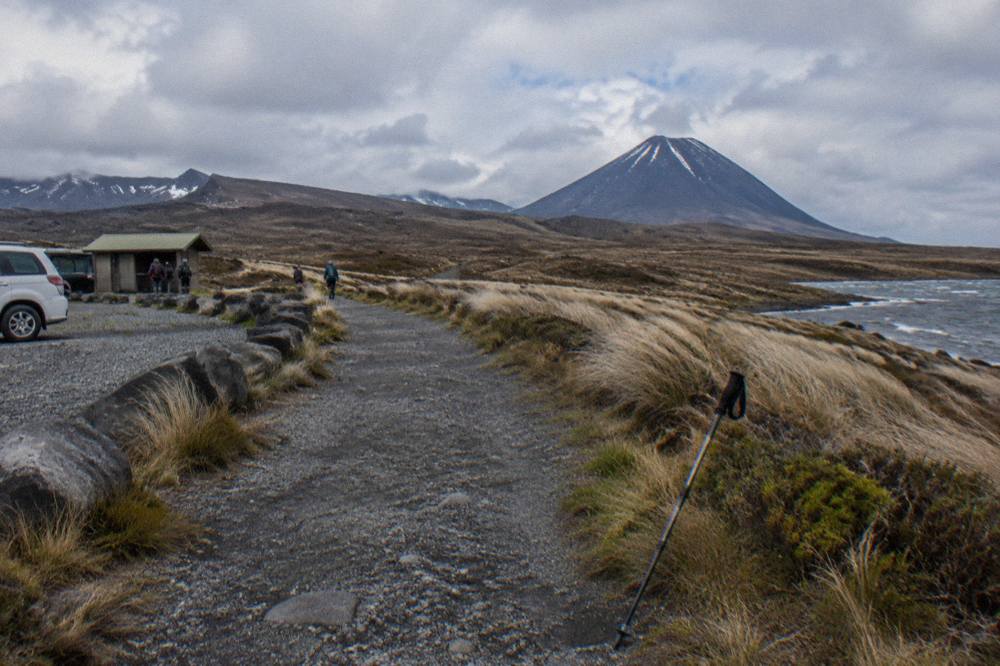
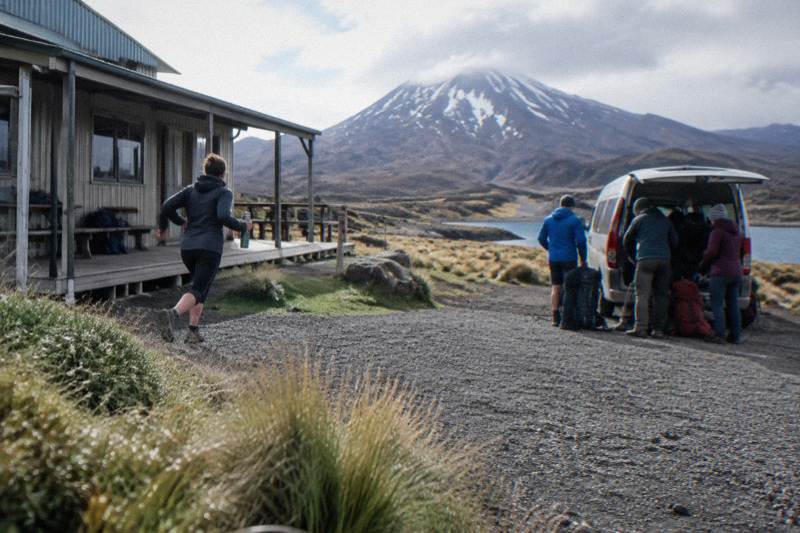
The Mangatepopo queue deserves its own paragraph because it shapes the first hour of the day. Manaaki Rangers greet visitors daily from November to April and share traditional stories; the area is sacred, so walkers are asked to stay on the tracks and respect the land. Queues form because most shuttles drop walkers at Mangatepopo in the same morning window, which means the start-area facilities take the heaviest load of the day. DOC's advice to treat a queue as a signal to walk on, with the next stop 20 minutes away, is the single most useful toilet tactic on the track: keep moving and use the next one.
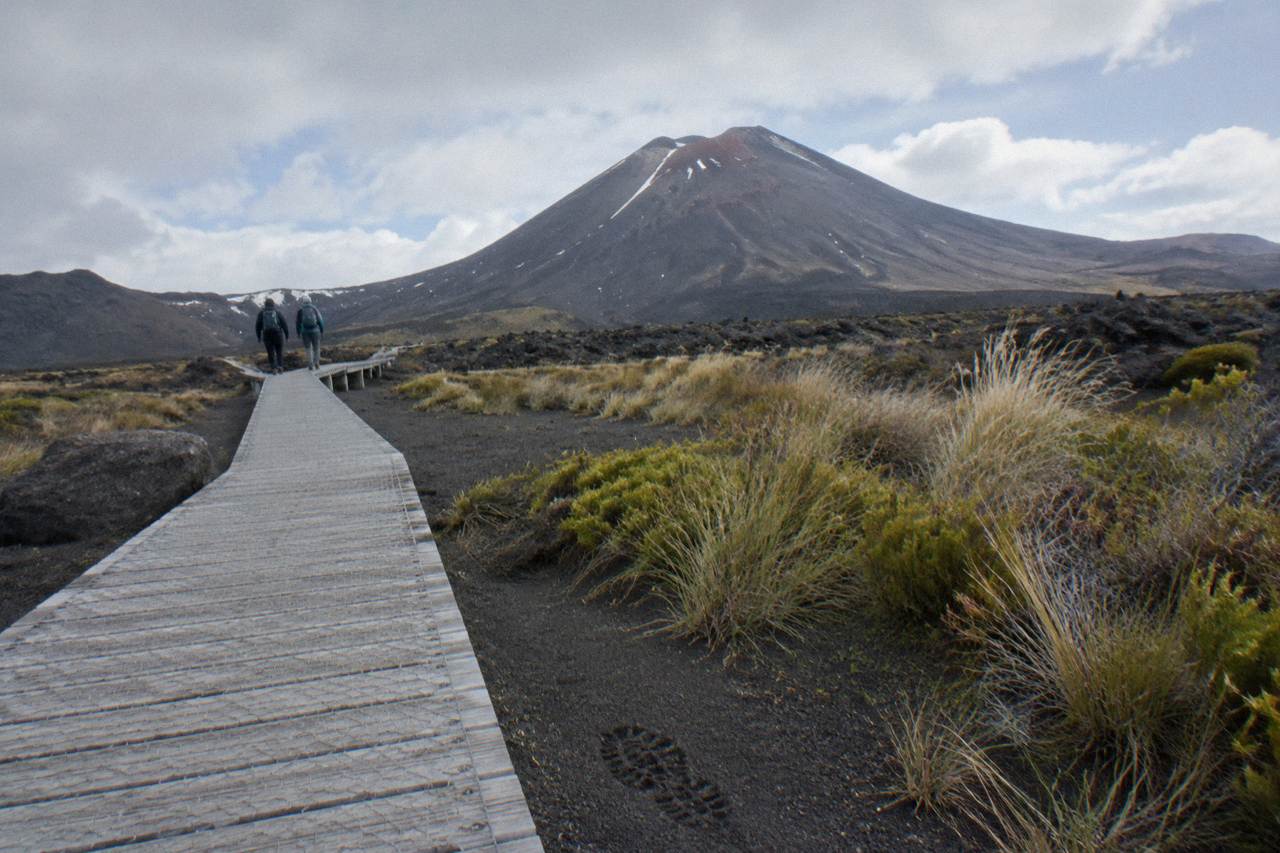
After the start, the intervals stretch across the track DOC describes in sequence: the boardwalk through Mangatepopo Valley, a steady climb of around 350 m up a staircase to the South Crater plateau, the ascent to Red Crater, the steep scree descent past the Emerald Lakes and Blue Lake, and the long zig-zag descent of the northern slopes with views over Lake Rotoaira and Lake Taupo before the forest reaches Ketetahi Road. Gaps between toilets will feel longest on the exposed high section, where the track is above the valley and the weather can turn quickly.
| Track fact | DOC figure | What it means for toilet planning |
|---|---|---|
| Distance | 20.2 km one way | A long day between ends of the track |
| Walking time, November to April | 7 to 8 hours | Toilets every 1 to 2 hours means several stops available |
| Walking time, May to October | 9 hours | Winter gaps run longer in daylight terms |
| Toilet spacing | Every 1 to 2 hours | Time intervals, not fixed distances |
| Mangatepopo queue | Next toilets 1 km, 20 minutes | Walk on rather than wait |
| Drinking water on track | None drinkable | Carry 2 to 3 litres |
How Do Toilet Stops Fit Into A Seven To Eight Hour Walk?
On a seven to eight hour summer walk, there are toilets every one to two hours along the track, and the first toilets after a Mangatepopo queue sit about 1 km, or 20 minutes, on; in winter the same intervals sit inside about nine hours of walking within nine to eleven hours of daylight.
Pacing is the hidden variable. DOC rates the fitness requirement as high and the gradient as steep and undulating, and 38 percent of tramping injuries come from slipping, a figure DOC uses to push sturdy boots and care on wet rock. A walker managing their water intake carefully, sipping 2 to 3 litres across the whole day rather than drinking a litre at each stop, will find the toilet intervals generous. A walker who drinks nothing for two hours and then gulps will find the same intervals tight, especially on the exposed middle section where there is no shelter at all.
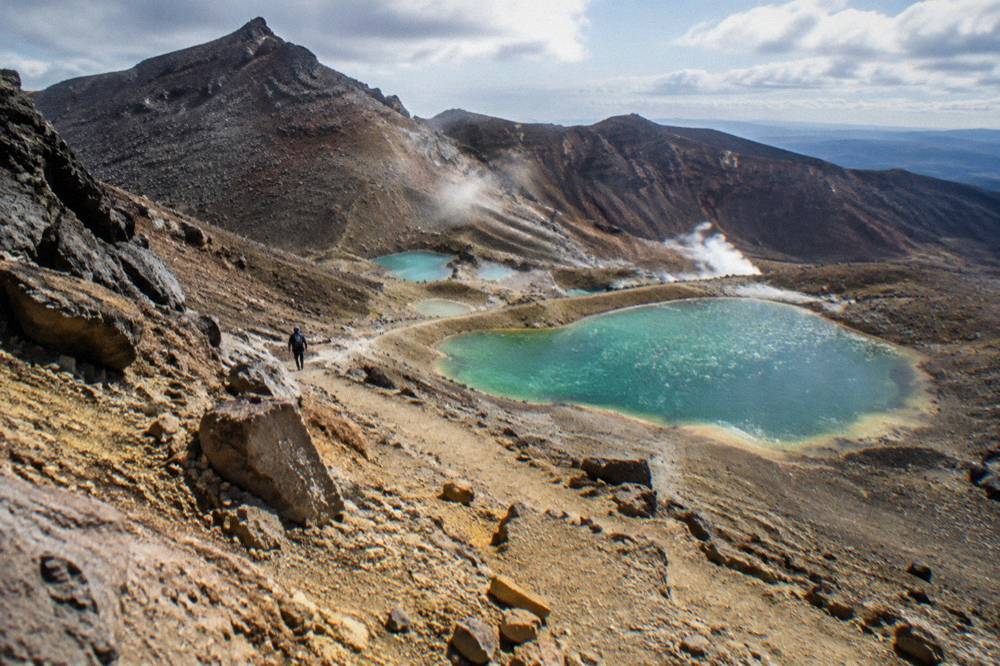
The hardest stretch for spacing is the climb from South Crater to Red Crater and the descent to the Emerald Lakes. Loose rock on Red Crater is what DOC calls a major slip hazard, and the many steps on the descent trouble weaker knees. Nobody should rush a hazardous section because of a toilet countdown, and the one-to-two-hour interval means the next stop is never more than a steady stretch of walking away. Fumaroles near the Emerald Lakes add a reason not to linger: DOC asks visitors not to approach steam vents.
The shuttle side of the day matters here too. Most visitors reach the track through a shuttle or a guided tour, and DOC is blunt that from Labour weekend in late October to 30 April a four-hour maximum applies at both road-end car parks, with no summer parking at Mangatepopo for Crossing walkers at all. A one-way park-and-ride flips the day: park at the Ketetahi end, ride to Mangatepopo, walk the track back to your own car. The Active Outdoor Adventures one-way shuttle with a private secure Ketetahi carpark works exactly that way, from $34 per person, rated 4.1 across 81 reviews on its booking page, with secure parking at the Ketetahi end. It is a one-way shuttle with no return leg, so the day ends at your own vehicle rather than at a pickup point.
For walkers who would rather not drive any part of the logistics, the round-trip alternative from National Park Village runs from the Park n Ride at 59 Findlay Street, with a morning pickup and an afternoon return from Ketetahi, from $42 per person.
How Does The Day Work With A Shuttle Or Guided Hike?
A shuttle day starts early at a pickup point or car park, drops everyone at Mangatepopo inside the same morning window, and collects walkers from Ketetahi in the afternoon. A guided hike keeps that same shape while adding a guide, group pacing and, on the Adrift Tongariro tours, supplied gear and round-trip transport.
The Adrift Tongariro premium guided Crossing hike is the fullest version. It runs 8 to 9 hours door to track and back, meets at the Adrift base at 53 Carroll Street in National Park Village, includes return transport, and is rated 4.6 across 241 reviews. It costs from $253 per person, takes walkers from age 12, caps groups at 60 and supplies crampons and ice axes for winter conditions plus a clothing and footwear allowance. Lunch is not included, so the food and water plan is the walker's own. Free cancellation applies up to 14 days before. On a guided day the group moves together, which means toilet stops become group stops: the guide's pacing decides when the intervals land, and a walker who needs a stop should say so rather than waiting for a scheduled pause that suits someone else.
The booking layer above all of this is simpler than people fear. DOC's track booking system, free and in place since October 2023, is needed to use a shuttle or guided walk service, is recommended for everyone, and carries no penalty for arriving without one. A guide or shuttle operator may make the booking on a walker's behalf, and rangers at the carpark ask to see the receipt. Manaaki Rangers greet visitors daily from November to April and share traditional stories.
Shuttle seasons are worth one clear sentence. DOC notes that shuttle buses generally do not operate during the winter months of May to late October, while guided trips include transport, so a winter walker's toilet-and-transport plan should lean toward a guided tour rather than assuming a shuttle seat exists.
What Should You Carry So Toilet Stops Are The Only Stops You Need?
DOC's gear guidance for the Crossing reads: 2 to 3 litres of water because track water is not drinkable, sturdy boots, waterproof layers, hat, gloves, sunscreen, and a layered clothing system of base layer, insulation and shell, with winter adding crampons, ice axe, helmet, avalanche equipment, a head torch and navigation tools. None of that replaces the track's toilets, but it removes every other reason to stop.
The water point is the one that intersects with toilet planning most directly. Two to three litres is a full day's supply on a high-exertion walk, and DOC's temperature rule explains why: on a calm day Red Crater is at least 10 °C colder than Taupo and 5 °C colder than the track start, and every 10 km/h of wind subtracts another 2 °C. Cold, windy, exposed sections suppress thirst exactly when hydration matters most, so steady small intakes beat big drinking stops, and the track's one-to-two-hour toilet interval absorbs that rhythm comfortably. Other pages covering the same trip are gathered on Tongariro Alpine Crossing Tours.
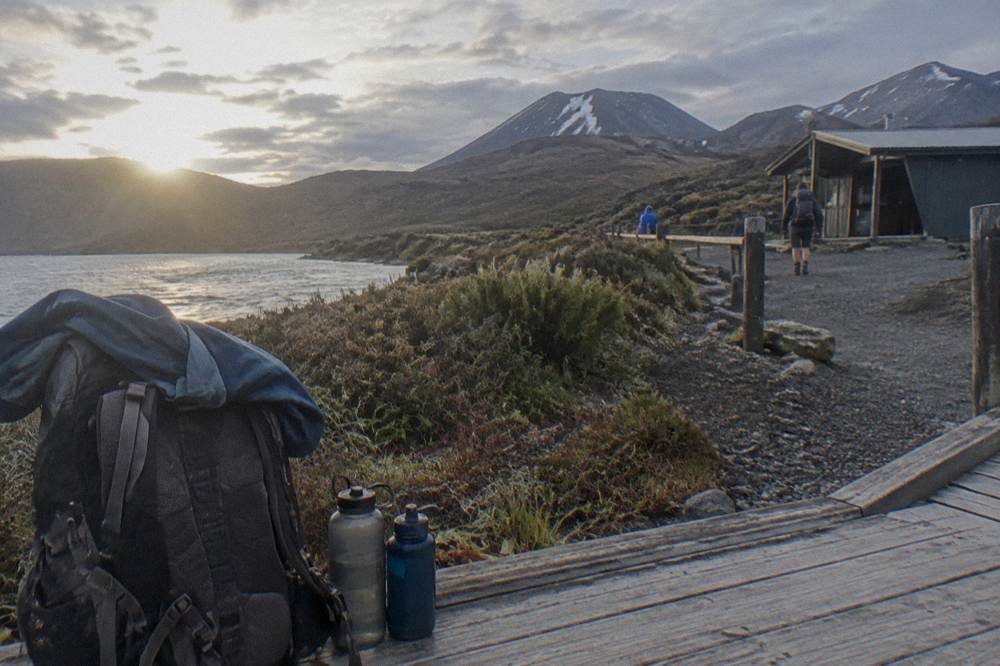
Toilet paper is a small item with a big rule attached. The late 2025 fires near the start of the track burned significant areas of Tongariro National Park, and the hapu Ngati Hikairo ki Tongariro placed a 10-year restorative rahui over the affected area. DOC's visitor guidance under that rahui is to stay on the tracks, keep off fire-affected ground, clean shoes and gear, and take rubbish home. Everything carried onto the maunga, including anything a toilet stop generates, leaves with the walker. That is not bureaucratic fussiness; the rahui, as the DOC explainer puts it, is not about keeping people out, it is about the mountain's recovery.
The winter gear list deserves respect rather than a shrug. From May to late October DOC classifies the track as an Expert route, expects ice between April and October, and treats crampons, an ice axe and a helmet as essential, along with competency in using them, an avalanche transceiver, probe and shovel for independent trips, a locator beacon, a head torch with spare batteries and map, compass or GPS. DOC's own winter advice is simple: go with a guide; the three Adrift Tongariro guided tours state crampons and ice axes supplied for winter conditions, plus a clothing and footwear allowance.
Are Toilets Available On Shorter Tongariro Walks?
The first 5.4 km of the Crossing is shared with the Soda Springs Walk, an easy two-hour return option that DOC explicitly offers to people without the fitness for the harder parts, and it sits inside the same toilet interval system from the Mangatepopo end, including the queue-and-walk-on dynamic at the start. DOC does not recommend the full Crossing for children under 10, which pushes families with younger kids toward this shorter option.
The Soda Springs fallback is genuinely useful for mixed groups. One partner can walk the full 20.2 km while the other takes the valley walk, both starting from the same morning shuttle drop-off, and the valley section carries the track's gentlest terrain, the boardwalk through Mangatepopo Valley and the early climbs only. DOC also names two alternatives for poor weather on the wider network, the Taranaki Falls Walking Track and the Tama Lakes Track, which sit in the same national park and suit a day when the Crossing's advisory flags the alpine section.
“This was a well organized car shuttle. Really appreciated hiking back to our car at the end with no fuss on how long or short our day was going to be.”
The age question ties the whole page together. DOC advises the track is not recommended for children under 10, and tour minimums sit above that on the guided side: the Adrift Tongariro premium hike and private Crossing both take walkers from 12. Among shuttles, Dempsey Buses excludes children under 6 on both its National Park Village and Ohakune services, and the National Park Shuttles one-way sets a minimum age of 8 with a group maximum of 37. A family weighing a first big walk should read those numbers together with the toilet spacing: a child's bladder does not respect a two-hour alpine interval, and the Soda Springs walk is the honest answer for the under-tens.
A reader planning that family day will find the practical detail spread across two companion pages, the guide to shuttles by departure town and the deep dive on how fit you need to be for the Crossing.
What Rules Apply Around Water And Rubbish On The Maunga?
The cultural request DOC prints is specific: Ngati Hikairo ki Tongariro ask visitors to respect the sanctity of the sacred mountains by not touching or entering any of the waterways, including the alpine lakes, and geothermal rules add that visitors should not approach the fumaroles near the Emerald Lakes. Rubbish, including everything a toilet stop produces, leaves the track with the walker under the 10-year restorative rahui placed after the late 2025 fires.
These mountains carry weight. The Crossing winds through maunga sacred to Ngati Hikairo ki Tongariro of Ngati Tuwharetoa, kaitiaki of the mountains, in what became New Zealand's oldest national park in 1894 and a dual World Heritage area, the first property inscribed under the revised cultural landscape criteria in 1993. The founding ancestor Ngatoroirangi ascended the mountains 30 generations ago and named Tongariro. Against that backdrop, the waterway request is not a swimming rule, it is a boundary around living water, and the Emerald Lakes and Blue Lake sit beside the track as places to look at, never to touch.
The volcanic layer is real too. The track traverses an active volcanic area, DOC says eruptions can occur at any time, the hazard zone is a 3 km radius around each of the three vents, and the most recent eruption was from Te Maari in 2012. None of this touches the toilet question directly, but it explains why the track's infrastructure, toilets included, is deliberately sparse and why DOC's line is to take everything out. There is no drones-without-permit exception culture up there either; the rules are the rules.
The weather advisory system rounds out the picture for anyone deciding whether the day goes ahead at all. In summer, a Not Recommended Today advisory is applied when the NIWA Red Crater forecast crosses defined thresholds, including sustained winds of 55 kph or more, gusts of 70 kph or more, or 10 mm of precipitation over six hours, and it is assessed each morning. Operators have agreed, as part of their concessions, not to operate when a Hazardous Weather Warning has been issued, so conditions allowing is the honest frame for any shuttle or guided booking. The sources to check before any Tongariro Alpine Crossing day are the DOC track page, the NIWA Red Crater forecast, the MetService mountain forecast and the avalanche forecast at avalanche.net.nz in winter.
Common Questions About Toilets On The Tongariro Crossing
Are There Toilets On The Tongariro Crossing?
Yes. The Department of Conservation places toilets roughly every one to two hours of walking along the 20.2 km route. If there is a queue at the Mangatepopo start toilets, the next ones are 1 km, about 20 minutes, along the track.
How Far Apart Are The Toilets On The Crossing?
DOC describes the spacing as every one to two hours of walking time rather than fixed distances. On steep sections an hour covers far less ground than in the valley, so plan by time, not kilometres.
Is There Drinking Water At The Toilets On The Track?
No. Track water is not drinkable, and DOC's gear list calls for 2 to 3 litres carried per person. The toilets and the water plan are separate: facilities exist for relief, not for refills.
Where Are The Toilets Near The Start Of The Tongariro Crossing?
DOC notes queues can form at the Mangatepopo toilets; the next toilets are about 1 km, or 20 minutes, up the track. DOC's tactic is to keep walking: the next toilets are 1 km, about 20 minutes, further on.
Do Children Manage The Toilet Spacing On The Crossing?
DOC does not recommend the full track for children under 10. The first 5.4 km is shared with the easy two-hour Soda Springs Walk return, which is the honest option for younger families.
Can I Rely On A Shuttle Or Guided Tour For Toilet Stops?
Plan around the track's own toilets, which DOC spaces every one to two hours. On a guided Adrift Tongariro day the group moves together, so raise a stop with the guide rather than waiting for a scheduled pause.