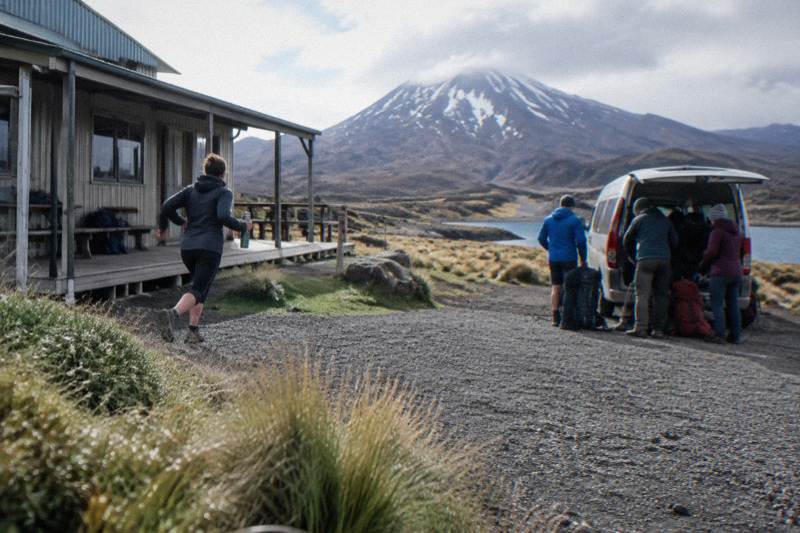
What Is The Best Time To Start The Tongariro Crossing?
Start time on the Tongariro Alpine Crossing is usually set by your shuttle or guided tour. Here is how the season, the walk length and winter daylight shape that early start.
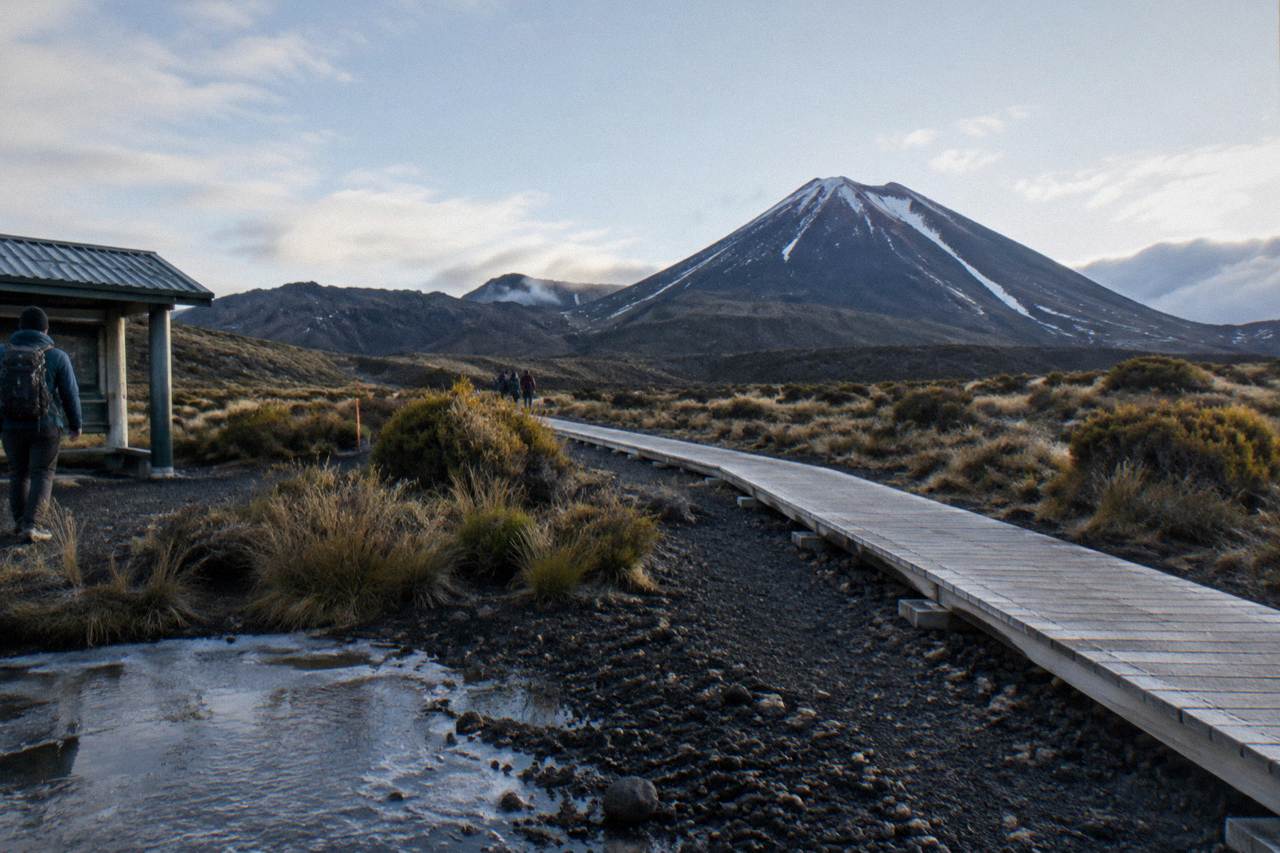
Start times on the Tongariro Crossing are set by the shuttle or guided walk rather than the walker; each departure time is on the booking page. DOC rates the track at 20.2 km one way, 7 to 8 hours of walking from November to April, and 9 hours from May to October, when winter daylight runs only 9 to 11 hours. An early start protects the margin.
Ask a room of people who have finished the walk and most will say the same thing: the day begins in the dark, or close to it, and that is deliberate. The Tongariro Alpine Crossing is not a short valley stroll. It climbs from 1120 m at Mangatepopo to Red Crater at 1886 m, then descends to about 760 m at Ketetahi Road, with an elevation change of plus and minus 1196 m. DOC grades the fitness requirement as high and the gradient as steep and undulating. That combination eats hours, and hours are the one thing a walker cannot buy more of on a winter day.
The practical answer for almost everyone is that the start time is chosen for you. Shuttles run early because they have to, and guided tours build their whole day around an early track entry. The Department of Conservation, which manages the track, puts it plainly on its Tongariro Alpine Crossing page: the best way to do the Crossing is by shuttle, and in summer there is no parking for Crossing walkers at Mangatepopo car park at all. From Labour weekend in late October to 30 April, a 4-hour maximum applies at the road ends, which rules out leaving a car all day.
That single parking rule is why the question of start time and the question of transport are really the same question. A walker who books a shuttle has a departure time. A walker who books a guided hike has a meeting time. A walker who drives to a Ketetahi park-and-ride has a shuttle seat and a walk back to their own car. In each case the day's first hour was decided when the booking was made, not on the morning itself.
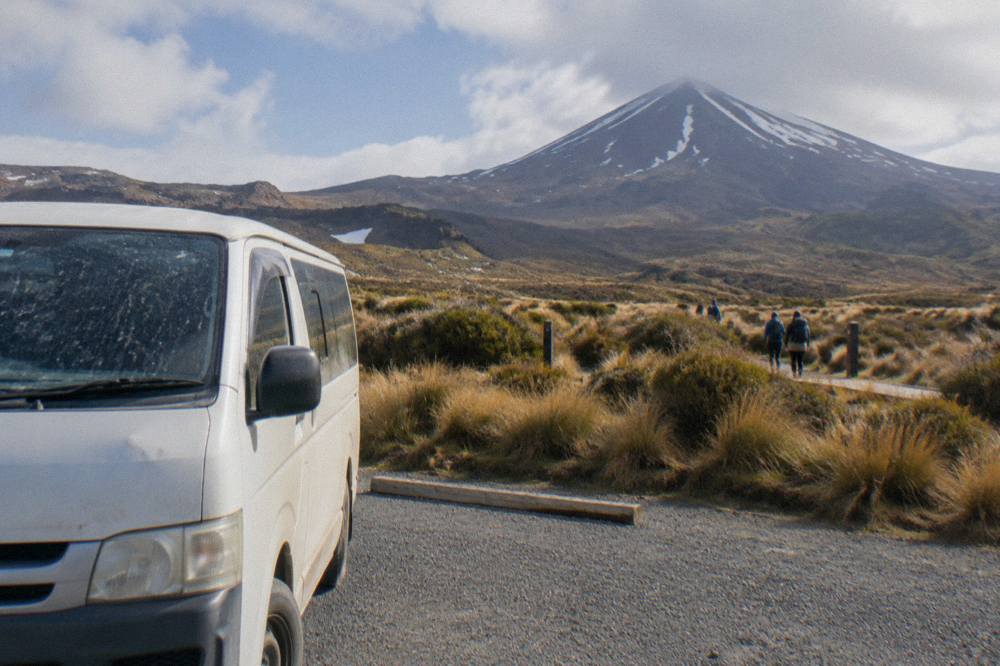
Why Does An Early Start Matter So Much On The Tongariro Crossing?
An early start matters because the walk takes most of a day: 7 to 8 hours in summer and 9 hours in winter. DOC advises 7 to 8 hours of walking in the November to April season and 9 hours from May to October, against 9 to 11 hours of winter daylight. Starting late removes the buffer for rest stops, queues, a slow descent, or a turn-back.
The numbers deserve a moment of honest arithmetic. In summer, 8 hours of walking plus a lunch stop, toilet stops that DOC says come every 1 to 2 hours, a queue at the Mangatepopo toilets, and a pause at the Emerald Lakes easily becomes a 9 or 10 hour day on the track. Winter is tighter still: DOC tells winter walkers to allow 9 hours and warns that there are between 9 and 11 hours of daylight, which is why its winter guidance says to always take a head torch. There is no slack in that budget for a leisurely start.
Weather is the second reason. The track's high point, Red Crater, sits in an alpine environment where DOC notes that on a calm day it is at least 10 °C colder than Taupo and 5 °C colder than the track start, and you subtract another 2 °C for every 10 km/h of wind. Walkers who start early pass the exposed sections, the South Crater plateau and the Red Crater ridge, with more of the day in hand.
There is also a safety net behind all of this. In the summer season DOC assesses conditions each morning and, when the Red Crater forecast crosses defined thresholds for wind, wind chill, rain rate or snow, it applies a Not Recommended Today advisory, with signage at the Mangatepopo Road end. Operators have agreed, as part of their concessions, not to operate when a Hazardous Weather Warning has been issued, so guided tours and shuttles run only when conditions allow. A party that started at dawn has options if the day turns; a party that started at midday has fewer.
Wondering whether the Dempsey Buses return shuttle from Ohakune is the right fit for your dates? It carries free cancellation up to 24 hours before, so an early-morning commitment stays flexible if your plans shift. Check availability on the booking page, and read more in the Ohakune shuttle comparison.
How Does The Season Change Your Tongariro Crossing Start?
The season changes everything about the start. From November to April the track is an intermediate tramping track with 7 to 8 hours of walking and summer shuttle operations; from May to late October it becomes an expert winter route needing 9 hours, crampons and an ice axe, and DOC says shuttle buses generally do not operate in winter while guided trips include transport.
Summer, in DOC's framing, runs roughly Labour weekend through to 30 April. The start time in summer is a logistics question: which shuttle, from which town, at which departure.
| Season | Track category | DOC walking time | Daylight note | Transport reality |
|---|---|---|---|---|
| November to April | Intermediate tramping track | 7 to 8 hours | Long days, but 4-hour parking maximum at road ends | Shuttle fleets operate; guided tours include transport |
| May to late October | Expert winter route | 9 hours | 9 to 11 hours of daylight; head torch advised | DOC says shuttle buses generally do not operate; guided trips include transport |
Winter is a different conversation entirely. DOC's winter guidance is unambiguous: expect ice on the track between April and October, carry crampons, an ice axe and a helmet, and have the competency to use them, plus avalanche gear for independent trips. The agency's own summary of who the winter track suits reads like a job description for an alpine trampler: someone who can navigate when cloud or snow hides the marker poles, rescue a companion in avalanche terrain, prevent a slide on ice, and survive worsening weather. For everyone else, DOC's winter advice is short: go with a guide.
That advice feeds directly into start time. A winter walker facing 9 hours of travel against 9 to 11 hours of daylight cannot negotiate with the clock. The three Adrift Tongariro guided tours run in summer and winter and include return transport from the Adrift base at 53 Carroll Street in National Park Village, with crampons and ice axes supplied for winter conditions if required. The guided day is built around an early start because it has to be.
The late-2025 fires near the start of the track add one more seasonal note. Ngati Hikairo ki Tongariro placed a 10-year restorative rahui over the fire-affected area, and DOC passes on the request plainly: stay on the track, clean your shoes and gear, and take rubbish home. A spokesperson for the hapu described the rahui as not about keeping people out. It changes nothing about start time, but it sets the tone for how the day should be walked.
Who Actually Sets Your Start Time On A Tongariro Crossing Tour?
Your operator sets your start time, not you. A shuttle departure, a guided-tour meeting time or a park-and-ride seat fixes the first hour of the day. Round-trip shuttles collect in the morning and return from Ketetahi in the afternoon, while the one-way park-and-ride works in reverse: you park at the Ketetahi end, ride to Mangatepopo, and walk back to your own car.
Consider what each format does to the morning. The Tongariro Crossing Shuttles round trip from National Park Village departs from the Park n Ride at 59 Findlay Street and returns from Ketetahi in the afternoon, an 8-hour booked day from $42 per person, rated 4.7 across 886 reviews, which makes it the most reviewed tour here. The Dempsey Buses round trip from National Park Village collects from village pickup points on the same morning-out, afternoon-back pattern, from $51 per person. Neither is guided, and neither pretends to be: a shuttle is a ride, and the walk between the two ends is yours.
The one-way Ketetahi park-and-ride flips the logic. Six of the products available work this way, including the Ruapehu Scenic Shuttles park-and-ride from $38 per person, rated 4.8 across 665 reviews, and the Owhango Adventures park-and-ride at the same from-price. You leave your car near the Ketetahi end, ride backwards to Mangatepopo, then walk the Crossing in its official direction, Mangatepopo to Ketetahi, finishing at your own vehicle. The cheapest per-person seat here is the Active Outdoor Adventures one-way shuttle with a secure Ketetahi car park, from $34. The trade-off is simple: no return transport at all, and your finish time, not a pickup schedule, decides when the day ends.
Guided tours set the morning differently again. The Adrift Tongariro premium guided Crossing hike, from $253 per person and rated 4.6 across 241 reviews, meets at the Adrift base in National Park Village for an 8 to 9 hour booked day, with a guide, return transport included, and a group of up to 60. The Adrift half-day guided walk, from $197, is a 4-hour guided walk that is not the full Crossing. If a reader wants the fuller picture of what a guide adds, the guided Crossing overview covers it in depth, and the question of whether a guide is needed at all is weighed in can you hike Tongariro without a guide.
One detail worth knowing: whatever you book, the free DOC track booking still applies. Introduced in October 2023, it is recommended for every walker and required to use a shuttle or guided service, one booking per group, shown to rangers at the carpark. Your guide or shuttle operator may make the booking for you, which is one less thing for an early morning.
Should You Start From Mangatepopo Or Ketetahi On The Tongariro Crossing?
DOC's direction for the track is Mangatepopo Valley to Ketetahi Road, and every shuttle and guided product here follows it. The real choice is not direction but where you leave your car or meet your ride: Mangatepopo starts are shuttle-only in summer, because DOC says there is no summer parking at that car park for Crossing walkers.
The one-way park-and-ride products exist precisely because of that rule. Walkers who want their own car at the finish park near the Ketetahi end and take the shuttle to the start, which is why the likes of the National Park Shuttles one-way from a private Ketetahi car park, from $34.40 per person with a group maximum of 37, and the Backyard Tours one-way with secure parking, from $44.72, all structure the morning the same way. The vehicle sits at the bottom of the mountain while you climb it, and the walk ends at the door.
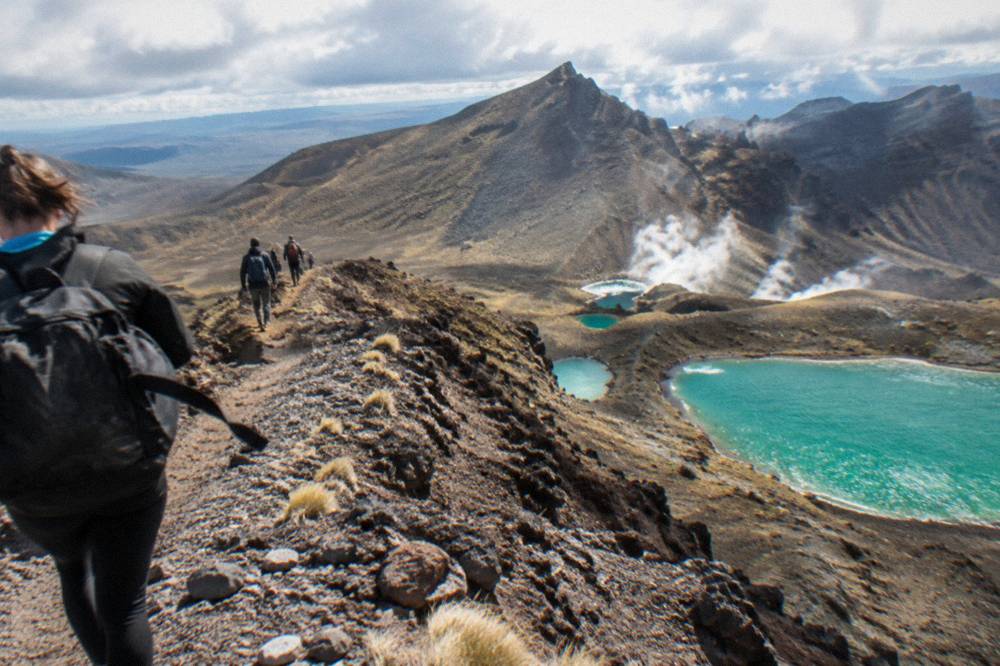
Starting at Mangatepopo, wherever you slept the night before, also means the day unfolds in the right order. The first 5.4 km are shared with the easy Soda Springs Walk, a 2-hour return option DOC flags for people without the fitness for the harder parts, before the climb of roughly 350 m up the staircase to South Crater and on to Red Crater. The descent past the Emerald Lakes and Blue Lake to the Ketetahi Road end is long, and DOC notes the loose rock on Red Crater is a major slip hazard, with many steps on the way down that trouble weaker knees. A tired walker descending in fading light is the scenario every early start is designed to avoid.
What Happens If You Start The Tongariro Crossing Too Late?
A late start compresses everything that makes the Crossing safe and enjoyable. The 7 to 8 hour summer walk or 9 hour winter route collides with afternoon weather deterioration, crowding on the Devil's Staircase and Red Crater, and, in winter, outright darkness, which is why DOC tells winter walkers to always carry a head torch.
The arithmetic is unforgiving in the colder half of the year. Nine hours of walking against 9 to 11 hours of daylight leaves a margin measured in minutes. DOC's winter framing is blunt about who belongs on the track in those conditions, people with alpine skills, equipment and experience, and its advice for everyone else is to go with a guide, whose transport and early meeting time are built into the product. In summer the stakes are lower but the same logic applies: a midday arrival at Red Crater means the exposed sections are walked in the warmest, most crowded, and statistically most changeable part of the day.
Late starts also collide with the return leg. Round-trip shuttles plan an afternoon pickup from Ketetahi, and a walker who started hours behind the fleet can find the day's logistics turning into a long wait or an unplanned finish. The 8 to 10 hour products from further afield, such as the Tongariro Expeditions Crossing shuttle with options from Taupo, Turangi and Ketetahi, from $42 per person for an 8 to 10 hour booked day, or its Taupo return shuttle, a 10-hour round trip from $80.27, are scheduled around walkers who began when the operator said to begin.
Is A Later Start Ever The Smarter Tongariro Choice?
Occasionally, yes. Walkers using a one-way Ketetahi park-and-ride finish at their own car, so no pickup waits on them, and a party that walks faster than the DOC estimate of 7 to 8 hours may prefer to let the morning crowds clear. But the later start trades comfort for weather margin, and in winter it is simply not available.
The park-and-ride crowd has the most freedom here. Because the Ruapehu Scenic, Owhango Adventures, Active Outdoor Adventures, National Park Shuttles, Backyard Tours and Tongariro Crossing Car Park one-way products include no return transport, the day ends whenever the walker reaches the Ketetahi end. Even then, the shuttles that carry you from the car park to Mangatepopo run to their own morning schedule, so "later" is relative: the seat time still sets the earliest possible start, and everything after that is yours to spend.
For town-based walkers the calculus is different. Ohakune sits 48 km from the track by DOC's distance figures, and the Dempsey Buses return shuttle from Ohakune, from $62 per person and rated 4.8 across 19 reviews, is a morning start with an afternoon return from Ketetahi, a full-day round trip with a minimum age of 6 and free cancellation up to 24 hours in advance. Turangi, 36.7 km away, has the Backyard Tours round-trip transfer from $51.60, rated 4.9 across 76 reviews, with free cancellation included. Taupo, 86.5 km out, is served by the Tongariro Expeditions options. In every case the operator's timetable, not the walker's preference, draws the line on how late is late.
There is one honest exception worth naming: the guided hikes start from National Park Village, not from Taupo. A reader based in Taupo who wants a guide can book the Adrift Tongariro premium guided day out of National Park Village and add its paid transfer from Taupo (minimum 2 travellers), or make the connection to the village themselves.
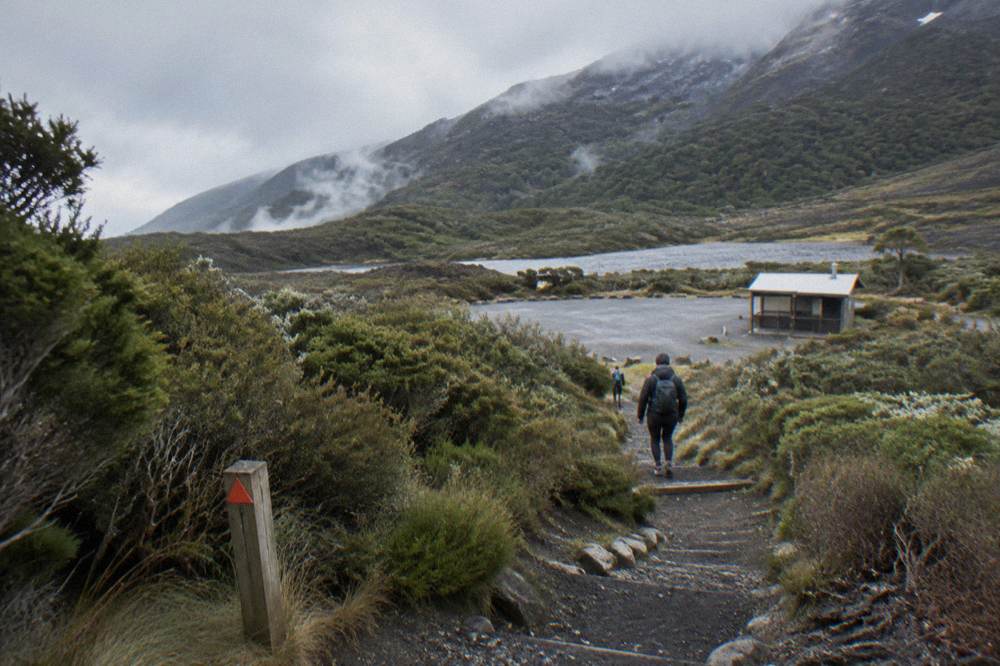
Before locking anything in, it is worth reading how weather shapes the whole decision in the Crossing weather and tours guide and how the booking system works in do I need to book the Tongariro Crossing. The site behind this article, Tongariro Alpine Crossing Tours, walks through both. Winter walkers should also check the avalanche forecast at avalanche.net.nz before any independent trip.
Common Questions About Starting The Tongariro Crossing
What Is The Best Time To Start The Tongariro Crossing?
Early, and in practice your shuttle or guided tour sets the hour. DOC rates the walk at 7 to 8 hours from November to April and 9 hours from May to October, against 9 to 11 hours of winter daylight. An early start preserves the margin for stops, weather changes and the long descent to Ketetahi Road.
Why Can I Not Just Park At Mangatepopo And Start Whenever I Like?
DOC says there is no parking for Crossing walkers at Mangatepopo car park in summer, and from Labour weekend in late October to 30 April a 4-hour maximum applies at the road ends.
Do Shuttles Run All Year?
No. DOC says shuttle buses generally do not operate during winter, from May to late October, while guided trips include transport. The Adrift Tongariro guided tours run in summer and winter and include return transport from the operator's National Park Village base, with crampons and ice axes supplied for winter conditions if required.
Does A One-Way Park-And-Ride Give Me A Later Start?
Only partially. You park near the Ketetahi end, ride to Mangatepopo, and walk back to your own car, so no return pickup waits on you at the finish. But the shuttle leg to the start still runs to the operator's morning schedule, so your earliest start is fixed by your seat time.
What Happens If The Weather Turns On The Day?
In the summer season DOC assesses the Red Crater forecast each morning and applies a Not Recommended Today advisory when thresholds for wind, wind chill, rain or snow are crossed, with signage at the Mangatepopo Road end. Operators have agreed, as part of their concessions, not to operate when a Hazardous Weather Warning has been issued, so tours and shuttles run conditions allowing.
Is The Start Time Different For The Half-Day Guided Walk?
The Adrift Tongariro half-day guided walk is a 4-hour guided walk, not the full Crossing, so the day is shorter and the pressure of a 7 to 9 hour track budget does not apply. It still meets at the Adrift base in National Park Village and includes return transport.