Can You Hike Tongariro Without A Guide?
Yes, the Tongariro Alpine Crossing can be walked without a guide in summer. Here is what DOC requires, what a shuttle costs, and when a guided hike is the wiser call.
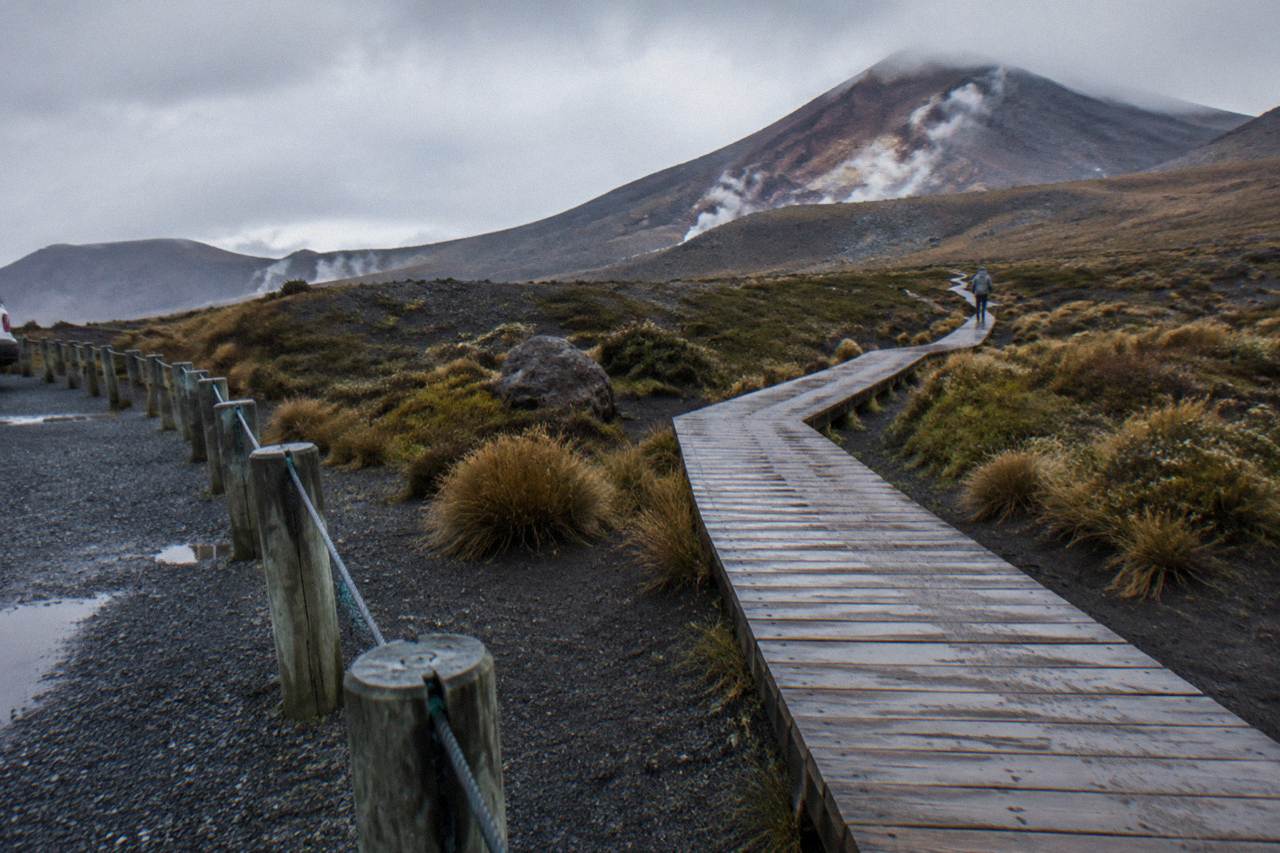
Yes. In summer conditions the Department of Conservation classes the Tongariro Alpine Crossing as an intermediate tramping track, marked with poles and boardwalks through the valley sections, and no law requires a guide. The walk covers 20.2 km one way from Mangatepopo to Ketetahi Road, takes 7 to 8 hours from November to April, and a free DOC booking plus a shuttle or a legal park gets you there independently. Before you set out, the guide to Tongariro Crossing booking requirements explains which dates need a reservation and how shuttle bookings work.
There is no guide requirement anywhere in the DOC rules for this track. What DOC does require is a booking through its free system if you want to use a shuttle or a guided walk service, and even independent walkers are encouraged to book, at no cost, with no penalty for turning up without one. The booking itself is a visitor-management tool introduced in October 2023, not a permit that tests your competence. Competence is left to you.
That distinction matters. Walking the Crossing alone in summer is a mainstream, ordinary choice, and the track on a fine November day holds a steady procession of independent walkers between Mangatepopo Valley and the Ketetahi Road end. In winter the same track is reclassified by DOC as an Expert route, snow-covered and very icy in sections, and the department's own advice shortens to three words: go with a guide. So the honest answer to the question is seasonal, and this page works through both halves of it.
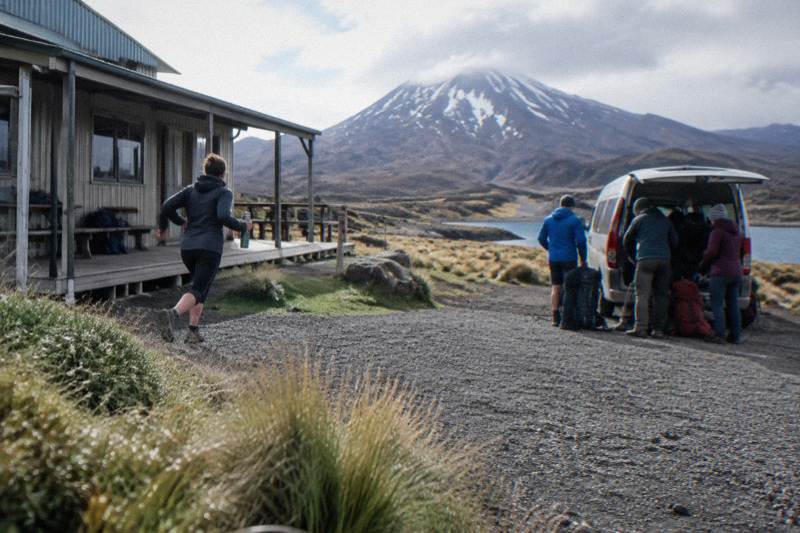
The practical shape of an independent day is simple. You sleep near the mountain, take an early start, ride a shuttle to Mangatepopo, walk north over South Crater, Red Crater at 1886 m and the Emerald Lakes, and descend to Ketetahi Road, where transport collects you or your own car waits. The choices that actually decide how the day goes are the season, the forecast, and whether you ride a round-trip shuttle or use a one-way park-and-ride at the Ketetahi end.
How Hard Is The Crossing Without A Guide?
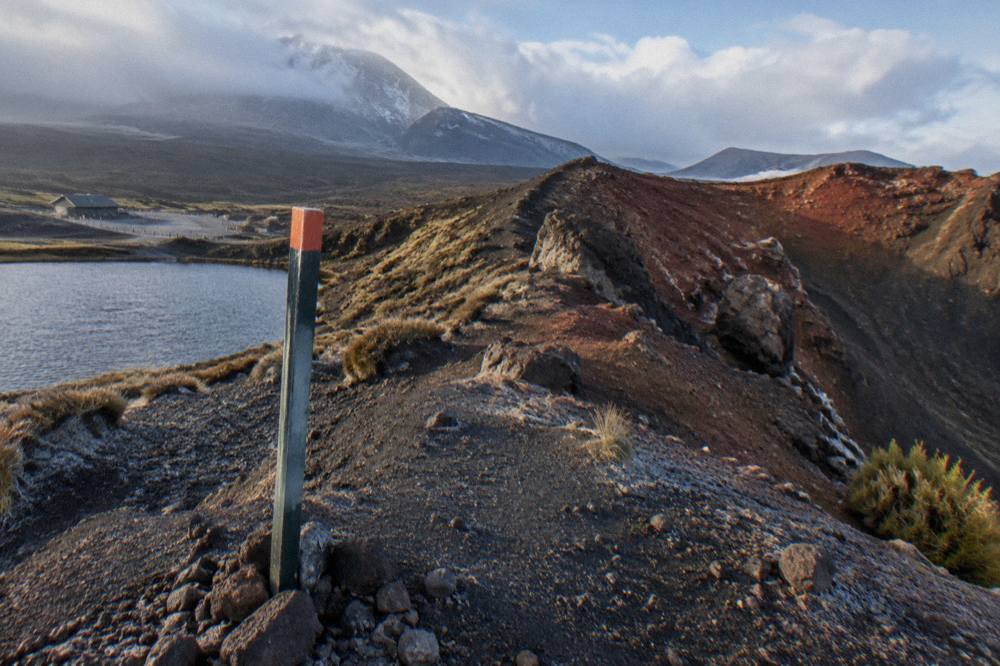
DOC rates the fitness requirement as High, the gradient as steep and undulating, and the track as unsuitable for children under 10. The full 20.2 km climbs from 1120 m at Mangatepopo to Red Crater at 1886 m, with a total elevation change of plus and minus 1196 m, and the loose scree on Red Crater is named by DOC as a major slip hazard.
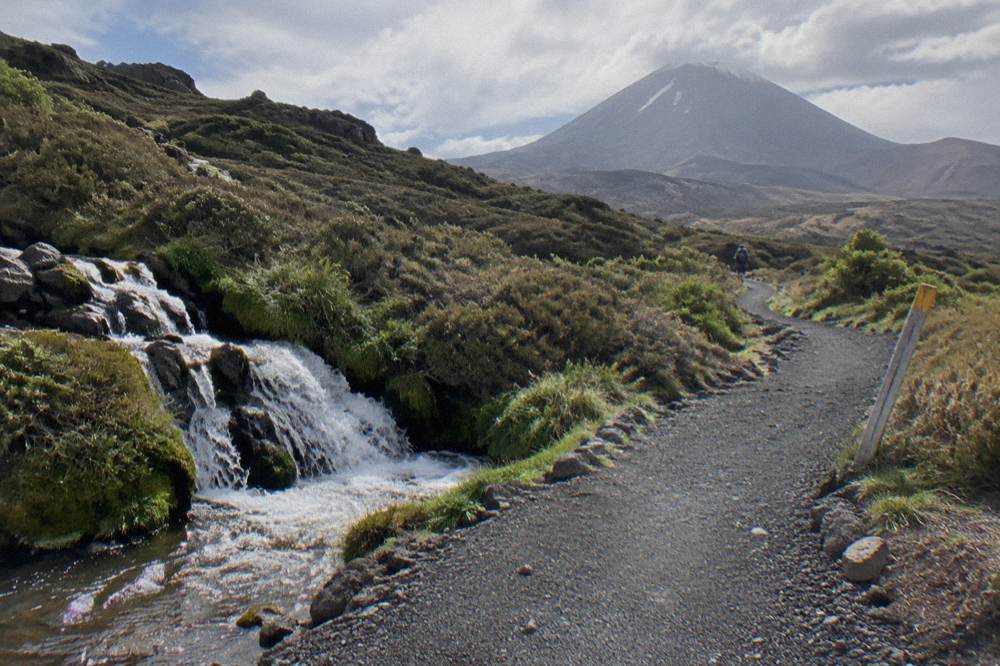
The climb sequence explains where the effort sits. A boardwalk carries you up Mangatepopo Valley, then a staircase lifts you roughly 350 m to the South Crater plateau, which feels deceptively flat before the final ascent to Red Crater. The far side is the part independent walkers underestimate: a steep scree descent to the Emerald Lakes, then a long zig-zag drop down the northern slopes, and DOC warns that the many steps on this descent trouble weaker knees. Poles help, and so does leaving enough daylight.
There is a built-in escape hatch. DOC notes the first 5.4 km of the Crossing is shared with the Soda Springs Walk, an easy two-hour return option for people who discover mid-valley that the harder sections are beyond them on the day. Turning back at Soda Springs is a legitimate outcome, not a failure, and it is far better judged there than at the base of the staircase. Toilets sit every one to two hours along the track, and if a queue forms at Mangatepopo the next toilets are 1 km, about 20 minutes, further on.
Water is the quiet difficulty. Track water is not drinkable, and DOC's gear guidance for this hike specifies carrying 2 to 3 litres per person. There is nowhere to refill safely, the lakes and streams are closed to drinking and to touching for cultural and geothermal reasons alike, and the physical effort plus sun exposure on the crater plateau drains more than most people expect. Independent walkers carry everything a guide would hand out, and that starts with water.
What Does DOC Say About Winter And Skill?
From May to late October the Crossing becomes an Expert route under snow and ice, DOC allows 9 hours against 9 to 11 hours of daylight, and the department's stated advice is to go with a guide. Crampons, an ice axe and a helmet are essential, as is proven competency using them, and independent winter walkers should also carry avalanche rescue gear. In winter the Crossing is an alpine environment, and the equipment and skills above are requirements for anyone on the track without a guide.
The skill list DOC publishes for winter is blunt. You need to find your way when cloud or snow hides the marker poles, know where avalanche terrain begins, be able to rescue someone caught in a slide, prevent a slide on ice, and survive deteriorating weather with sub-zero clothing. No advisory system cushions you either: DOC issues no hazardous weather advisories from May to October, so reading the forecast yourself, on the NIWA Red Crater page, the MetService mountain forecast and avalanche.net.nz, is part of the job description. A head torch is non-negotiable because daylight runs out fast.
On a calm day, DOC says, Red Crater is at least 10 °C colder than Taupo and 5 °C colder than the track start, and you subtract another 2 °C for every 10 km/h of wind. A pleasant autumn town morning can mean a summit ridge near freezing with a wind chill far below it, and 38 percent of tramping injuries in New Zealand come from slipping. Ice on the track should be expected anywhere from April to October.
Transport also narrows in winter. DOC states that shuttle buses generally do not operate during winter, while guided trips include transport, which quietly stacks the practical case toward a guided day once the snow arrives. Adrift Tongariro runs the three guided tours on this page, including its premium guided Crossing hike from $253 per person, rated 4.6 across 241 reviews, running 8 to 9 hours door to trail and back with return transport included, crampons and ice axes supplied for winter conditions, and a group of up to 60. Winter conditions allowing, that is the shape of a guided alternative.
If a full guided day is more commitment than you want, the same operator runs a half-day guided walk from $197 per person, rated 4.7 across 27 reviews, which reaches part of the mountain without the full Crossing. Neither replaces the independent walk, they just cover the seasons and confidence levels where going alone stops being sensible. The boundary is not courage, it is the DOC track category changing from Intermediate to Expert.
How Do Shuttles Work For Independent Walkers?
A shuttle is how nearly every independent walker reaches the track, and it is transport only, never guided. Two formats exist: round-trip shuttles that pick you up in a town and return you from Ketetahi, and one-way park-and-rides where you leave your car at the Ketetahi end, ride to Mangatepopo, and walk back to your own vehicle. Both are booked per person, with free cancellation windows stated on each booking page.
Round-trip service is the simplest version of an independent day. The Tongariro Crossing Shuttles round-trip from National Park Village costs from $42 per person, rates 4.7 across 886 reviews, the most reviewed tour here, and cancels free up to 24 hours before. You can check availability on the operator's page and read the terms there. Dempsey Buses runs a comparable round trip from pickup points in National Park Village from $51 per person, rated 4.8 across 72 reviews, with a minimum age of 6 on that service.
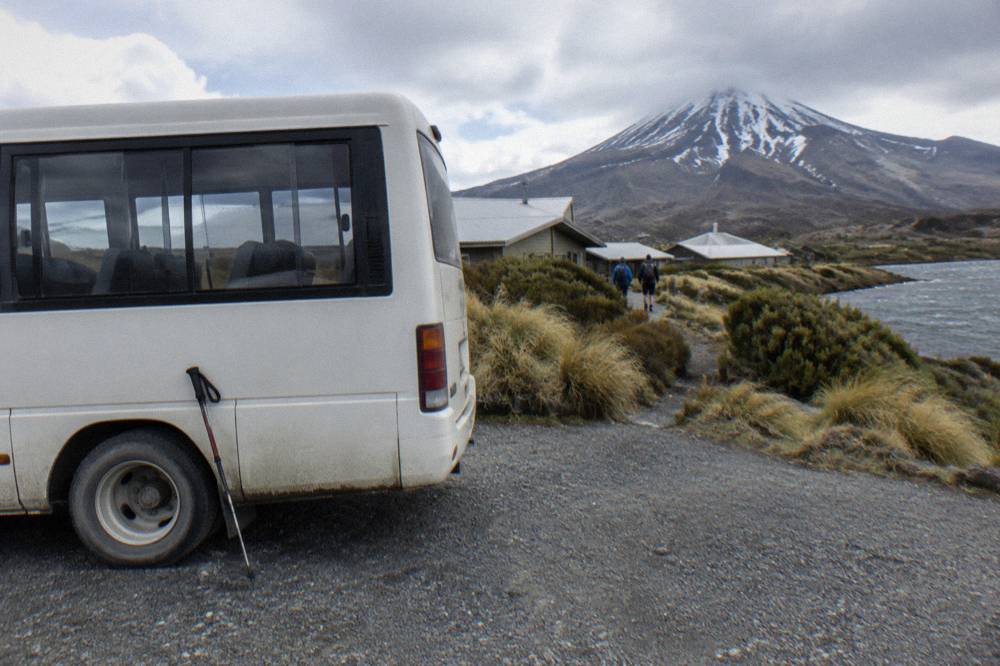
The park-and-ride format inverts the day. Ruapehu Scenic Shuttles runs the Ketetahi park-and-ride from $38 per person, rated 4.8 across 665 reviews: you park at the Ketetahi Road end, ride to Mangatepopo, and the walk finishes at your own car, with no return leg needed or offered. Owhango Adventures runs the same format from $38, Active Outdoor Adventures from $34 with a secure Ketetahi car park, and National Park Shuttles from $34.40 with a group cap of 37 and a minimum age of 8. Each states free cancellation on its booking page.
The two formats suit different plans. Round trips work if you are staying in a village without a car, or if you simply prefer not to think about a vehicle at all. Park-and-rides work if you value the freedom of finishing at your own car with no waiting for a collection, and the secure-parking variants at the Ketetahi end answer the worry about leaving a loaded vehicle roadside. No shuttle here includes a guide, and most do not list food or gear (the Backyard Tours Turangi round trip adds walking poles and a cold drink at the end), so pack your own, and note DOC's rule that the free track booking is needed to use a shuttle service. The car-park-or-shuttle trade-off gets a fuller treatment in the car park versus shuttle guide.
| Shuttle format | Example tour | From price (per person) | Rating and reviews | Return transport |
|---|---|---|---|---|
| Round trip, National Park Village | Tongariro Crossing Shuttles round-trip | $42 | 4.7 across 886 reviews | Included, from Ketetahi |
| Round trip, pickup points in National Park Village | Dempsey Buses round-trip | $51 | 4.8 across 72 reviews | Included, from Ketetahi |
| One-way park-and-ride, Ketetahi | Ruapehu Scenic Shuttles park-and-ride | $38 | 4.8 across 665 reviews | Walk back to your own car |
| One-way with secure car park, Ketetahi | Active Outdoor Adventures park-and-ride | $34 | 4.1 across 81 reviews | Walk back to your own car |
Further afield, Tongariro Expeditions runs Crossing shuttle options from Taupo, Turangi and the Ketetahi end from $42 per person, rated 4.7 across 429 reviews, and a Taupo return shuttle from $80.27 with a group cap of 24. Backyard Tours covers Turangi round trips from $51.60, rated 4.9 across 76 reviews, and Dempsey Buses serves Ohakune from $62. By DOC's distances the track sits 86.5 km from Taupo, 36.7 km from Turangi, 48 km from Ohakune and 13.5 km from National Park, so village bases shorten the day considerably. Every one of these is transport, and the walking, the route-finding and the timing stay yours. If you're still weighing whether a single long day suits you better than an overnight loop, the guide to choosing between the Northern Circuit and the Alpine Crossing lays out the tradeoffs side by side.
What Does The Free Booking System Actually Require?
The DOC track booking is free, takes minutes online, and is required only if you use a shuttle or a guided walk service. Independent walkers arriving under their own steam are not penalised for skipping it, but DOC recommends it for everyone, and the receipt, digital or paper, is shown to rangers at the car park. One booking covers one group.
“Fantastic day! We had stunning weather for the crossing, incredible experience. The shuttle was brilliant and made the whole day run smoothly, thank you!”
Because a booking is a condition of boarding any shuttle, independent walkers using transport effectively cannot skip it, and in practice the shuttle operator or guide may make the booking for you. Rangers from the Manaaki programme greet visitors daily from November to April, share traditional stories, and a booking receipt is shown to rangers at the car park.
Parking is where independent plans most often break. From Labour weekend in late October to 30 April, a 4-hour maximum applies at both road ends, which is far shorter than the 7 to 8 hours the walk takes, and DOC states plainly that in summer there is no parking for Crossing walkers at Mangatepopo car park at all, only a private car park near Ketetahi. Parking on State Highway sides is not recommended. The department's own bottom line is that the best way to reach the Crossing is by shuttle, which is why the independent day and the shuttle are effectively the same plan. The full booking mechanics are covered in the guide to booking the Crossing.
What Should An Unguided Walker Carry?
DOC's guidance for this hike is specific: 2 to 3 litres of water because track water is not drinkable, sturdy boots, waterproof jacket and pants, a base layer, insulation and shell, hat, gloves and sunscreen. Winter adds crampons, ice axe, helmet, an avalanche transceiver, probe and shovel, a distress beacon, head torch with spare batteries, and map, compass or GPS. An independent walker carries what a guide would otherwise supply and manage.
The clothing list reads as overkill right up until the Red Crater temperature rule bites. Layers exist so you can shed them on the climb and seal them on the ridge, and gloves and a hat belong in the pack even on a warm valley morning. Footwear deserves its own mention: sneakers have ended more Crossing days early than any storm, and the scree and stepped descent punish soft soles. The can you wear sneakers question gets its own answer elsewhere on this site if you are weighing it.
Two cultural and safety rules apply regardless of guidance. Ngati Hikairo ki Tongariro, kaitiaki of these sacred mountains, ask visitors not to touch or enter any of the waterways including the alpine lakes, and the geothermal steam vents near the Emerald Lakes are not to be approached. The fires of late 2025 left a 10-year restorative rahui over country near the start, which DOC frames as not about keeping people out: walkers are asked to stay on the track, clean their shoes and gear, and carry rubbish home. None of that costs effort, and all of it is part of walking here respectfully.
Guided walkers get some of this handled. On the Adrift Tongariro guided tours, crampons and ice axes are supplied for winter conditions if required, and a clothing and footwear allowance is included, though lunch is not, so bring your own. Shuttles transport only. Knowing which parts of the burden are yours is the whole skill of planning an independent Crossing, and the gear question is the one that most reliably separates a good day from a grim one. A fuller packing rundown sits in the what to bring guide.
Guided Or Independent: Which Suits You?
Walk independently if you are confident in summer conditions, reasonably fit, equipped for alpine weather, and happy to manage your own timing and transport. Choose a guide if you are walking between May and October, want winter gear and alpine judgement supplied, prefer not to find your own way, or would rather pay from $253 per person for the premium guided hike than carry the risk yourself. Neither choice is the better one in the abstract.
The money comparison is honest and simple. A round-trip shuttle seat from National Park Village runs from $42 per person, a one-way park-and-ride from $34, and the premium guided hike from $253, so the guided premium costs roughly six times the shuttle seat, and buys gear handling, alpine leadership and a group of up to 60 rather than solitude. The private guided Crossing is from $774.01, with the price basis on the booking page, and is non-refundable, while the premium and half-day guided tours cancel free up to 14 days ahead. Reading the cancellation terms before booking matters more here than on most day trips, because mountain weather moves plans.
Weather governs both paths equally, in one direction only. Guided operators and shuttles run when DOC's advisory system and the forecast allow, conditions permitting, and no operator can promise a clear day or even a walk that goes ahead. The summer advisory, assessed each morning against the NIWA Red Crater forecast, closes operations on days whose triggers include 55 kph sustained wind or 10 mm of rain over six hours, and signage at the Mangatepopo Road end carries the call. The volcanic setting is managed the same way: the track crosses an active volcanic area where eruptions are unlikely but possible, most recently from Te Maari in 2012, and GeoNet's alert levels drive any track closures. Checking the DOC Tongariro Alpine Crossing page before you travel, and the avalanche forecast outside summer, is part of the independent walker's job.
Walk the Crossing independently but let a specialist handle a longer trip around it: a private transfer from Auckland to the Tongariro area exists from $338 with the Crossing shuttle excluded and the walk self-guided, and a private three-day Auckland tour from $3,150.50 includes the Crossing as one self-guided leg among Waitomo, Huka Falls and Lake Taupo stops. Those are transfers and tours, not guided hikes, so they change the logistics question, not the guiding question. For most readers the real decision sits much closer to the mountain, and it is the shuttle seat versus the guided day. Whichever way you settle the shuttle-versus-guided question, the guide to every toilet stop on the Tongariro Alpine Crossing helps you pace the day so a long stretch without facilities never catches you off guard.
If mountains and culture are what drew you, the surrounding park rewards an extra day regardless of how you walk the Crossing. The track itself passes through New Zealand's oldest national park, created in 1894, a dual World Heritage area whose mountains are sacred to Ngati Hikairo ki Tongariro of Ngati Tuwharetoa, who made the heart of the mountains sacrosanct in 1887. That heritage is why the waterways rule exists and why the rahui asks what it asks, and it is the context Tongariro Alpine Crossing Tours writes from. A companion guide to free things to do around your walk day lists the waterfalls and lake lookouts within reach.
Common Questions About Hiking Tongariro Without A Guide
Can You Hike Tongariro Without A Guide?
Yes. In summer DOC classes the track as intermediate, and no guide is required, only the free booking if you use a shuttle. From May to late October the track is an Expert route under snow and ice and DOC advises going with a guide.
Is The Tongariro Alpine Crossing Too Hard To Walk Alone?
DOC rates fitness required as High over 20.2 km with plus and minus 1196 m of elevation change, 7 to 8 hours in summer. Fit, prepared walkers do it alone routinely; the Soda Springs Walk offers a shorter fallback on the shared first 5.4 km.
Do I Need A Booking If I Walk Without A Guide?
The DOC booking is free and required only to use a shuttle or guided walk service. Independent walkers arriving without one face no penalty, but DOC recommends booking, and the receipt is shown to rangers at the car park.
Can I Just Drive Myself To The Start?
Not reliably in summer. From Labour weekend to 30 April a 4-hour parking maximum applies at the road ends, and DOC says there is no summer parking for Crossing walkers at Mangatepopo car park. A one-way park-and-ride at the Ketetahi end, from $34, is the drive-yourself option.
Is Winter Different?
Yes. May to late October is an Expert route: 9 hours walking against 9 to 11 hours of daylight, ice expected, crampons, ice axe and helmet essential, avalanche gear for independent trips, and shuttles generally not operating while guided trips include transport.
What Is The Cheapest Way To Do It Independently?
A one-way park-and-ride shuttle, from $34 per person with a secure Ketetahi car park option, or a round-trip shuttle seat from $42. Compare those with the premium guided hike from $253 per person before deciding.