Tongariro Alpine Crossing Guided Hike: Summer Group Departures
Adrift Tongariro runs the three guided walks covered here, in both summer (November to April) and winter (May to late October). Here is what each one costs, includes and demands.
Short answer
A guided Tongariro Alpine Crossing hike with Adrift Tongariro costs from $253 per person for the full Crossing (8 to 9 hours, group up to 60) or from $197 for a 4 hour half-day walk, with a private option from $774.01. Return transport is included, lunch is not, and the minimum age on the full Crossing is 12.
What Exactly Is A Guided Tongariro Alpine Crossing Hike?
A guided Crossing hike is a walk of the 20.2 km track led by a professional guide, with return transport from the operator's base folded into the day. Adrift Tongariro runs three such tours: the premium full Crossing hike, a shorter half-day guided walk that is not the full track, and a private guided Crossing. Only these three carry a guide; the shuttle products elsewhere on this site are transport, not guided walks.
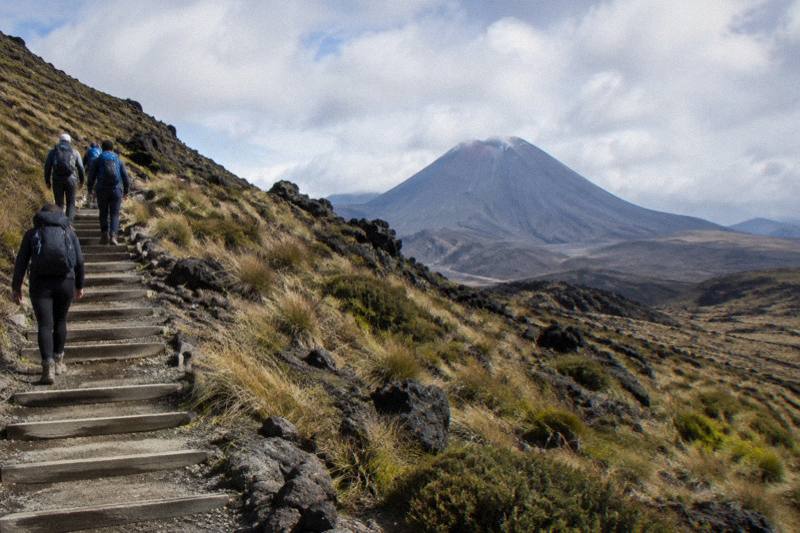
The distinction matters more here than on most trails. The Department of Conservation classes the Crossing as an Intermediate tramping track in summer and an Expert route in winter, with a fitness requirement of High and a one-way distance of 20.2 km between Mangatepopo and Ketetahi Road. A guide does not shorten the walk or flatten the Devil's Staircase, roughly 350 m of climbing on a staircase to the South Crater plateau. What a guide adds is interpretation, decision making on a mountain where the weather turns fast, and a seat home afterwards, since return transport is included on all three Adrift tours from the base at 53 Carroll Street, National Park Village.
The guided option also changes your paperwork. DOC's track booking system, free since October 2023, is required for anyone using a shuttle or guided walk service, and the guide or shuttle operator may make that booking for you. That is one fewer thing to arrange on the morning of a long day. Hotel pickup is not included on the Adrift tours, so plan to make your own way to National Park Village.
Here is how the three guided tours compare on the figures that matter when you are picking a departure. Prices are per person "from" figures in USD except where noted; for the private tour, check the booking page for its price basis.
| Guided tour | From price | Booked duration | Rating and reviews | Group max | Minimum age |
|---|---|---|---|---|---|
| Full Crossing hike | $253 per person | 8 to 9 hours | 4.6 across 241 reviews | 60 | 12 |
| Half-day guided walk | $197 per person | 4 hours | 4.7 across 27 reviews | Check the booking page | Check the booking page |
| Private guided Crossing | $774.01 | 7 to 9 hours | 4.5 across 30 reviews | Check the booking page | 12 |
How Much Does A Guided Hike Cost Compared With A Shuttle?
The premium full Crossing guided hike costs from $253 per person, the half-day guided walk from $197 per person, and the private guided Crossing from $774.01. A pure shuttle seat, for comparison, starts at $34 per person for a one-way park-and-ride, so the guide and the round-trip transport from a base, rather than a road end, account for most of the difference.
Those figures deserve a little unpacking, because the guided products and the shuttle products are solving different problems. The most reviewed tour on this whole site is a shuttle, the Tongariro Crossing Shuttles round trip from National Park Village, 4.7 across 886 reviews priced from $42 per person, and it does exactly what it says: two bus legs and no guide. The most reviewed guided tour is the Adrift premium hike, 4.6 across 241 reviews. Both ratings are real signals, but they are ratings of different products, and the review pools are of very different sizes.
The dearest per-person tour here is the premium guided hike at $253, and the guided half-day sits at $197. The private Crossing costs $774.01, while the multi-day tours run from $338 to $3,150.50, far above the shuttle and group-walk prices. When you weigh a guided hike against a shuttle, the honest framing is: the shuttle moves you, the guide moves you, reads the mountain and brings you back. If you want the fuller treatment of what each transport option costs, the Tongariro Crossing shuttle comparison guide breaks the whole shuttle market down, and the cost guide for a Crossing trip totals a full day out.
If a guided departure is the right call for your fitness, your dates or your nerves, these three picks cover the guided option, the private version and the shuttle-only contrast in one place.
What Is Actually Included On The Adrift Guided Tours?
All three Adrift guided tours include the guide, return transport from the base at 53 Carroll Street, National Park Village, and, for winter conditions, crampons and ice axes if required plus a clothing and footwear allowance. Hotel pickup is not included, and the private tour is explicitly non-refundable, unlike the premium and half-day tours which state free cancellation up to 14 days before.
Start with what is in, because it is more than the price line suggests. The booked duration of 8 to 9 hours on the premium tour is the whole day including transfers, not your walking time; DOC puts the summer walking time at 7 to 8 hours between November and April. The guide travels with you for all of it. DOC's own winter position is blunt: crampons, ice axe and helmet are essential between May and October, "as is competency using them", and the department's summary advice for the winter track is simply "go with a guide".
The private guided Crossing, from $774.01 with a 4.5 rating across 30 reviews, is the same product shaped around one group, with crampons, ice axes and all clothing and footwear hire supplied and a minimum age of 12. It carries the strictest terms on the site: the booking page states the experience is non-refundable and cannot be changed for any reason. The premium and half-day tours, by contrast, both state free cancellation up to 14 days in advance for a full refund. That asymmetry is worth weighing if your travel dates could shift, and the private guided Crossing guide walks through the trade in full.
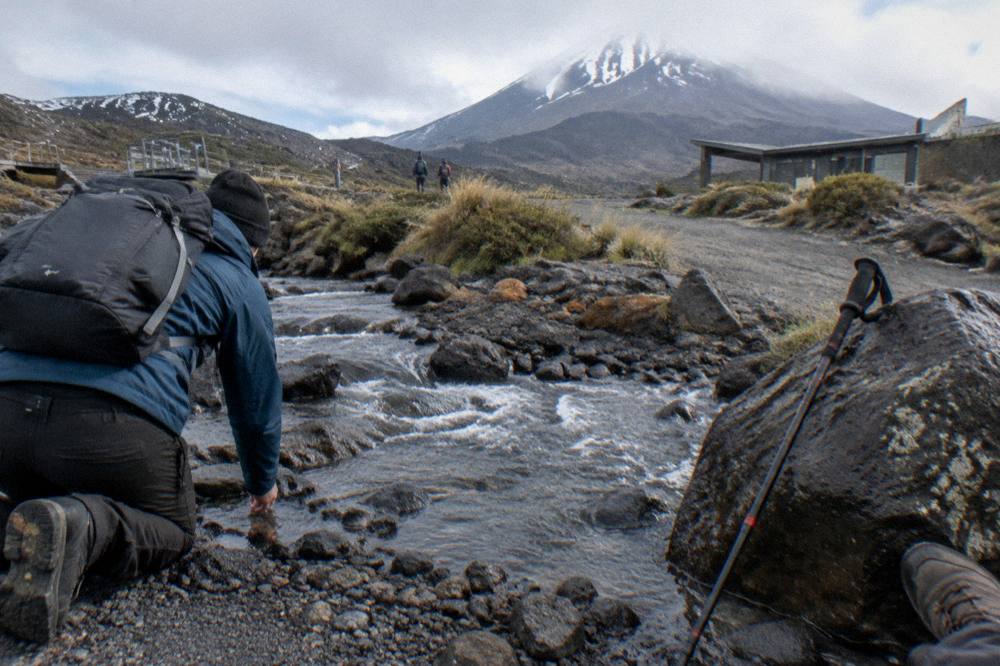
One quiet detail: food is excluded on all three, so bring your own lunch. There are toilets every 1 to 2 hours along the track per DOC, and if there is a queue at Mangatepopo the next toilets are 1 km, about 20 minutes, further on. Water from the track is not drinkable, and DOC's gear guidance runs to 2 to 3 litres per person.
Should you book the group hike or the private one before your dates firm up? Free cancellation up to 14 days ahead on the group departures means an early booking costs you nothing if plans move.
How Long Is The Day And Where Does It Start?
The premium guided hike is a booked day of 8 to 9 hours, the half-day walk 4 hours, and the private Crossing 7 to 9 hours, all measured as total tour durations including transport, not walking time. Every one of the three starts at the Adrift base at 53 Carroll Street, National Park Village, with return transport included; hotel pickup is not included.
The start point is practical knowledge, not trivia. National Park Village sits 13.5 km from the track by DOC's distance table, and the guided day begins and ends at one fixed address, which removes the two decisions that complicate an independent Crossing: where to leave a car and how to get back to it. DOC's summer parking rules make that meaningful. From Labour weekend, late October, to 30 April a 4 hour maximum applies at the road ends, there is no summer parking at Mangatepopo for people doing the Crossing, and DOC's stated preference is that you arrive by shuttle. A guided day with round-trip transport sidesteps all of it. Everything else covered here is indexed on Tongariro Alpine Crossing Tours.
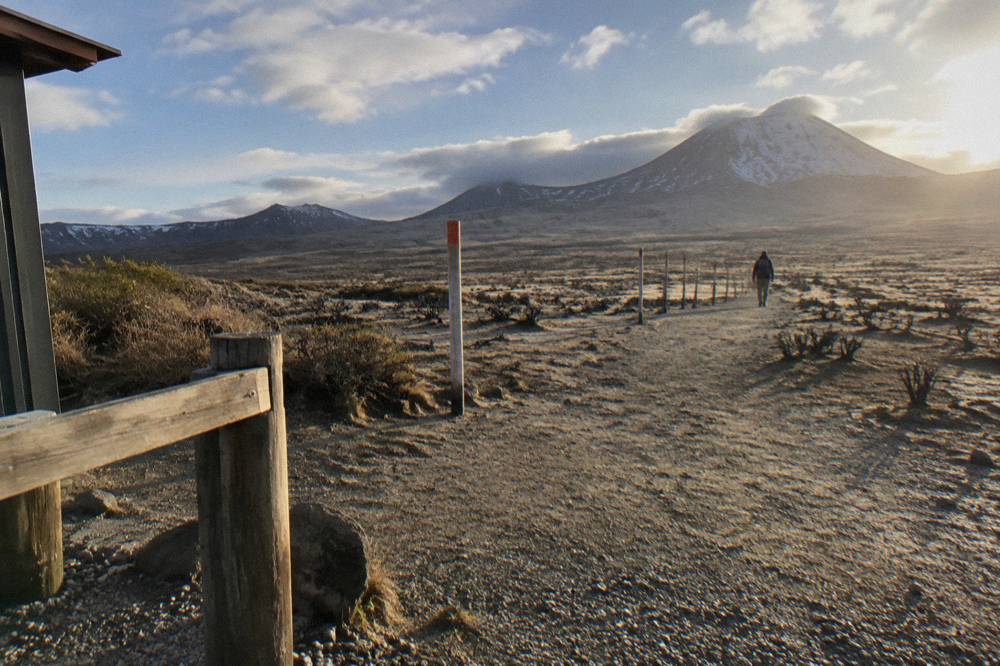
The 8 to 9 hour premium booking should be read against DOC's walking time of 7 to 8 hours from November to April. The difference is transfers, briefings and the slower arithmetic of a group of up to 60 people moving through a climb sequence that DOC describes as boardwalk through Mangatepopo Valley, the staircase to South Crater, the ascent to Red Crater at 1886 m, the steep scree drop to the Emerald Lakes, Blue Lake, and the long zig-zag descent to forest and Ketetahi Road at 760 m. An early start is the norm. Check the booking page for departure times.
The half-day walk, 4 hours booked and from $197, is a different animal: it is a guided walk in the Tongariro area, not the full Crossing, rated 4.7 across 27 reviews. It suits travellers who want a guide's eyes and stories without committing to a 20.2 km day. If you are still deciding whether the full track is realistic for you, the difficulty guide for the Crossing and the page on how long the Crossing takes cover the honest arithmetic.
Do You Still Need To Book The Track For A Guided Hike?
Yes, in the sense that DOC requires a track booking to use a guided walk or shuttle service, and the booking is free, introduced in October 2023. There is no cap and no penalty for arriving without one, one booking covers a group, and the guide or shuttle operator may make the booking for you, which is the usual path on a guided day.
The system is lighter than the word "booking" suggests. DOC recommends it for everyone using any part of the track, requires it for guided and shuttle users, and asks that a booking receipt, digital or paper, be shown to rangers at the carpark. The full mechanics, including what hut and campsite holders on the Northern Circuit are exempt from, are laid out in the booking guide for the Crossing.
Manaaki Rangers greet visitors daily from November to April and share traditional stories, which is part of why the summer season feels curated rather than merely busy. The mountains themselves carry the deeper context: Tongariro is New Zealand's oldest national park, set aside in 1894, a dual World Heritage area, and sacred to Ngati Hikairo ki Tongariro of Ngati Tuwharetoa. DOC passes on the kaumātua's request that visitors respect the sanctity of the sacred mountains by not touching or entering any of the waterways, including the alpine lakes. For that context, the DOC Tongariro page is the official reference.
What Is The Route Like On A Guided Summer Day?
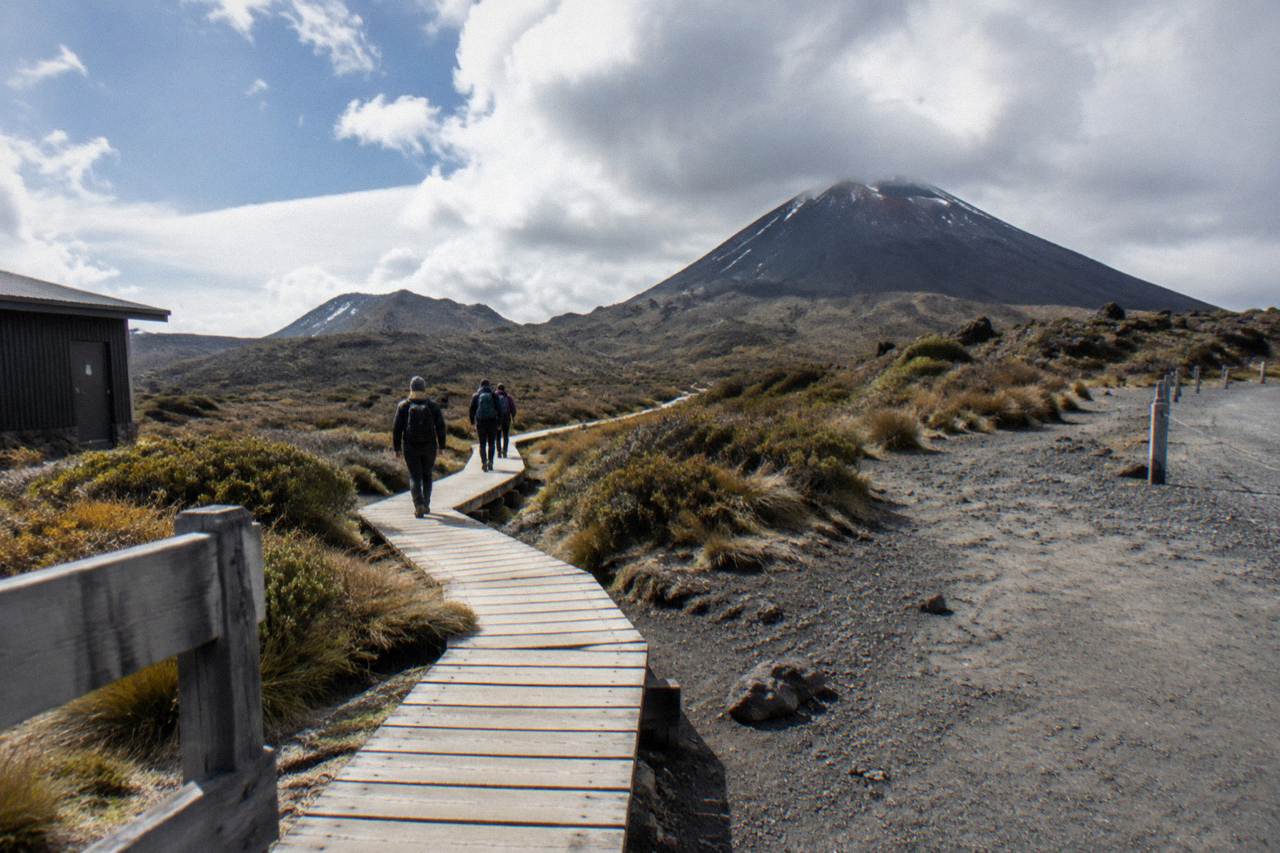
The route runs one way, Mangatepopo to Ketetahi Road, 20.2 km, starting at 1120 m elevation, topping out at Red Crater 1886 m and finishing at about 760 m, with an elevation change of plus and minus 1196 m per DOC. Summer walking time is 7 to 8 hours from November to April, and the first 5.4 km is shared with the easy Soda Springs Walk.
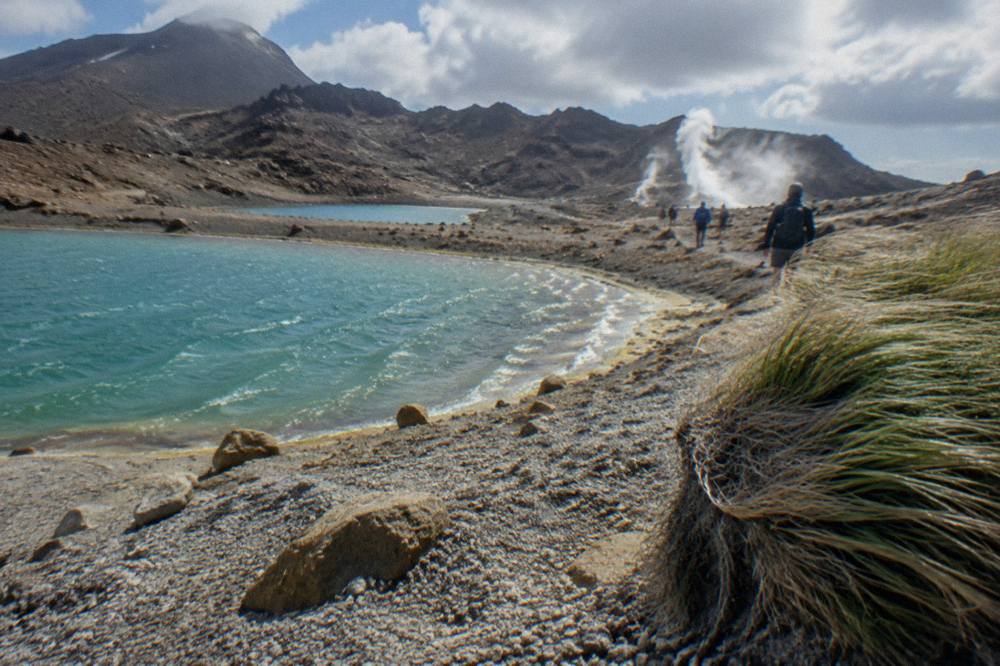
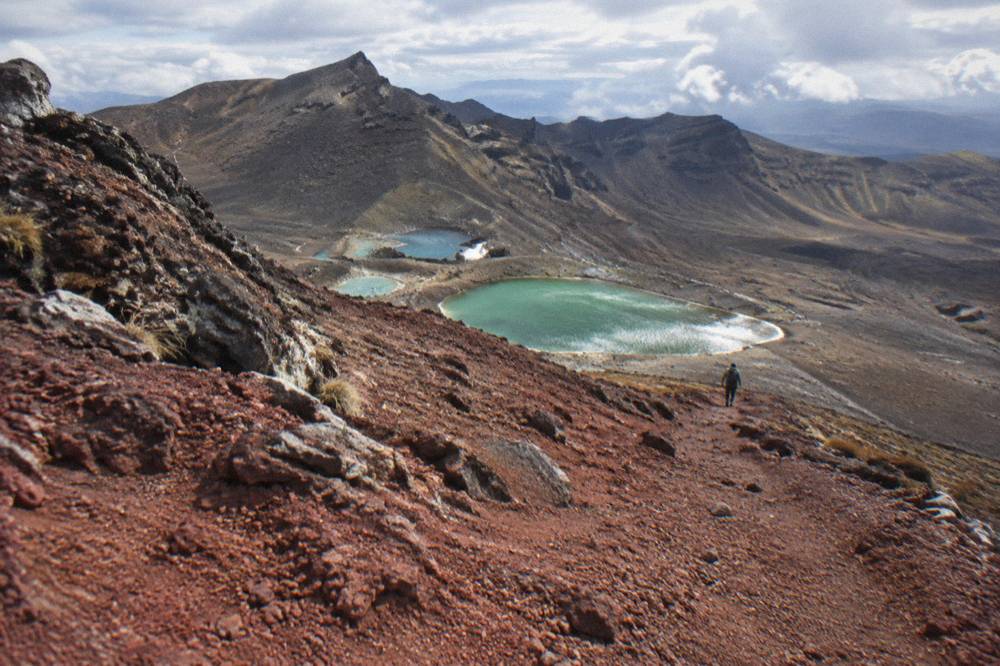
That profile explains most of the day's rhythm. The valley boardwalk is gentle, the roughly 350 m staircase climb to South Crater is the work, and the Red Crater ridge is where the scenery turns severe: loose scree that DOC flags as a major slip hazard, then a steep descent to the Emerald Lakes, where fumaroles steam and the rule is to stay back and touch nothing. The lakes are Ngā Rotopounamu; Blue Lake beyond them is Te Wai Whakaata o Te Rangihīroa. The northern slopes then zig-zag down with views over Lake Rotoaira and Lake Taupō before forest delivers you to the road end.
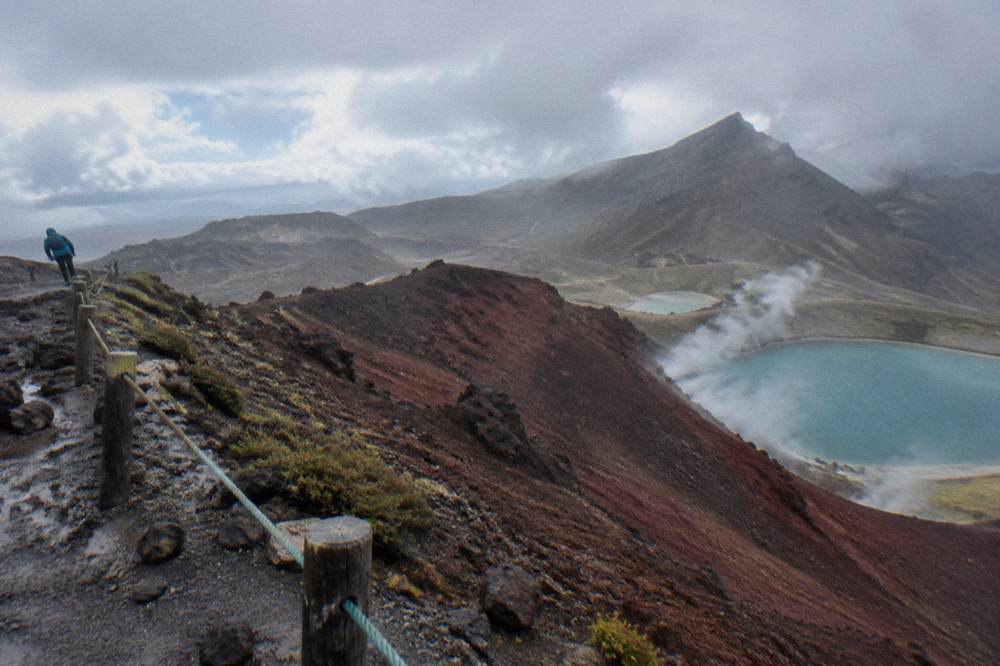
Two things a guided day does not change. Ngauruhoe, the cone that carries the popular Mount Doom nickname, stands beside the track as scenery only; no product here climbs it, and no summit distance or time exists to quote. And the late 2025 fires near the start of the track left blackened landscapes now in regrowth, with a 10-year restorative rāhui placed by Ngāti Hikairo ki Tongariro over the affected area. DOC's guidance for visitors is simple and a guide will repeat it: stay on the tracks, keep out of fire-affected areas off track, clean your shoes and gear, and take rubbish home. The rāhui, as the DOC explainer puts it, is "not about keeping people out".
| Route feature | Position | What DOC says |
|---|---|---|
| Mangatepopo Valley start | 1120 m | Boardwalk through the valley, shared first 5.4 km with the Soda Springs Walk |
| South Crater | After the staircase | Steady climb of around 350 m to the plateau |
| Red Crater | 1886 m, highest point | Loose scree, a major slip hazard |
| Emerald Lakes | Below Red Crater | Fumaroles nearby; do not approach vents or enter any lake |
| Blue Lake | Beyond the lakes | Te Wai Whakaata o Te Rangihīroa |
| Ketetahi Road finish | About 760 m | Long zig-zag descent, forest, many steps |
How Fit And How Old Do You Need To Be?
DOC rates the fitness requirement High and does not recommend the track for children under 10; the Adrift premium and private tours set a minimum age of 12, while the half-day walk prints no age rule. The premium guided hike takes groups of up to 60, and the only other stated group maxima on the site belong to shuttle products, so group size is a per-tour fact worth checking on the booking page.
The fitness question deserves an honest answer rather than encouragement. The track is steep and undulating, 20.2 km one way, and DOC's fallback for people without the fitness for the harder parts is the first 5.4 km: the Soda Springs Walk, an easy 2 hour return. That is a genuine option, and the half-day guided walk occupies similar territory, a shorter guided experience rather than a truncated Crossing. For the full track, the training that matters is sustained walking on uneven ground and confidence on long descents, because many steps on the way down trouble weaker knees per DOC.
Age rules are per tour and nowhere else. Twelve on the premium hike and the private Crossing is an operator rule specific to those products; Dempsey Buses sets 6 on its shuttles and National Park Shuttles sets 8, but those are shuttle facts, not guided-tour facts, and they never transfer. If a family booking is the plan, the booking page is the final word for the departure you are eyeing, and the fitness guide for the Crossing has the fuller conditioning picture.
What Should You Bring On A Guided Departure?
Bring your own lunch, 2 to 3 litres of water because track water is not drinkable, sturdy boots, waterproof layers, hat, gloves and sunscreen, per DOC's day-hike gear guidance. On the Adrift tours crampons and ice axes are supplied for winter conditions if required plus a clothing and footwear allowance, but summer walkers should arrive dressed and shod for an alpine day rather than relying on hire.
DOC's list is specific enough to shop from: a base layer, insulation and shell, and for winter, crampons, ice axe, helmet, an avalanche transceiver, probe and shovel, a PLB, head torch with spare batteries, and map and compass or GPS. On a guided winter departure the equipment clause covers the alpine hardware and all clothing and footwear hire comes with the private tour in particular. Summer departures are simpler, and the gear guide for the Crossing, what to bring on a Tongariro Alpine Crossing hike, itemises it without the winter weight.
| Season | What you carry | What the tour supplies |
|---|---|---|
| Summer, November to April | Lunch, 2 to 3 litres of water, boots, waterproof layers, hat, gloves, sunscreen | Guide and return transport on all three tours |
| Winter, May to October | Head torch with spare batteries, map and compass or GPS per DOC | Crampons and ice axes if required, plus a clothing and footwear allowance |
| Private Crossing, any season | Your own lunch; water for the day | Crampons, ice axes and all clothing and footwear hire |
Footwear draws a surprising amount of debate, and the answer is settled: sneakers are a poor bet on scree and wet steps, and the page on wearing sneakers on the Crossing explains why boots earn their space in the bag. Beyond the gear, small rules from DOC shape the day: no dogs, no mountain biking, and no drones without a permit. None of it is guide-dependent; it is simply how the park works, as DOC's track information states plainly.
What Happens If The Weather Turns On Your Guided Day?
Guided operators and shuttles have agreed, as part of their concessions, not to operate when a Hazardous Weather Warning has been issued, and in summer DOC assesses a "Not Recommended Today" advisory each morning against the NIWA Red Crater forecast thresholds, for example sustained wind of 55 kph or more, gusts of 70 kph or more, or 2.5 mm of rain per hour. When it applies, signage goes up at Mangatepopo and operators are informed, so a guided day can be stood down.
The thresholds are published, which means the decision is not vibes. Any two hours between 9 am and 5 pm showing average wind at or above 55 kph, gusts at or above 70 kph, wind chill of minus 10 °C or colder, wind chill at or below 0 °C with at least 1 mm of precipitation, rain at 2.5 mm per hour or more, snow at 0.1 cm per hour or more, or 10 mm of precipitation over six hours can trigger the advisory. From May to October no hazardous weather advisories are issued at all, and DOC tells winter walkers to read the forecast themselves, with the avalanche forecast for the region part of that reading.
This is where the cancellation terms you read earlier earn their keep. The premium and half-day tours state free cancellation up to 14 days in advance for a full refund, and the private tour states the opposite, non-refundable with no changes. A weather stand-down is the operator's call under DOC rules, not a promise any page can make, so treat every guided date as "conditions allowing". If the forecast kills the Crossing, DOC names fallback tracks in the same area: the Taranaki Falls Walking Track and the Tama Lakes Track. The fuller picture, including where to check forecasts, sits in the weather and tours guide.
Volcanic hazard is the quiet background condition. DOC notes the Crossing traverses an active volcanic area where eruptions can occur at any time, unlikely as that is, with a hazard zone of 3 km around each of the three vents and the most recent eruption from Te Maari in 2012. If volcanic alert levels rise at Tongariro or Ngauruhoe, track sections or the whole Crossing close, and that is a DOC decision, not an operator's.
Common Questions About A Tongariro Alpine Crossing Guided Hike
What Exactly Is A Guided Tongariro Alpine Crossing Hike?
A guided walk of the full 20.2 km Crossing, or a shorter guided walk, led by a professional guide with return transport from the operator's base included. Adrift Tongariro runs the three guided tours on this site: the premium full Crossing, a half-day walk that is not the full track, and a private option.
How Much Does A Tongariro Alpine Crossing Guided Hike Cost?
From $253 per person for the premium full Crossing hike, from $197 per person for the 4 hour half-day guided walk, and from $774.01 for the private guided Crossing. A shuttle-only seat starts at $34 per person for comparison.
Do You Still Need To Book The Track For A Guided Hike?
Yes. DOC requires a free track booking, in place since October 2023, to use a guided walk or shuttle service. There is no penalty for arriving without one, and the guide or shuttle operator may make the booking for you. Carry the booking receipt to show rangers at the carpark.
Is Lunch Included On The Adrift Guided Tours?
No. Lunch is not included on the premium, half-day or private tours, so bring your own, along with 2 to 3 litres of water per person because track water is not drinkable.
What Is The Minimum Age For The Guided Hikes?
The premium full Crossing hike and the private guided Crossing both set a minimum age of 12. The half-day guided walk prints no age rule, so the booking page is the source for that departure. DOC separately advises the track is not recommended for children under 10.
What Happens If The Weather Is Bad On Your Guided Day?
Guided operators have agreed, as part of their concessions, not to operate when a Hazardous Weather Warning has been issued. In summer DOC assesses a Not Recommended Today advisory each morning against published NIWA Red Crater thresholds; when it applies, signage goes up at Mangatepopo and operators are informed. The premium and half-day tours state free cancellation up to 14 days in advance.