Can You Do Tongariro Crossing In One Day?
Yes, the Tongariro Alpine Crossing is a one-day walk of 20.2 km taking 7 to 8 hours in summer. Here is how shuttles, start times and fitness decide whether your day works.
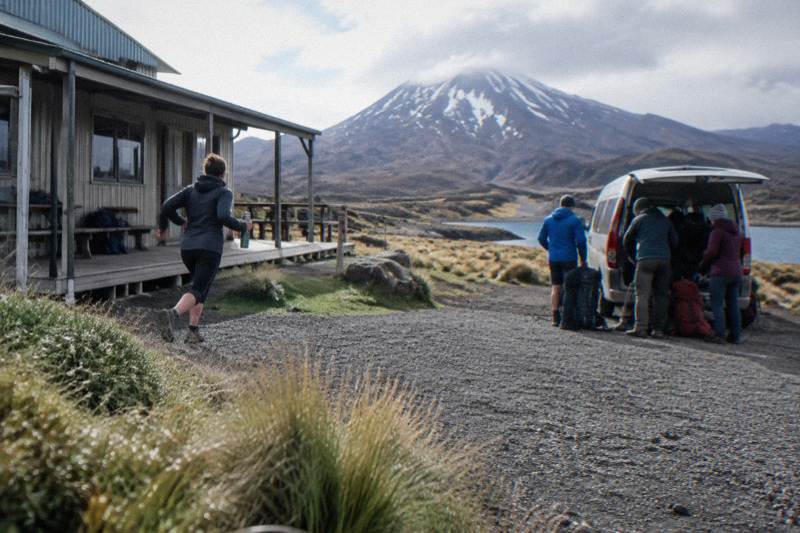
Yes. The Department of Conservation classifies the Tongariro Alpine Crossing as a one-way day walk: 20.2 km from Mangatepopo to Ketetahi Road, taking 7 to 8 hours between November and April and 9 hours in the winter season. One day is not only possible, it is how the track is designed, and shuttle timetables, parking limits and daylight are all built around it.
That single paragraph answers the headline question, but it hides a cluster of smaller decisions that determine whether your one day actually works. The walk itself is only part of the arithmetic. You also need to get to the start, get home from the finish, carry the right gear for an alpine environment, and pick a day when the weather at 1886 m cooperates. Get any one of those wrong and the day collapses, which is why DOC describes the fitness required as High and the gradient as steep and undulating.
The track climbs from 1120 m at Mangatepopo to Red Crater at 1886 m, then descends to finish near 760 m at Ketetahi Road, with an elevation change of plus and minus 1196 m according to DOC. It passes through a dual World Heritage national park established in 1894, mountains that are sacred to Ngati Hikairo ki Tongariro of Ngati Tuwharetoa. Day walkers are the intended users: the summer parking rules, the free booking system and the shuttle network all assume you arrive, walk and leave within a single day.
This article works through the timing question piece by piece: how long the track really takes, when to start, whether shuttles make the one-day plan possible, what fitness you need, what happens when the weather advisory flies, and where Auckland travellers fit, because Auckland is the one departure point where a strict one-day plan generally does not survive contact with the map.
How Long Does The Tongariro Crossing Actually Take?
DOC publishes two walking times: 7 to 8 hours for the November to April summer season and 9 hours for May to October, covering the full 20.2 km from Mangatepopo to Ketetahi Road. Those are walking times for the track itself, not total tour durations, which run longer once meeting points and transfers are counted. Plan the whole day around them.
The 7 to 8 hour figure assumes steady movement with short breaks. Most walkers budget an early start and a full daylight allowance, and DOC's own winter guidance is blunt about the margin: allow 9 hours, carry a head torch, because winter daylight on the Central Plateau runs only 9 to 11 hours.
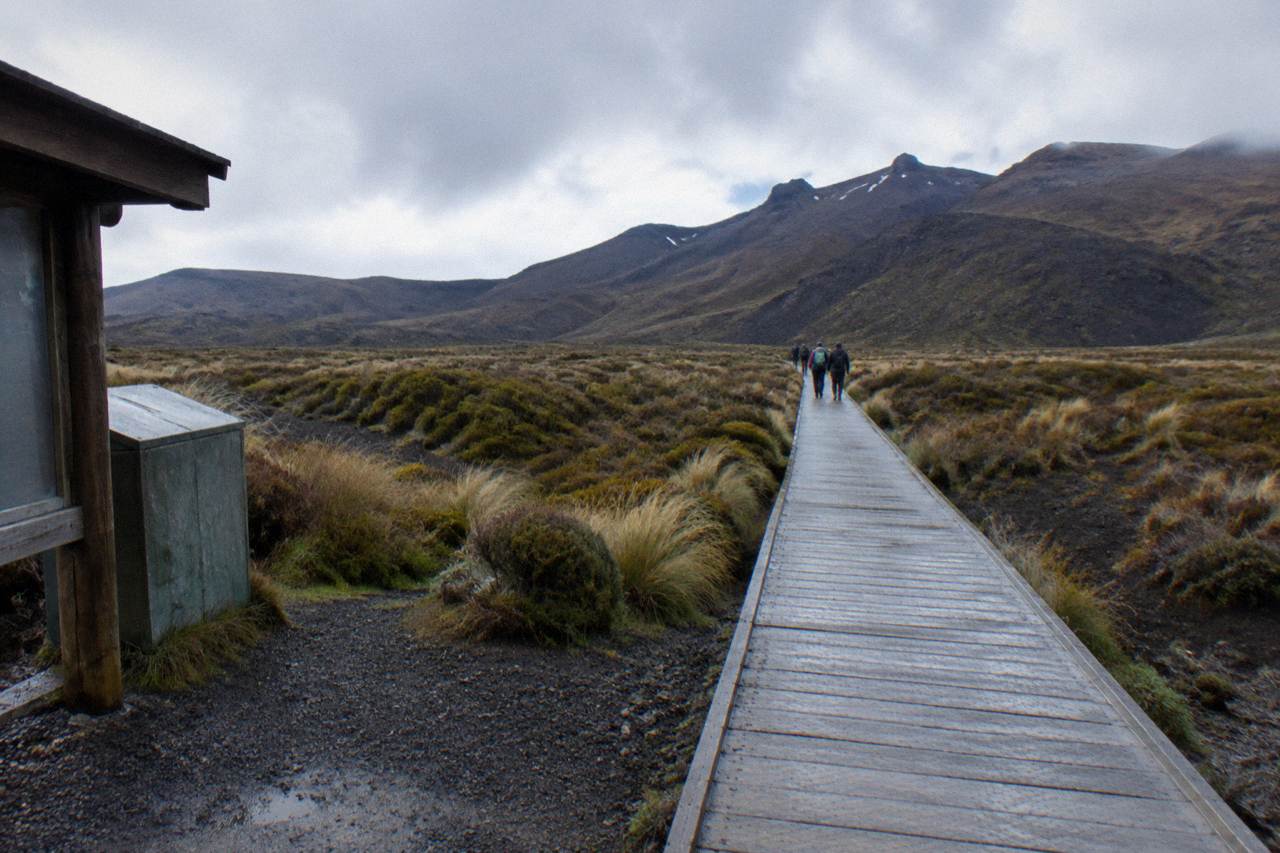
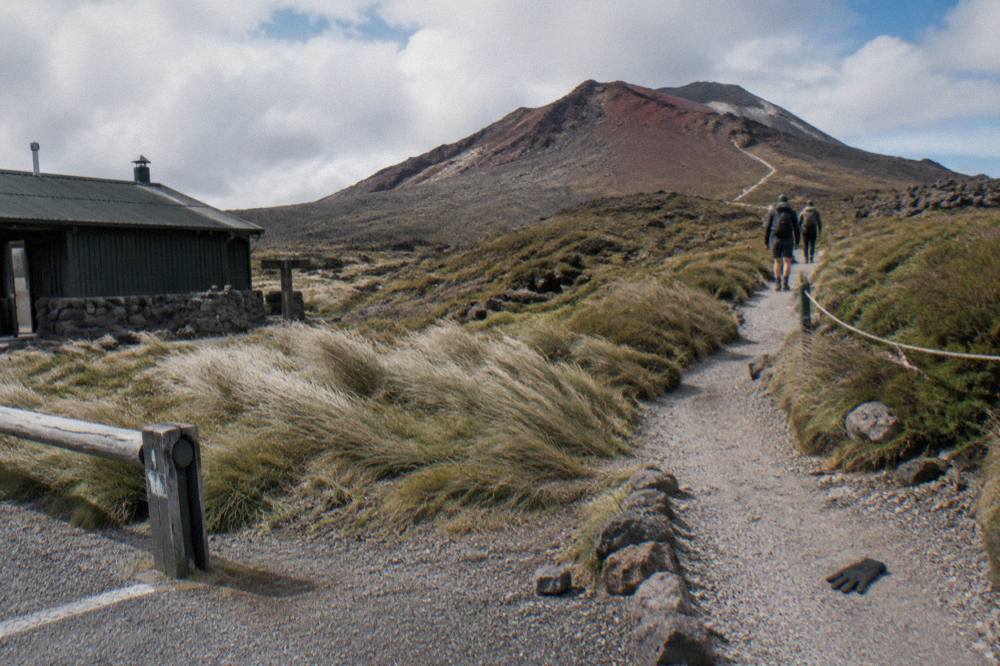
The shape of the track explains where the hours go. The first 5.4 km is shared with the easy Soda Springs Walk, a 2 hour return option that DOC suggests as a fallback for people without the fitness for the harder parts. After that comes a steady climb of around 350 m up a staircase to the South Crater plateau, the ascent to Red Crater, a steep scree descent past the Emerald Lakes, Blue Lake, and a long zig-zag descent of the northern slopes with views over Lake Rotoaira and Lake Taupo before forest and the finish at Ketetahi Road. Loose rock on Red Crater is a major slip hazard and many descent steps punish weaker knees, so the second half often takes as long as the first.
Toilets sit every 1 to 2 hours along the track; if there is a queue at Mangatepopo, DOC notes the next toilets are 1 km, about 20 minutes, further on. Small delays like that are the reason experienced walkers treat the 7 to 8 hour range as a real range, not a target to beat. For a fuller breakdown of the stages and timings, the companion guide on how long the Crossing takes walks the track kilometre by kilometre.
Total booked durations for day tours are longer than the walking time, and that difference matters when you plan. The Adrift Tongariro premium guided Crossing hike lists 8 to 9 hours for the whole guided day, and the Tongariro Expeditions Crossing shuttle lists 8 to 10 hours depending on the option chosen. Those figures include meeting, transfers and the walk, so if you are booking a guided hike or a shuttle product, block out the whole day plus travel to your accommodation, not just the track hours.
What Time Do You Need To Start The Crossing?
Start early enough that your finish time sits comfortably inside daylight, with margin for a slow descent or a twisted ankle. In winter, with only 9 to 11 hours of daylight and a 9 hour walking estimate, an early start is not advice, it is arithmetic. In peak season, late October through 30 April, both road ends carry a strict 4 hour parking limit, too short for a full Crossing day.
No specific clock time suits every month, and none is needed. The structural facts do the work. Winter daylight on the plateau is between 9 and 11 hours per DOC, and the winter walking time is 9 hours, so the two windows almost coincide. Head torches are on DOC's winter essentials list precisely because walkers who start late in that season can run out of light. In the November to April season the same 7 to 8 hour walk fits inside daylight many times over, but the practical ceiling comes from elsewhere.
From Labour weekend in late October to 30 April, DOC applies a 4 hour maximum parking restriction at the Mangatepopo and Ketetahi road ends. Four hours is not enough to walk the Crossing, so DOC suggests booking a shuttle, and in summer it goes further: there is no parking at all for Crossing walkers at Mangatepopo car park, with only a private car park near the Ketetahi end. The practical effect is that almost every summer one-day plan begins with a shuttle, and shuttles run early, which sets your start time for you.
The weather advisory system also has a morning rhythm. The summer "Not Recommended Today" advisory is assessed each morning against the NIWA Red Crater forecast, and it triggers when that forecast shows average wind of 55 kph or more, gusts of 70 kph or more, severe wind chill, heavy rain or snow rates, or around 10 mm of rain over six hours. When it is applied, signage goes up at the Mangatepopo Road end and operators and isites are notified. Starting early means you know the day's status before you commit to the track.
Guided tours fold the start-time decision into the product. The Adrift Tongariro premium guided hike meets at the Adrift base at 53 Carroll Street, National Park Village, and the day runs 8 to 9 hours including return transport; the Tongariro Crossing Shuttles round trip departs from the Park n Ride at 59 Findlay Street, National Park Village, with an afternoon return from Ketetahi. Either way the operator owns the timetable and you simply turn up when told.
Do You Need A Shuttle To Do The Crossing In One Day?
In practice, yes for most of the year. The track is one-way, summer parking rules block a self-drive plan at Mangatepopo, and DOC's own advice is that the best way to the Crossing is by shuttle. From late October to 30 April a 4 hour maximum at the road ends makes driving yourself incompatible with a 7 to 8 hour walk, so a shuttle, or a guided tour with transport included, is the standard one-day plan.
The alternatives narrow fast. DOC advises against parking on State Highway shoulders, and in summer the Mangatepopo car park is reserved against all-day Crossing walkers. The one self-drive pattern that survives is the park-and-ride: park at the Ketetahi end, take a one-way shuttle to Mangatepopo in the morning, walk the Crossing back to your own car. Several operators run exactly that. The Ruapehu Scenic Shuttles Ketetahi park-and-ride costs from $38 per person and is rated 4.8 across 665 reviews; the Owhango Adventures Ketetahi park-and-ride is also from $38 per person, rated 4.8 across 312 reviews. These are one-way products with no return leg: your car is the return leg.
“Great shuttle service, easy to use and great secure parking. Friendly staff. Thank you! Bus was full! Book your spot!”
Round-trip shuttles suit walkers staying in the villages. The Tongariro Crossing Shuttles round trip from National Park Village is the most reviewed tour here, rated 4.7 across 886 reviews, from $42 per person, with an 8 hour booked duration and free cancellation up to 24 hours ahead. The Dempsey Buses round-trip shuttle from National Park Village is from $51 per person, rated 4.8 across 72 reviews, with pickup points in National Park Village and a minimum age of 6. Cheaper still, the Active Outdoor Adventures one-way shuttle with a secure Ketetahi car park is the cheapest per-person tour priced from $34, rated 4.1 across 81 reviews.
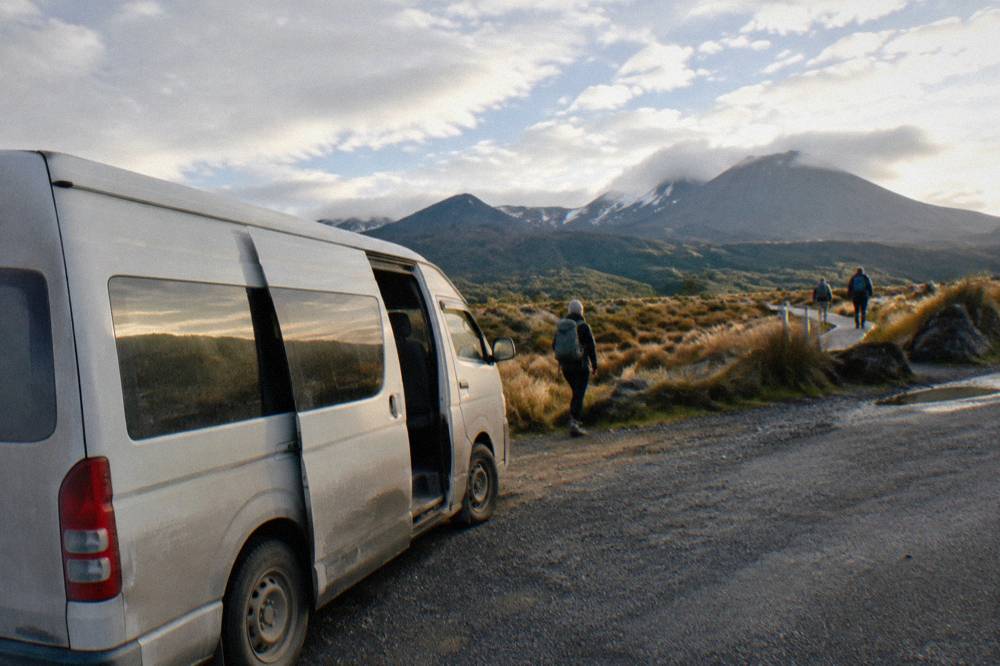
Winter changes the picture completely. DOC states that shuttle buses generally do not operate from May to late October, while guided trips include transport. So a winter one-day plan leans hard toward a guided product rather than a shuttle: the Adrift guided tours run summer and winter and include return transport, with crampons and ice axes supplied for winter conditions if required. That transport inclusion is not a small perk in a season when the track becomes an Expert route and the operator's van may be your only ride.
After that shuttle paragraph, one option worth a direct look if you want the round-trip structure handled for you:
A free DOC track booking is needed to use a shuttle or guided walk service for the Crossing; check your tour's booking page to see whether the operator arranges it for you. Arriving without one carries no penalty and there is no cap, but the booking receipt, digital or paper, is shown to rangers at the car park. The details live in the guide to booking the Tongariro Crossing.
Two round-trip shuttles, a Ketetahi park-and-ride, and a guided walk are compared below on price, guest feedback, and how transport is handled.
| Option | Type | From price (USD) | Rating and reviews | Return transport |
|---|---|---|---|---|
| Tongariro Crossing Shuttles round trip, National Park Village | Shuttle, round trip | $42 per person | 4.7, 886 reviews | Included |
| Dempsey Buses round trip, National Park Village | Shuttle, round trip | $51 per person | 4.8, 72 reviews | Included |
| Ruapehu Scenic Shuttles Ketetahi park-and-ride | Shuttle, one-way | $38 per person | 4.8, 665 reviews | None, walk back to your car |
| Adrift Tongariro premium guided hike | Guided hike | $253 per person | 4.6, 241 reviews | Included |
How Fit Do You Need To Be To Finish In One Day?
DOC rates the fitness requirement as High, on a steep and undulating 20.2 km track with an elevation change of plus and minus 1196 m, and it does not recommend the walk for children under 10. Most reasonably active adults finish inside the 7 to 8 hour summer window, but the descent and the scree demand more than a casual stroll.
The honest benchmark is not the distance but the terrain sequence. A staircase climb of around 350 m to South Crater, the push to Red Crater at 1886 m, a steep scree descent where loose rock is a major slip hazard, then a long zig-zag drop with many steps that can trouble weaker knees. DOC notes that 38 percent of tramping injuries come from slipping, a statistic that holds across the whole park and explains why sturdy boots sit near the top of its gear list.
Training advice is simple and unglamorous: be comfortable walking for the full upper end of the time range, around 8 hours, on hills, before you go. The first 5.4 km, shared with the Soda Springs Walk, gives you a natural checkpoint: if that gentle valley section is already stretching you, DOC's own suggestion of the 2 hour return Soda Springs Walk as a fallback is worth taking seriously rather than pushing into the alpine zone underprepared. The fitness question, with training plans and the under-10 rule in full, is covered in the companion post on how fit you need to be.
Gear supports fitness as much as muscles do. DOC's list for the walk includes 2 to 3 litres of water because track water is not drinkable, sturdy boots, waterproof layers, hat, gloves and sunscreen, and a base layer, insulation and shell combination. Winter adds a serious alpine kit: crampons, ice axe and helmet, described by DOC as essential along with competency using them, plus an avalanche transceiver, probe and shovel for independent trips, a personal locator beacon, head torch and navigation tools. The three Adrift Tongariro guided tours supply crampons and ice axes for winter conditions and include a clothing and footwear allowance, which is one argument for going guided in the colder months. Lunch is not included on those tours, so bring your own.
What If The Weather Turns On Your One Day?
Your day goes ahead only if conditions allow. Operators have agreed, as part of their concessions, not to operate when a Hazardous Weather Warning has been issued, and the summer "Not Recommended Today" advisory, assessed each morning against the Red Crater forecast, recommends against the walk when thresholds are met. Nobody can promise you clear views or a dry track, and any honest tour description says conditions allowing.
The advisory thresholds are specific, and knowing them helps you read a forecast yourself. The advisory applies when any two hours of the Red Crater forecast show average wind of 55 kph or more, gusts of 70 kph or more, wind chill of -10 °C or colder, wind chill of 0 °C or colder with precipitation, rain of 2.5 mm per hour or more, or snow falling, plus around 10 mm of rain over six hours. The official forecasts to watch are the NIWA Red Crater forecast, the MetService mountain forecast, and in winter the avalanche forecast at avalanche.net.nz; volcanic alert levels are published by GeoNet. DOC's own Crossing page and alerts are the authority on track status.
From May to October no hazardous weather advisories are issued at all, and DOC tells winter walkers to read the forecast themselves. The track is an Expert route in that season, with snow, ice and avalanche hazard, and DOC's summary of who it suits is stark: people who can navigate when marker poles are hidden, rescue in avalanche terrain, prevent a slide and survive worsening weather. For everyone else DOC's winter advice is short: "go with a guide". The full planning picture, including what a bad-weather day means for your booking, is in the guide to Crossing weather and tours.
Cancellation terms matter here. Most tours on this site state free cancellation: the Adrift premium and half-day guided tours allow cancellation up to 14 days ahead for a full refund, and most shuttle products allow it up to 24 hours ahead. Two are exceptions, the Adrift private guided Crossing and the ExperienceKart three-day tour, both non-refundable, so the booking page is the place to confirm terms before you commit to a specific date in a fickle mountain climate.
There are also in-park fallbacks that keep a ruined day from being a wasted drive. DOC names the Taranaki Falls Walking Track and the Tama Lakes Track as alternatives in poor weather, both reachable from the Whakapapa side, 10.4 km from the track by DOC's distance table.
Can You Do The Crossing From Auckland In One Day?
Not as a realistic single-day walk. Auckland is a long way from the track, and the products that connect the two are built as two- or three-day journeys: a two-day private transfer from $338 and a three-day private tour from $3,150.50, each with the Crossing as a self-guided leg. No guided Taupo or Auckland day trip to the Crossing exists on this site, and the distances explain why.
“Fantastic day! We had stunning weather for the crossing, incredible experience. The shuttle was brilliant and made the whole day run smoothly, thank you!”
DOC's distance table puts Taupo 86.5 km from the track, with Turangi at 36.7 km, Ohakune at 48 km, National Park Village at 13.5 km and Whakapapa at 10.4 km. Auckland sits far beyond all of them, and adding a 7 to 8 hour alpine walk to that journey in both directions inside one day is not something any product here attempts. The honest framing for Auckland travellers, laid out fully in the guide to Tongariro from Auckland, is that an overnight is the minimum sane plan.
The two Auckland products make the structure explicit. The Kiwi Road Tours private transfer from Auckland is a two-day private transfer from $338, price basis on the booking page, with the Crossing shuttle excluded and the walk self-guided; it is not a guided hike and carries no reviews yet. The ExperienceKart private three-day tour from Auckland is from $3,150.50, price basis on the booking page, with the Crossing as one self-guided leg among Waitomo, Huka Falls and Lake Taupo stops, not suitable under 12 and non-refundable. Neither is a guided Crossing tour, and neither should be booked by someone expecting to be walked through the alpine zone with a guide.
For everyone else, the one-day plan works from the closer towns. National Park Village, Whakapapa and Turangi all sit within easy shuttle range of the road ends, Taupo has shuttle options from $42 per person through Tongariro Expeditions, and Ohakune has the Dempsey Buses return shuttle from $62 per person, rated 4.8 across 19 reviews, with a minimum age of 6. The choice between those departure points, with prices and durations side by side, is covered in the guide to Crossing tours by departure town.
Guided Or Shuttle: Which One-Day Plan Suits You?
Pay for a guide if you want alpine expertise, winter capability and transport in one package, from $197 for a half-day guided walk or $253 for the full Crossing. Take a shuttle if you are confident on an intermediate track and mainly need the one-way logistics solved, from $34 per person. The walk itself is identical; what changes is who carries the risk and the gear.
The three guided tours listed here are all from Adrift Tongariro. The premium guided hike covers the full Crossing in an 8 to 9 hour day from $253 per person, rated 4.6 across 241 reviews, with a guide, return transport from the base at 53 Carroll Street, crampons and ice axes for winter conditions, a clothing and footwear allowance, a minimum age of 12 and a group size up to 60. The half-day guided walk, from $197 per person and rated 4.7 across 27 reviews, is a shorter 4 hour guided walk and explicitly not the full Crossing, which makes it the right product for walkers who want a guide's eye but not the full 20.2 km. The private guided Crossing, from $774.01 with the price basis on the booking page, gives your group its own guide; note it is non-refundable.
Shuttles strip the day back to logistics. The cheapest per-person tour here is the Active Outdoor Adventures one-way shuttle with a secure Ketetahi car park priced from $34, and the National Park Shuttles one-way from the Ketetahi private car park follows priced from $34.40 per person, rated 4.7 across 73 reviews, with a minimum age of 8 and a group maximum of 37. Round trips cost more but remove the car entirely. Guided walks and shuttles do different jobs: the guided hikes come with a guide, while a shuttle is transport, and the walk between its two ends is yours alone, a distinction worth being clear about before you book.
For the shuttle route that most one-day walkers take, this is the round-trip option to compare against a guided day:
If you are still deciding, the deeper comparison between the two styles, including winter, costs and group sizes, is in the guide to a guided Tongariro Crossing, and Tongariro Alpine Crossing Tours keeps the full set of day options side by side. Whichever you choose, the one-day structure holds: early shuttle or guided pickup, 7 to 8 hours on the track in summer, and a finish at Ketetahi Road with the day still, just, intact.
Common Questions About Doing Tongariro Crossing In One Day
Can You Do Tongariro Crossing In One Day?
Yes. The track is a one-way day walk of 20.2 km taking 7 to 8 hours from November to April and 9 hours from May to October, and the shuttle and guided-tour network is built around walkers completing it in a single day.
How Many Hours Should I Allow For The Whole Day?
Walk the 7 to 8 hour summer figure, then add transfers. Booked day tours run 8 to 9 hours for the Adrift premium guided hike and 8 to 10 hours for the Tongariro Expeditions shuttle options, so block out the full daylight window plus travel to your accommodation.
Do I Need A Shuttle If I Only Have One Day?
From late October to 30 April, effectively yes: a 4 hour parking maximum applies at the road ends and there is no summer Crossing parking at Mangatepopo. A shuttle or a guided tour with transport included is the standard plan, and in winter DOC says shuttle buses generally do not operate while guided trips include transport.
What Is The Cheapest Way To Do The Crossing In One Day?
The Active Outdoor Adventures one-way shuttle with a secure Ketetahi car park is the cheapest per-person tour here priced from $34, followed by the National Park Shuttles one-way priced from $34.40 per person. Both are park-and-ride products: you park at the Ketetahi end and walk back to your own car.
Can I Do It As A Day Trip From Auckland?
Not realistically. Auckland is a long way from the track, and the two products connecting them are a two-day private transfer from $338 and a three-day private tour from $3,150.50, each with the Crossing self-guided. Stay overnight in National Park Village, Whakapapa or Turangi instead.
What Happens If The Weather Is Bad On My Day?
Operators have agreed, as part of their concessions, not to run when a Hazardous Weather Warning has been issued, and the summer advisory is assessed each morning against the Red Crater forecast. Most tours state free cancellation, 14 days ahead for the Adrift guided tours and 24 hours for most shuttles, so check the terms on the booking page and have DOC's poor-weather alternatives, the Taranaki Falls and Tama Lakes tracks, in your back pocket.