Can You Wear Sneakers On Tongariro Crossing?
DOC recommends sturdy boots for the 20.2 km Tongariro Alpine Crossing. Here is what that means for sneakers, trail runners, winter ice and guided tour footwear allowances.
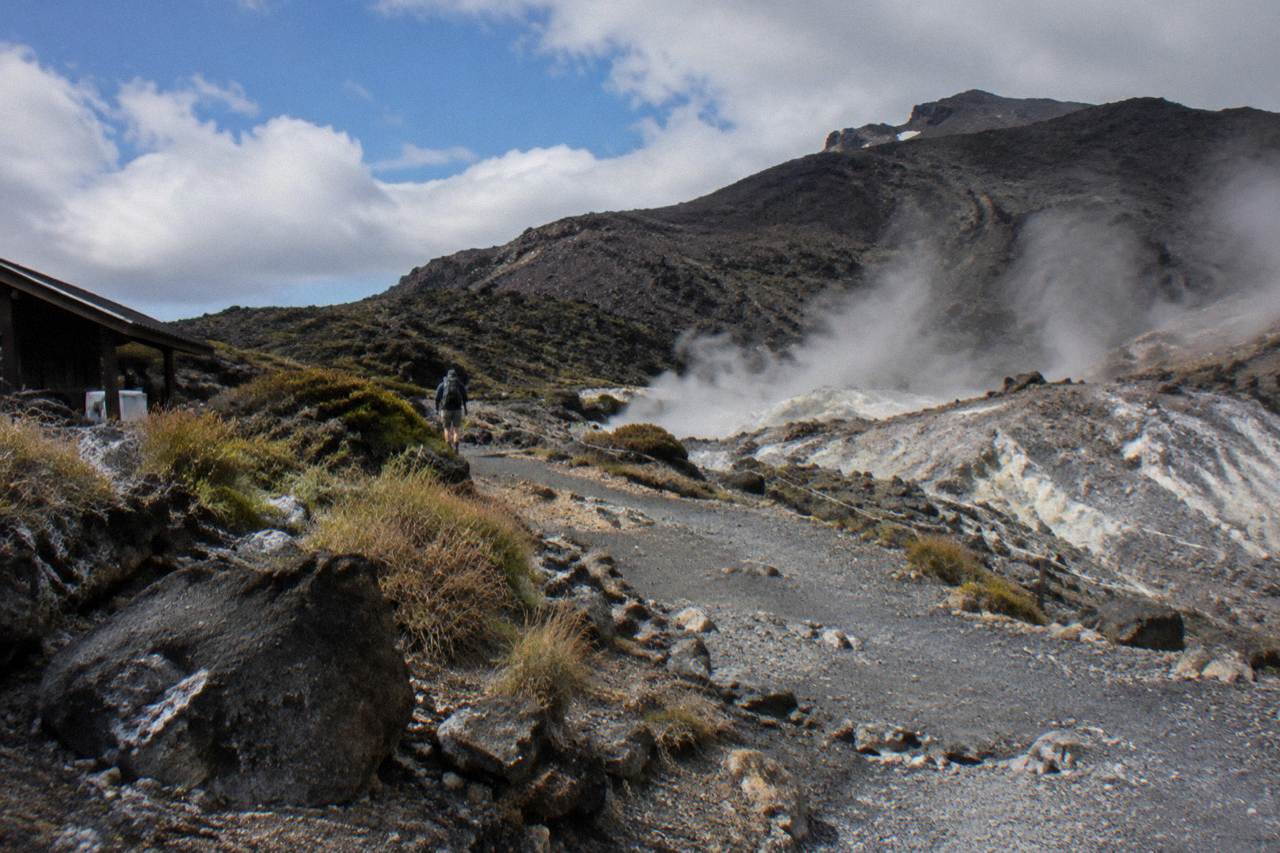
No, and the Department of Conservation is unambiguous about it. DOC's guidance for the Tongariro Alpine Crossing calls for sturdy boots, describes the track as steep and undulating with a high fitness requirement, and rates loose rock on Red Crater as a major slip hazard. Across 20.2 km one way, sneakers leave you with wet feet, sore soles and poor grip on scree.
It is one of the most searched questions about this walk, and it deserves a straight answer rather than a shrug. Plenty of people have finished the Crossing in running shoes. Soft soles carry real risks here: blisters on the Devil's Staircase climb, and sliding on the Red Crater scree, where a soft sole cannot bite into loose rock. Weather on the day and the state of the soles both affect how sneakers hold up on the track.
The track is an Intermediate tramping track in summer, and DOC raises it to an Expert route from May to late October when snow and ice cover sections of it. In winter the sneaker question answers itself: crampons, an ice axe and a helmet are listed as essential, and crampons need a stiff, sturdy boot to attach to and to walk on. A sneaker flexes too much for either job.
The honest way to frame this page is around what DOC actually says, what the terrain actually does to soft footwear, and what your options are if you do not own boots. That last part matters more than people expect, because the one guided operator here, Adrift Tongariro, supplies a footwear allowance across its three guided tours, which quietly solves the problem for travellers who flew in with sneakers in their carry-on.
If you are still weighing whether to walk it independently or with a guide, start with the longer rundown on the Tongariro Crossing guided tour options, because the footwear question and the guiding question turn out to be connected.
What Footwear Does DOC Recommend For The Tongariro Crossing?
DOC's gear guidance is specific: sturdy tramping or mountaineering boots, waterproof layers, and in winter crampons and an ice axe, with competency in using them. The department describes the track as requiring high fitness, steep and undulating, 20.2 km one way, and not recommended for children under 10.
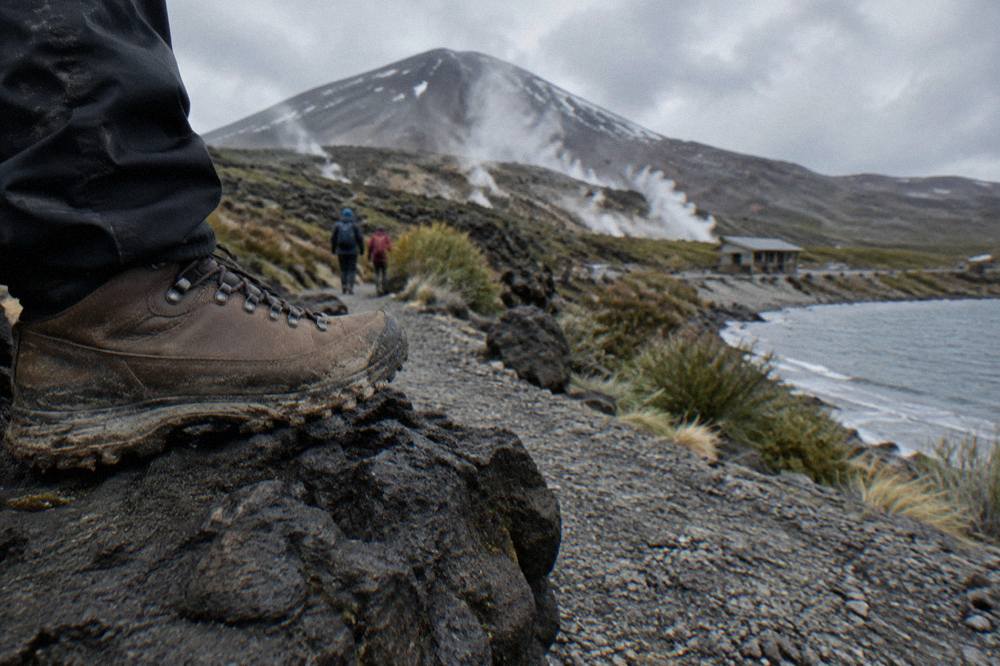
The full DOC gear list for the Crossing builds on its standard day hike list and then adds mountain-specific items. Boots come first, followed by a waterproof jacket and trousers, warm layers, hat, gloves and sunscreen. Water matters too: DOC advises carrying 2 to 3 litres per person because track water is not drinkable. None of that is brand advice, and this page will not give you any. It is about construction: a stiff sole, ankle support and something that keeps a scree slope from dumping grit into your shoe every hundred metres.
Two numbers from DOC put the footwear demand in context. Even in the height of summer, the descent from Red Crater to the Emerald Lakes runs through fields of loose volcanic scree that behave like ball bearings under a soft rubber sole.
There is a reason DOC also points to the first 5.4 km of the route as an easy option. That stretch, shared with the Soda Springs Walk, is a two hour return trip on gentle boardwalk and valley track, and it is genuinely achievable in sneakers if the weather is kind. It is everything after it, the staircase climb, the crater crossing and the long scree descent, where the sneaker decision stops being a preference and starts being a risk.
Why Do Sneakers Fail On The Tongariro Terrain?
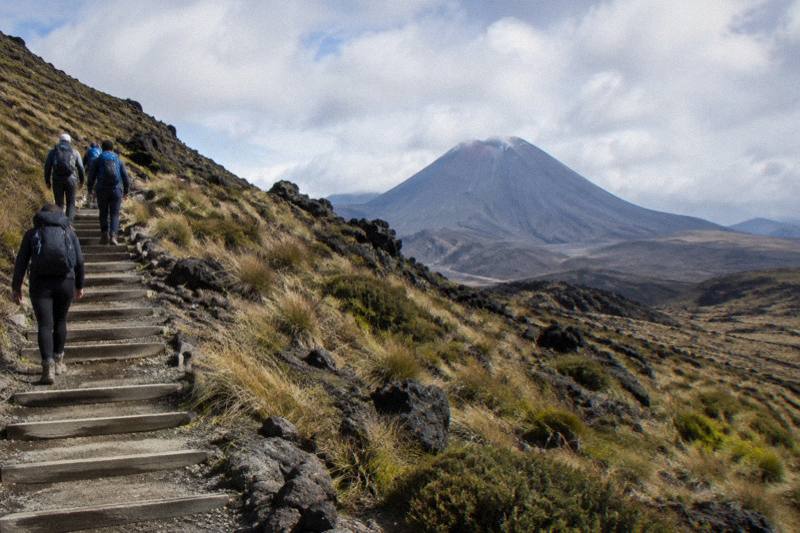
Sneakers fail on three specific features of the Crossing: the roughly 350 m staircase climb to South Crater, the loose scree on and below Red Crater at 1886 m, and the long zig-zag descent on northern slopes where DOC warns many steps trouble weaker knees. Soft soles cannot grip scree and cannot cushion volcanic rock for seven to eight hours.
The climb sequence matters here. From the Mangatepopo start at 1120 m, the track follows a boardwalk through the valley, then climbs about 350 m up a staircase to the South Crater plateau, then rises again to Red Crater, the highest point at 1886 m. After the Emerald Lakes, the route descends on long zig-zags toward Ketetahi Road at about 760 m, with views over Lake Rotoaira and Lake Taupo before the forest section.
Each stage punishes a different part of a sneaker. The staircase is relentless stone steps, and a soft midsole compresses and heats the forefoot long before the top. The scree fields around Red Crater, which DOC flags as a major slip hazard, reward a stiff lug sole and punish flat street tread. The zig-zag descent loads your knees for well over an hour, and every rock edge finds the exact bone a cushioned running shoe was never designed to protect. Total elevation change is plus and minus 1196 m, which is a full mountain day by any measure.
| Track stage | Terrain underfoot | What it does to sneakers |
|---|---|---|
| Mangatepopo Valley boardwalk, first 5.4 km | Flat boardwalk and valley track | Manageable; grit still gets in through mesh uppers |
| Devil's Staircase to South Crater | Rough stone steps, about 350 m of climbing | Sole compresses, forefoot bruises on stone edges |
| South Crater to Red Crater, 1886 m | Volcanic rock, exposed ridge | Sharp rock through thin soles, poor ankle support |
| Red Crater descent to Emerald Lakes | Steep loose scree, flagged slip hazard by DOC | Soft tread slides instead of biting |
| Zig-zag descent to Ketetahi Road, about 760 m | Long stepped descent, then forest | Knee and heel impact for over an hour |
Timing frames the physical load. DOC's walking time is 7 to 8 hours between November and April, and 9 hours from May to October. Add the approach an operator's day takes on top of that, and your feet are working inside the same shoes for the better part of a daylight block. Winter daylight is only 9 to 11 hours, which is why DOC tells winter walkers to always take a head torch: the margin between finishing and stumbling down in the dark is thin.
Do Trail Runners Count As Sneakers On The Tongariro Crossing?
A stiff, lugged trail runner with a protective rock plate sits in a grey zone: some experienced walkers manage the Crossing in them in dry summer conditions. But DOC's stated standard is sturdy boots, and trail runners still fall short on scree grip, ankle support and ice, so they are a calculated risk rather than an equivalent choice.
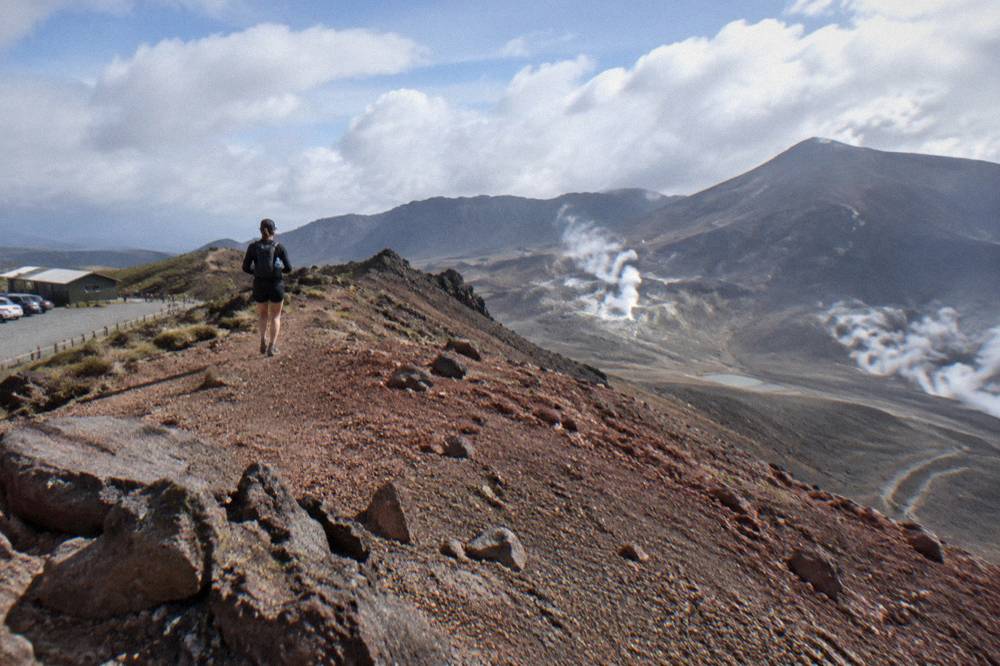
The distinction is construction. A genuine trail-running shoe built for mountain terrain has a stiff plate underfoot, aggressive lugs and a reinforced toe box. That handles the valley and the staircase passably. What it does not handle well is the Red Crater scree, where the descent is steep enough that grip, not cushioning, decides whether you stay upright, and the wet sections that follow rain, when volcanic mud turns slick.
The cost of getting it wrong is not just discomfort. DOC's injury data on slipping, at 38 percent of tramping injuries, plus the department's explicit warning that loose rock on Red Crater is a major slip hazard, should anchor the decision. If you own both boots and trail runners, wear the boots. If you own only trail runners, check the sole is stiff enough that you cannot fold the shoe in half, and accept that the descent will test them.
What never works is the everyday sneaker, the fashion trainer or the worn-out running shoe with a smooth heel. If you want to read more about the section that breaks most people's footwear decisions, the write-up on the hardest part of the Tongariro Crossing covers the staircase and the scree in detail.
Can You Wear Sneakers On The Tongariro Crossing In Winter?
No. From May to late October DOC reclassifies the route as an Expert route with snow and very icy sections, lists crampons, an ice axe and a helmet as essential along with competency using them, and sets the walking time at 9 hours. Crampons require stiff mountaineering or sturdy tramping boots to attach to, which rules sneakers out entirely.
Winter changes the question from footwear preference to alpine equipment. DOC's winter list adds an avalanche transceiver, probe and shovel for independent trips, a personal locator beacon, a head torch with spare batteries, and map, compass or GPS for use when cloud or snow hide the marker poles. None of that attaches to a sneaker, and none of it compensates for one. The wider set of guides lives on Tongariro Alpine Crossing Tours.
The temperature arithmetic explains why. On a calm day, DOC says Red Crater is at least 10 degrees colder than Taupo and 5 degrees colder than the track start, and you subtract another 2 degrees for every 10 km/h of wind. A mild late-autumn town morning can mean ice and a wind chill near freezing on the crater rim, in the very months, April to October, when DOC tells walkers to expect ice on the track. A wet canvas sneaker at that altitude is a fast track to numb feet and bad decisions.
There is also a logistics wrinkle that catches visitors out. DOC says shuttle buses generally do not operate during winter, while guided trips include transport. So the independent winter sneaker-wearer often discovers there is no ride to the start either. Winter walkers should also check the avalanche forecast before any independent trip, at avalanche.net.nz, because no hazardous weather advisories are issued from May to October and reading the forecast yourself is the system.
Does A Guided Tongariro Crossing Tour Supply Footwear?
Yes, in one specific and useful way: the three Adrift Tongariro guided tours each include a clothing and footwear allowance alongside the crampons and ice axes supplied for winter conditions if required. The premium guided Crossing hike runs from $253 per person, rated 4.6 across 241 reviews, with return transport included.
This is the quiet solution to the sneaker problem. If you are flying into New Zealand without room for boots in your luggage, a guided day with an operator that supplies a footwear allowance removes the single heaviest item from your packing list. You still need socks and the sense to break nothing in on the day, but the boot question is handled.
The premium guided hike meets at the Adrift base, 53 Carroll Street, National Park Village, runs 8 to 9 hours as a total booked day, and takes groups of up to 60 with a minimum age of 12. Hotel pickup is not included but return transport is, and the operator states free cancellation up to 14 days in advance for a full refund. Lunch is not included, so bring your own. The full details are on the premium guided Crossing hike page, and check availability if the footwear angle has settled the decision.
If the full 20.2 km feels like too much for a first alpine day, the same operator runs a half-day guided walk from $197 per person, rated 4.7 across 27 reviews, a 4 hour guided walk that is deliberately not the full Crossing. It carries the same clothing and footwear allowance and the same winter gear provisions, so it answers the same question on a smaller stage.
Remember what a guided tour does not change: the terrain underfoot is identical, DOC's cultural request stands, and Ngati Hikairo ki Tongariro ask visitors to respect the sacred mountains by not touching or entering any waterways including the alpine lakes. A guide supplies boots, crampons, transport and judgement, not a different track.
What If You Only Have Sneakers And Cannot Buy Boots?
Your realistic options narrow to three: walk only the first 5.4 km Soda Springs section and turn back, book a guided tour that includes a footwear allowance, or accept a much higher risk day on the full track. The Soda Springs Walk is DOC's own easy two hour return fallback for people without the fitness or gear for the harder parts.
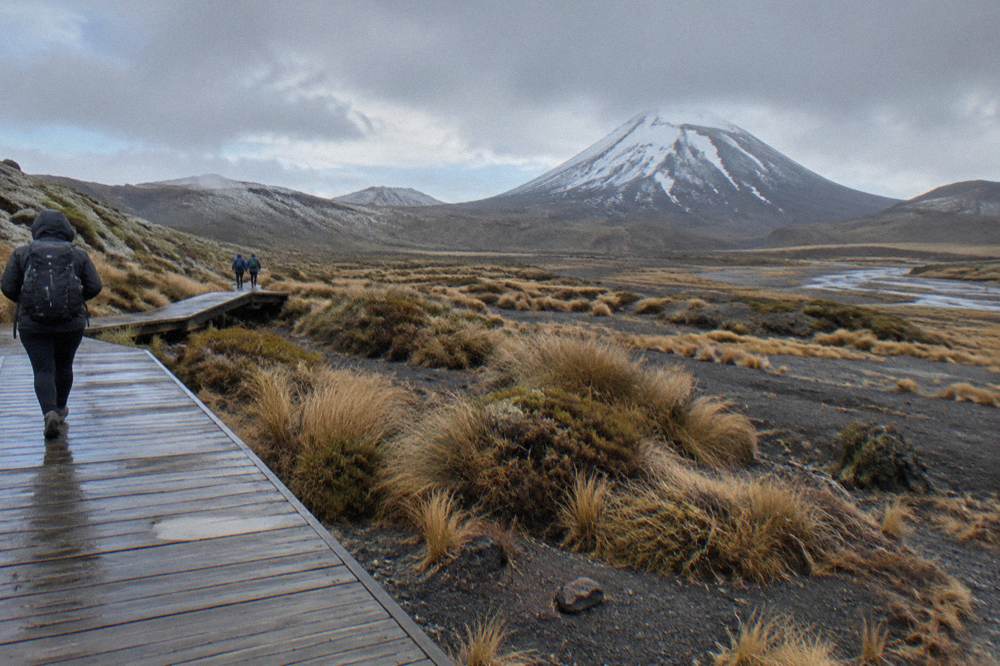
The turn-back option is genuinely underrated. The Mangatepopo valley boardwalk is beautiful, flat and gives you the mountain views without the crater commitment, and DOC itself frames the Soda Springs Walk as the alternative. Toilets sit every one to two hours along the track, and if there is a queue at Mangatepopo, the next toilets are 1 km, about 20 minutes, further on. In summer, Manaaki Rangers greet visitors daily from November to April and share traditional stories.
The guided option is the one that gets you the full Crossing. Weighing the two costs honestly: the cheapest shuttle-only way onto the track is a one-way park-and-ride from $34 per person, which moves you but supplies nothing you wear, while the premium guided hike from $253 per person supplies a guide, winter gear when conditions require it, the clothing and footwear allowance and return transport. If you already own boots, the shuttle math favours you. If you do not, the gap is smaller than it first looks once you price a pair of boots you may never wear again.
| Option | What it covers | Footwear supplied |
|---|---|---|
| Soda Springs Walk, first 5.4 km | Easy 2 hr return valley walk | None; sneakers manageable in dry weather |
| Shuttle-only round trip, from $42 per person | Transport to the start and back from Ketetahi | None; you bring everything |
| Half-day guided walk, from $197 per person | 4 hr guided walk, not the full Crossing | Clothing and footwear allowance included |
| Premium guided hike, from $253 per person | Full guided Crossing, 8 to 9 hr day | Clothing and footwear allowance plus winter gear if required |
The third option, walking the full track in sneakers, deserves a plain sentence rather than a lecture: people do it, some are fine, and DOC's own guidance tells you why the department would rather you did not. At DOC's Tongariro Alpine Crossing page the winter gear list calls for boots.
How Do Shuttles Change The Footwear Question On Tongariro?
They do not change it at all. A shuttle solves transport, not terrain: the Tongariro Crossing Shuttles round trip from National Park Village, from $42 per person and rated 4.7 across 886 reviews, drops you at Mangatepopo and collects you at Ketetahi, but the 20.2 km between them is all yours and all on your feet.
The shuttle-versus-guided choice is really a boots-supplied-versus-boots-byo choice. Shuttle transport is the way DOC recommends reaching the track in summer: from Labour weekend in late October to 30 April a 4 hour parking maximum applies at the road ends, DOC says there is no parking for Crossing walkers at Mangatepopo in summer, and the department suggests booking a shuttle. The distance logic is documented too, with DOC giving 13.5 km from National Park, 10.4 km from Whakapapa and 86.5 km from Taupo to the track.
“Great shuttle service, easy to use and great secure parking. Friendly staff. Thank you! Bus was full! Book your spot!”
None of that touches your shoes. Whether you ride the Tongariro Crossing Shuttles round trip from the Park n Ride at 59 Findlay Street, National Park Village, or a one-way park-and-ride from the Ketetahi end, the staircase, the scree and the descent are identical. If footwear is your open question, the guide pages on what to pack, starting with what to bring on a Tongariro Alpine Crossing hike, do the job the shuttle cannot.
For planning the wider trip, the question of booking the Tongariro Crossing matters as much as the boot question, because the free booking system is required for anyone using a shuttle or guided service.
Common Questions About Sneakers On The Tongariro Crossing
Can You Wear Sneakers On Tongariro Crossing?
No. DOC recommends sturdy tramping or mountaineering boots for the 20.2 km track, flags loose rock on Red Crater as a major slip hazard, and lists slipping as the cause of 38 percent of tramping injuries. Sneakers lack the sole stiffness, grip and protection the terrain demands.
Has Anyone Finished The Tongariro Crossing In Sneakers?
Some walkers have, in dry summer conditions, and some of them regretted it on the scree descent. Finishing is possible; the guidance against it exists because the failure mode, a slip on loose rock or a twisted ankle hours from the road end, is costly. DOC's standard remains sturdy boots.
Can You Wear Sneakers On The Tongariro Crossing In Summer?
Summer, November to April, is the only season where the question is even arguable, with a walking time of 7 to 8 hours and an Intermediate track rating. But DOC's summer gear list still says sturdy boots, and ice can linger from April, so sneakers in summer remain a risk you are choosing rather than a method the department endorses.
Do Guided Tongariro Tours Provide Boots?
The three Adrift Tongariro guided tours each include a clothing and footwear allowance, plus crampons and ice axes supplied for winter conditions if required. The premium guided Crossing hike runs from $253 per person, rated 4.6 across 241 reviews, with return transport included. Shuttles supply transport only.
What Kind Of Boots Does The Tongariro Crossing Need?
Sturdy tramping boots with a stiff sole, good lug tread and ankle support for summer; mountaineering or sturdy tramping boots compatible with crampons for the May to late October winter season, when DOC lists crampons, an ice axe and a helmet as essential. Break them in before the day.
Is There A Shorter Walk If You Only Have Sneakers?
Yes. The first 5.4 km is shared with the Soda Springs Walk, an easy two hour return walk on the Mangatepopo valley boardwalk, which DOC offers as the fallback for people without the fitness or gear for the harder parts. It is the one part of the route where sneakers are genuinely fine in dry weather.