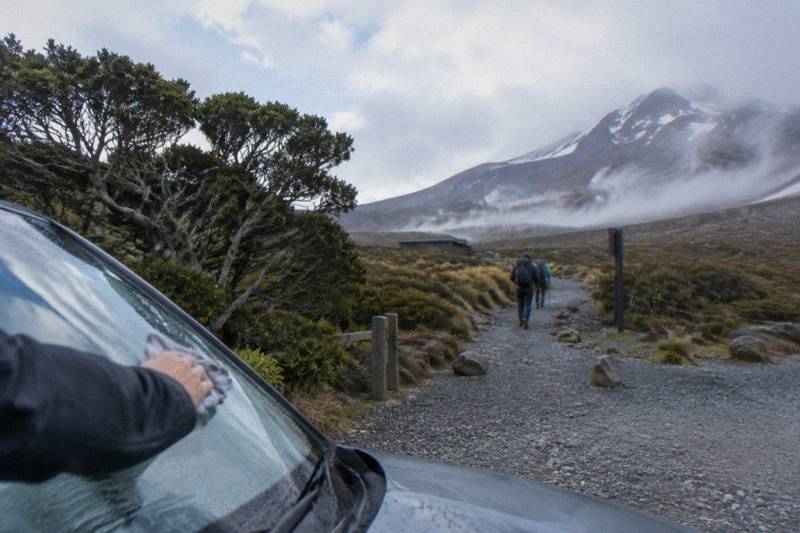
Tongariro Crossing Car Park Or Shuttle: Why Most Hikers Book A Transfer
DOC restricts summer parking at both Tongariro Crossing road ends to four hours, which rules out leaving a car all day. Here is how the park-and-ride and shuttle options compare on price, start point and what you get.
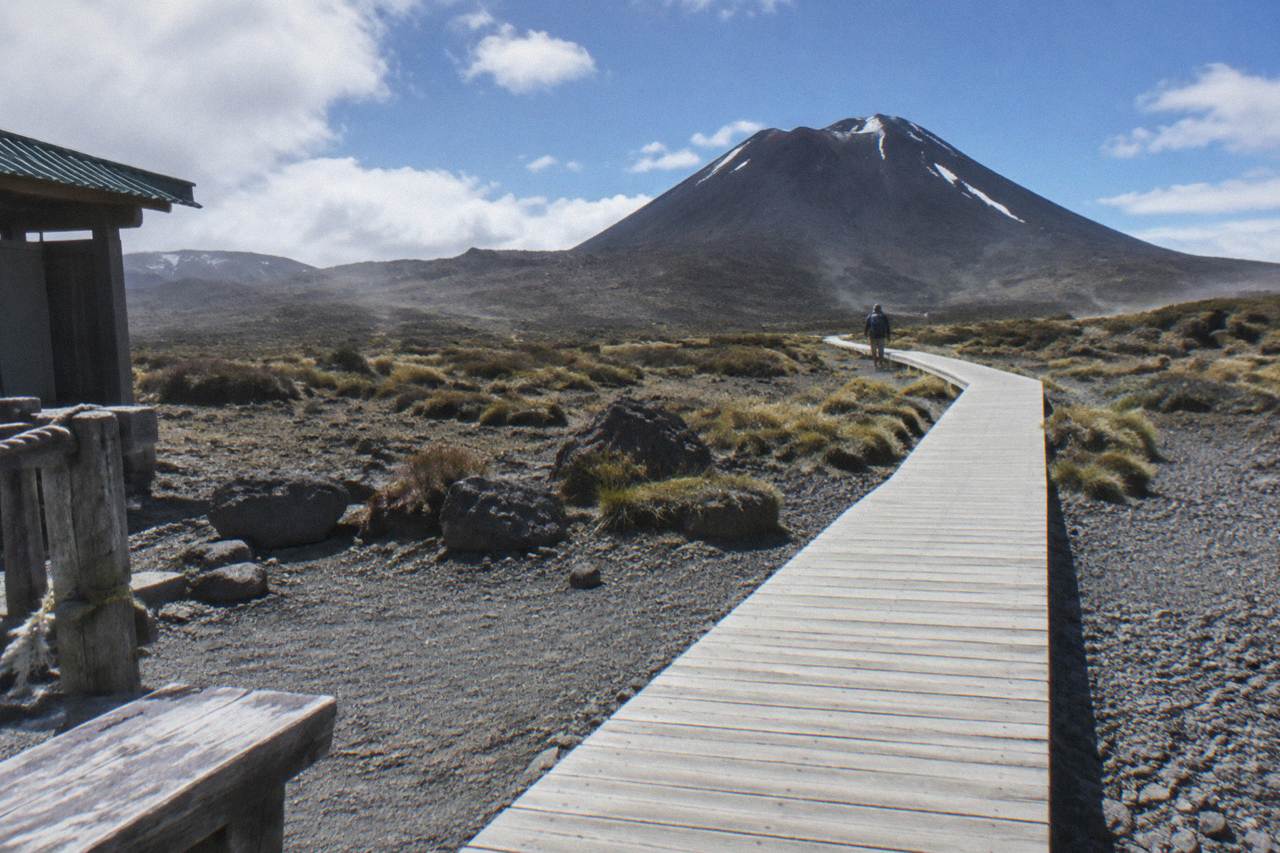
Short answer
From Labour weekend to 30 April a 4-hour maximum applies at the Mangatepopo and Ketetahi road ends, and DOC says the best way to do the Crossing is by shuttle. One-way park-and-ride transfers run from $34 to $44.72 per person: you park at Ketetahi, ride to Mangatepopo, and finish at your own car.
The Tongariro Alpine Crossing begins at 1120 m in the Mangatepopo Valley and finishes 20.2 km later at Ketetahi Road, about 760 m, and that one-way shape is exactly why the car park question matters. Unlike a loop walk, you cannot park at one end and stroll back to the same spot. Add the Department of Conservation's summer rule, a 4-hour parking maximum at both road ends from Labour weekend in late October through 30 April, and the arithmetic stops working for anyone planning to drive the full day. Once the parking rules push you toward a shuttle, the next question becomes timing, and the guide to finishing the Tongariro Alpine Crossing in a single day explains how start times and fitness shape the answer.
DOC's own advice is blunt: the best way to get to the Tongariro Alpine Crossing is by shuttle. The department also states there is no parking for Crossing walkers at Mangatepopo car park in summer, and only a private car park near the end of the hike at Ketetahi. That combination pushes most day visitors toward one of two patterns: a round-trip shuttle that collects you at the far end, or a one-way park-and-ride where you leave your car at Ketetahi, ride backwards to Mangatepopo, and walk the Crossing toward your own vehicle. If that backwards shuttle ride sounds like the right fit, the guide to Ketetahi to Mangatepopo shuttle operators compares each company and explains how the parking rules work in practice.
This guide works through both patterns with real prices from the shuttle products sold here, from $34 per person at the cheapest one-way park-and-ride to $80.27 for a Taupo round trip. It covers the booking system, the parking rules, winter, and how each departure town changes the math. For the wider picture of the walk itself, the Tongariro Crossing track guide covers distance, elevation and difficulty in detail.
Can You Park At The Tongariro Crossing Road Ends?
No, not for a full day in summer. DOC restricts parking at the Mangatepopo and Ketetahi road ends to a 4-hour maximum from Labour weekend (late October) until 30 April, and the walk itself takes 7 to 8 hours over 20.2 km. Even in the shoulder months the practical problem remains: the track is one way, so your car sits at the wrong end when you finish.
The 4-hour rule is DOC's seasonal restriction, published with its suggestion that visitors book a shuttle. It exists because the two road ends have far more demand than tarmac: the Mangatepopo start and the Ketetahi finish funnel every Crossing walker, plus Soda Springs walkers at the front of the track, onto two small rural roads. DOC also says there is no parking for visitors doing the Crossing at Mangatepopo car park in summer at all, and it does not recommend parking on State Highway sides. To see how those two road ends and every shuttle stop fit together, the map of the Tongariro Crossing start, finish and shuttle pickup points lays it all out plainly.
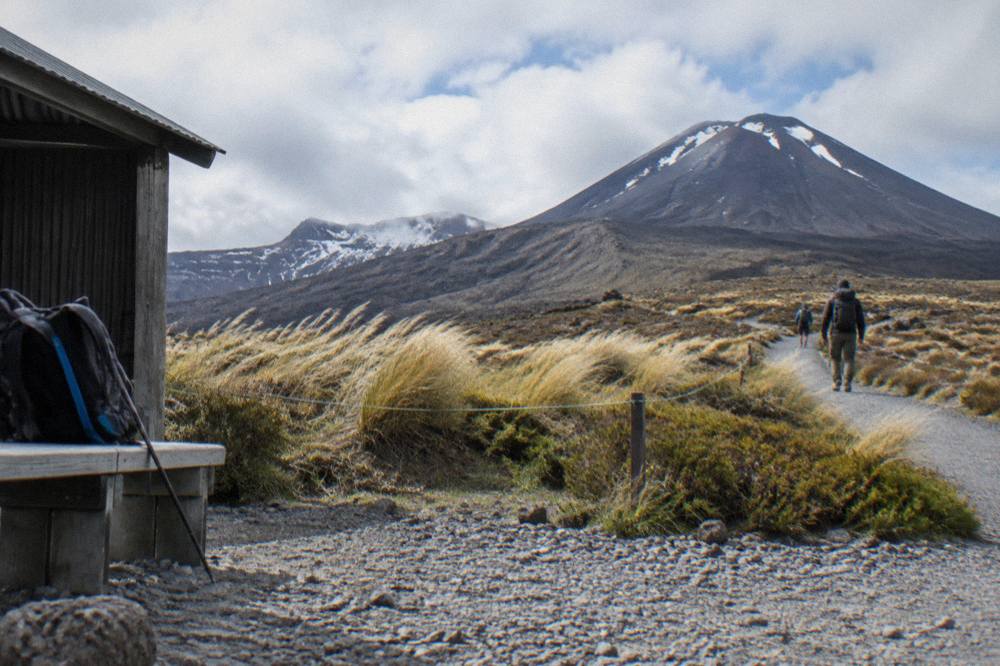
What remains in summer is a private car park near Ketetahi, at the finish end of the track. That single fact shapes the whole shuttle market: it is the reason the one-way park-and-ride pattern exists. You drive to the Ketetahi side, park privately, ride a shuttle backwards to Mangatepopo, then walk the full Crossing and step off the track within reach of your own car.
The road ends themselves sit in quiet country. DOC's published distances from the track put Whakapapa 10.4 km away and National Park Village 13.5 km, with Turangi at 36.7 km, Ohakune at 48 km and Taupo at 86.5 km. Those numbers matter for the car-or-shuttle decision because they tell you how far your car, or your shuttle, has to travel before the walk even begins. A walker staying in Taupo faces a very different morning from one sleeping in National Park Village, and the shuttle prices reflect that gap.
If you want the fine grain of where exactly the private parking sits and how the operators differ, the piece on where to park for the Tongariro Alpine Crossing shuttle goes deeper on that question alone.
What Is A One-Way Park-And-Ride Shuttle?
A one-way park-and-ride means you drive to the Ketetahi end, park there, and take the shuttle to Mangatepopo before the walk. You then hike the Crossing in its normal direction and finish right back at your car, with no second transfer to catch and no waiting at the far end. It is a shuttle ride only, never a guided walk.
Six products on this site use that pattern, and their prices run from $34 to $44.72 per person. The cheapest is the Active Outdoor Adventures one-way shuttle with a secure Ketetahi car park, from $34, rated 4.1 across 81 reviews. Next is the National Park Shuttles one-way shuttle from the Ketetahi private car park, from $34.40, rated 4.7 across 73 reviews, with a minimum age of 8 and a group maximum of 37. Then come the Ruapehu Scenic Shuttles Ketetahi park-and-ride and the Owhango Adventures Ketetahi park-and-ride, both from $38, rated 4.8 across 665 and 312 reviews respectively.
At the top of the price band sit two shared park-and-ride services: the Backyard Tours one-way shuttle with secure parking, from $44.72 and rated 4.8 across 53 reviews, and the Tongariro Crossing Car Park secure parking and one-way shuttle, from $40.13. That last one has a single review so far, too few to draw any conclusion from.
The pattern has one built-in advantage worth naming: because you finish at your own car, there is no afternoon collection window to miss and no dependence on a return leg. Every one of these six products is a shuttle ride with no guide, and none of them includes return transport, because the walk itself is the return. The figures below compare them side by side.
| One-way park-and-ride | From price (USD) | Rating | Start point |
|---|---|---|---|
| Ruapehu Scenic Shuttles | $38 | 4.8 from 665 reviews | Ketetahi Road end, Otukou |
| Owhango Adventures | $38 | 4.8 from 312 reviews | Ketetahi Road end, Otukou |
| Active Outdoor Adventures | $34 | 4.1 from 81 reviews | Secure car park, Ketetahi end |
| National Park Shuttles | $34.40 | 4.7 from 73 reviews | Private car park, Ketetahi end |
| Backyard Tours | $44.72 | 4.8 from 53 reviews | Secure parking, Ketetahi end |
| Tongariro Crossing Car Park | $40.13 | 1 review, too few to rate | Secure parking, Ketetahi end |
Before booking, check the guide to parking for the Tongariro Alpine Crossing for the DOC road-end rules and how secure Ketetahi parking compares with a round-trip shuttle.
All six state free cancellation, most with a refund if you cancel up to 24 hours in advance. Free cancellation terms for each product are shown on its own booking page, so check them before you commit, especially for the two that run for private groups only. The Ruapehu Scenic Shuttles and Owhango Adventures park-and-rides both start at the Ketetahi Road end in Otukou: you park there and ride to Mangatepopo. The others describe a secure or private car park at the Ketetahi end without publishing an address, and the booking page is where the exact meeting detail appears.
Two small practical points round out the picture. Because the ride runs in the opposite direction to the walk, the shuttle leg happens at the start of your day, when legs are fresh and timing is easy to control. And because your car is at the finish, you can leave dry clothes, food and a full water bottle in the boot for the moment you step off the track, something a round-trip walker waiting at Ketetahi cannot do. DOC advises carrying 2 to 3 litres of water because track water is not drinkable, so that boot-stocked resupply is a genuine comfort.
How Does A Round-Trip Shuttle Differ?
A round-trip shuttle collects you in the morning from a town or village, drops you at Mangatepopo to walk, and meets you at Ketetahi in the afternoon for the ride home. You never drive a road end at all, which sidesteps the 4-hour parking rule entirely, and your car stays where you slept.
The most reviewed tour on this whole site is one of these: the Tongariro Crossing Shuttles round trip from National Park Village, rated 4.7 across 886 reviews, from $42 per person. Dempsey Buses runs two round-trip products: with pickup points in National Park Village, from $51, rated 4.8 across 72 reviews, and from Ohakune, from $62, rated 4.8 across 19 reviews, both with a minimum age of 6 and free cancellation.
From further afield, the Tongariro Expeditions Taupo return shuttle runs a 10-hour booked day from $80.27, rated 4.5 across 25 reviews, while the Backyard Tours round-trip transfer from Turangi starts at the operator's base on Te Rangitautahanga Road, Turangi, from $51.60, rated 4.9 across 76 reviews. The price gap between the cheapest one-way park-and-ride ($34) and the Taupo round trip ($80.27) is mostly distance: DOC lists Taupo 86.5 km from the track, against 13.5 km for National Park.
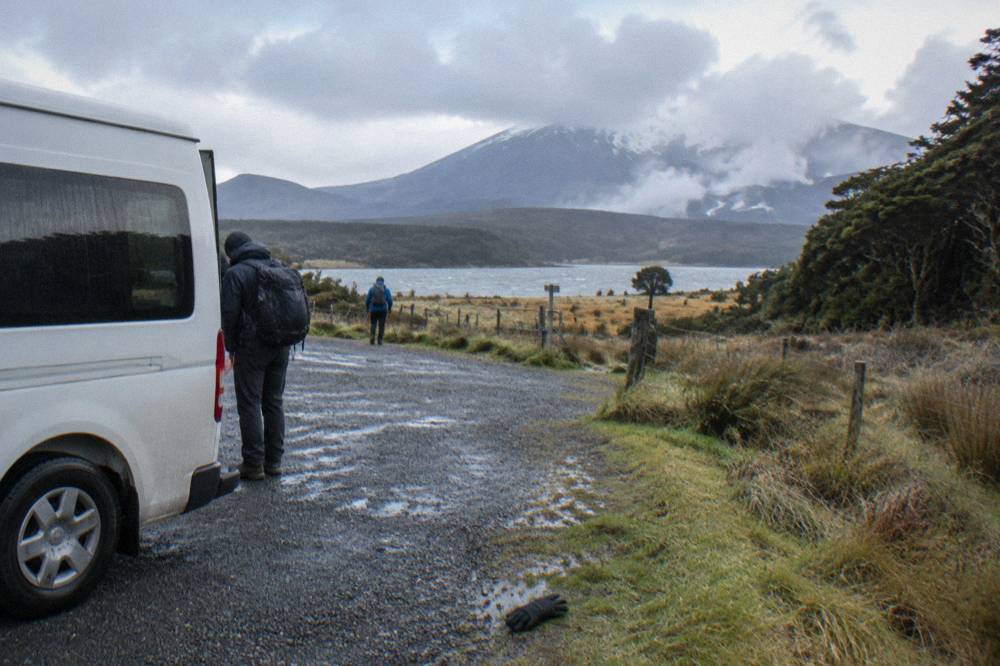
The trade-off is symmetry of risk. A round trip depends on both legs running: if weather turns or you are slow, the afternoon collection is the one you must not miss. A park-and-ride depends only on a single morning ride backwards. Neither runs guaranteed in bad conditions; operators have agreed, as part of their concessions, not to operate when a Hazardous Weather Warning is issued, so book with the expectation of conditions allowing.
There is also a family argument for the round trip. With no car to manage at all, the day compresses into two decisions: be at the pickup, be at the collection. Dempsey Buses accepts children from 6 on both its routes, the lowest stated age minimum among the shuttle products here, which makes its Ohakune and National Park Village round trips the natural shuttle choice for families with young walkers. DOC separately advises the track is not recommended for children under 10, so judge the walk itself, not just the ride, before booking for kids.
Which Is Cheaper: Driving To A Car Park Or Booking A Shuttle?
The cheapest per-person option on this site is the Active Outdoor Adventures one-way shuttle at $34, followed by National Park Shuttles at $34.40, then the Ruapehu Scenic Shuttles and Owhango Adventures park-and-rides at $38 each. The median per-person price across the shuttle products here is $42. Guided options sit far above, from $197 for a half-day guided walk.
Cost is not just the fare. A round trip from a town adds nothing else, while a park-and-ride assumes you already have a car, with fuel and the drive factored in outside these prices. DOC publishes distances from the track rather than drive times: Whakapapa 10.4 km, National Park 13.5 km, Turangi 36.7 km, Ohakune 48 km, Taupo 86.5 km. Those numbers are the honest way to compare where each option leaves you.
| Option pattern | Cheapest from-price | What you pay for | Parking needed |
|---|---|---|---|
| One-way park-and-ride (6 products) | $34 | Single ride Ketetahi to Mangatepopo | Private or secure car park at Ketetahi |
| Round trip, National Park Village | $42 | Both legs, town to road ends and back | None |
| Round trip, Ohakune | $62 | Both legs from 48 km away | None |
| Round trip, Turangi (private) | $51.60 | Both legs, private | None |
| Round trip, Taupo | $80.27 | Both legs from 86.5 km away | None |
One cost item often missed is DOC's conservation contribution. DOC says part of a shuttle fee goes to conservation. That share is not a price and not a comparison point; it just explains why shuttle fares feel high for a short ride.
For the full budget picture beyond transport, the Tongariro Crossing cost breakdown itemises what a day on the track adds up to.
Do You Need A Booking For The Track Itself?
Yes, if you use a shuttle or a guided walk. DOC's booking system, free since October 2023, is required for anyone using a shuttle or guided service, and recommended for everyone else. There is no penalty for arriving without a booking and no cap, and one booking covers a whole group. Show the receipt to rangers at the car park.
The system is a visitor-management tool, not a ticket. Your guide or shuttle operator may make the booking for you, which in practice means most people who book a shuttle or guided tour never handle the DOC step themselves. Independent walkers who park (legally, briefly) still benefit from the free booking, because rangers at the car park check receipts. The full index of guides sits on Tongariro Alpine Crossing Tours.
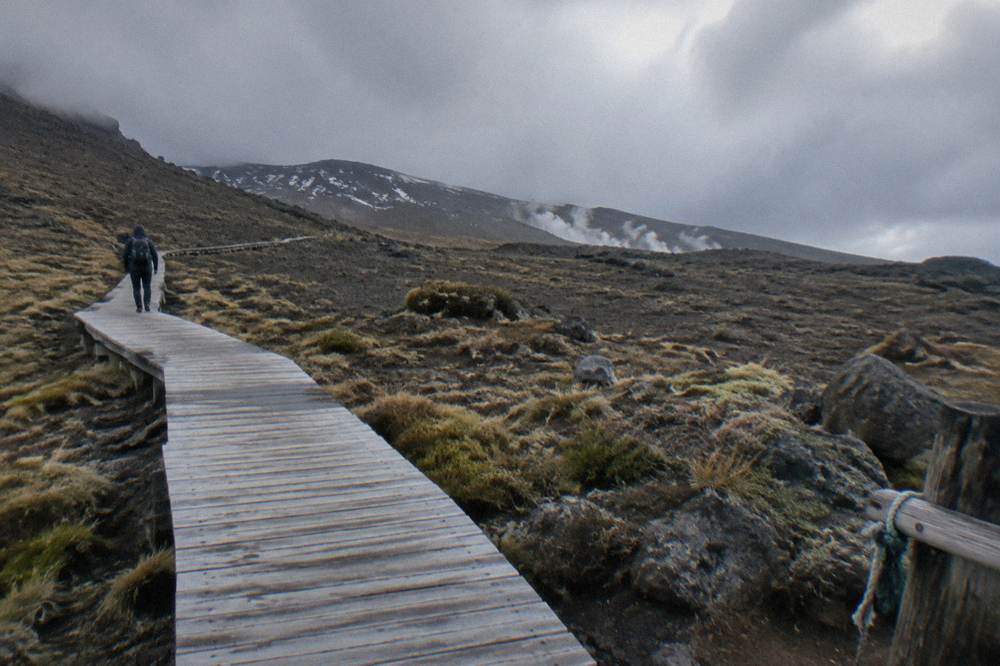
Two practical notes follow from the system. First, hut and campsite holders on the Tongariro Northern Circuit are exempt from the track booking, so multi-day walkers arriving via a different track are not caught by it. Second, the booking is free, so nobody should treat it as a reason to skip the shuttle: the two decisions, track booking and transport, are separate. More detail, including how rangers check receipts, is in booking the Tongariro Crossing.
It is worth being precise about what the booking does not do. It does not reserve a parking space, a shuttle seat or a place in a walking group; those belong to the operator you pay. It does not guarantee the track is open, and it does not override a weather advisory. All it records is that you intend to walk, which helps DOC manage numbers across a summer that funnels thousands of people down a single 20.2 km corridor. Treat it as paperwork, not as a plan.
What Happens To Parking And Shuttles In Winter?
DOC says shuttle buses generally do not operate in winter, from May to late October, while guided trips include transport. The track becomes an Expert route over that period, with an allowed time of 9 hours and only 9 to 11 hours of daylight, so the summer park-and-ride pattern largely disappears and guided transport replaces it.
Winter changes the vehicle question because it changes the walk. DOC's winter essentials list includes crampons, an ice axe and a helmet, described as essential, along with an avalanche transceiver, probe and shovel for independent trips, a PLB, head torch and navigation tools. DOC expects ice on the track between April and October and notes that 38% of tramping injuries come from slipping. The winter forecast picture, including the avalanche forecast, is published at avalanche.net.nz's Tongariro region page.
Adrift Tongariro runs the three guided tours on this site, summer and winter, and all three include round-trip transport from the operator's base at 53 Carroll Street, National Park Village, with crampons and ice axes supplied for winter conditions if required plus a clothing and footwear allowance. Lunch is not included, so bring your own. That transport inclusion is what DOC means when it says guided trips include transport in the months when shuttles stop.
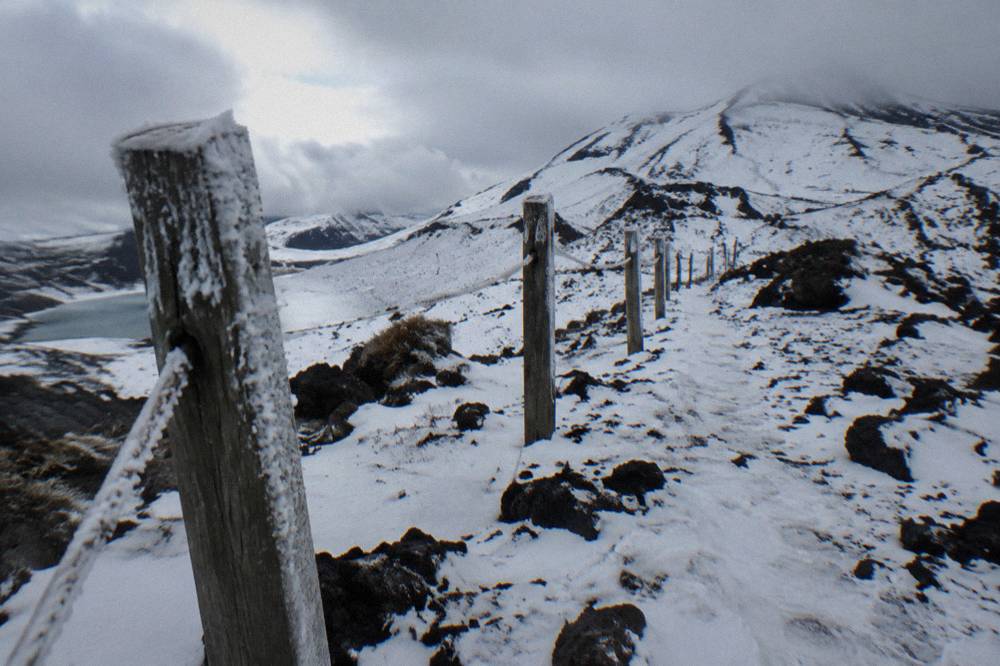
A second winter difference is the advisory system. The summer "Not Recommended Today" advisory, assessed each morning against the NIWA Red Crater forecast thresholds, is not issued from May to October. In winter you read the forecast yourself, and DOC's blunt summary of who the winter track suits lists people who can navigate when marker poles are hidden, rescue in avalanche terrain, prevent a slide and survive worsening weather. DOC's own short advice for everyone else: go with a guide. The full seasonal picture is in the Tongariro winter guided tour guide.
The temperature arithmetic makes the case by itself. On a calm day, DOC says, Red Crater is at least 10 °C colder than Taupo and 5 °C colder than the track start, and you subtract another 2 °C for every 10 km/h of wind. A mild Taupo morning can mean a summit close to freezing, with ice underfoot on the scree where loose rock is already a major slip hazard. Add shorter daylight, 9 to 11 hours, against a 9-hour allowance, and the winter margin between comfortable and serious thins to almost nothing.
Which Option Suits Which Traveller?
Families and groups with a car near the track suit the park-and-ride: National Park Shuttles takes children from 8, the Backyard Tours one-way includes secure parking, so that part is already sorted. Town-based travellers without a car suit the round trips, from $42 in National Park Village. Anyone wanting a guide, winter transport or gear supplied needs one of the three Adrift guided tours instead.
Age limits are per product and worth checking before you book: Dempsey Buses excludes children under 6 on both its round trips, National Park Shuttles one-way has a minimum age of 8, and the Adrift guided tours have a minimum age of 12. DOC separately advises the track is not recommended for children under 10. Group sizes are stated only where stated at all: up to 60 on the Adrift premium guided hike, 37 on the National Park Shuttles one-way, 24 on the Taupo return shuttle.
| If you are | Best fit | From price | Why |
|---|---|---|---|
| Driving, staying near the track | One-way park-and-ride | $34 | Finish at your own car, one leg only |
| In National Park Village without a car | Round-trip shuttle | $42 | Both legs, 13.5 km from the track |
| In Ohakune | Dempsey Buses return | $62 | Only Ohakune round trip here |
| A group wanting privacy | Backyard Tours one-way or Turangi return | $44.72 / $51.60 | The Turangi return is private |
| Wanting a guide, gear or winter transport | Adrift guided tours | $197 | Guide, gear and round-trip transport |
Cancellation terms follow the same per-product logic. The Adrift premium guided hike and half-day walk allow cancellation up to 14 days before for a full refund; most shuttles allow 24 hours. Two products are different: the Adrift private guided Crossing and the ExperienceKart three-day tour are non-refundable and cannot be changed. The booking page shows the cancellation terms for each product, so read them there rather than assuming.
Comfort on the walk is part of the choice too. Toilets sit every 1 to 2 hours along the track, and if there is a queue at Mangatepopo the next toilets are 1 km, about 20 minutes, further on. The first 5.4 km share the easy Soda Springs Walk, a 2-hour return option that serves as a fallback for anyone in the group not up for the full distance, which is one more reason a car at the Ketetahi end can help: a turnaround plan is easier when the exit is your own vehicle, not a fixed collection time.
What Are The Risks Of Getting It Wrong?
The main risks are a long walk back to a badly parked car, a missed afternoon collection on a round trip, or showing up in winter expecting a shuttle that does not run. Each is avoidable: park-and-ride at Ketetahi, know your collection arrangement before you start walking, and book guided transport for the May-to-late-October season.
The one-way shape of the track is the trap. A walker who parks at Mangatepopo in defiance of the summer rules faces a 20.2 km walk that ends at the opposite road end, a long drive from the car, and the road between the ends is not a walking route. The park-and-ride pattern exists precisely to make the finish and the car coincide. DOC's distances make the same point another way: the two road ends are connected only by a long drive around, not by the track.
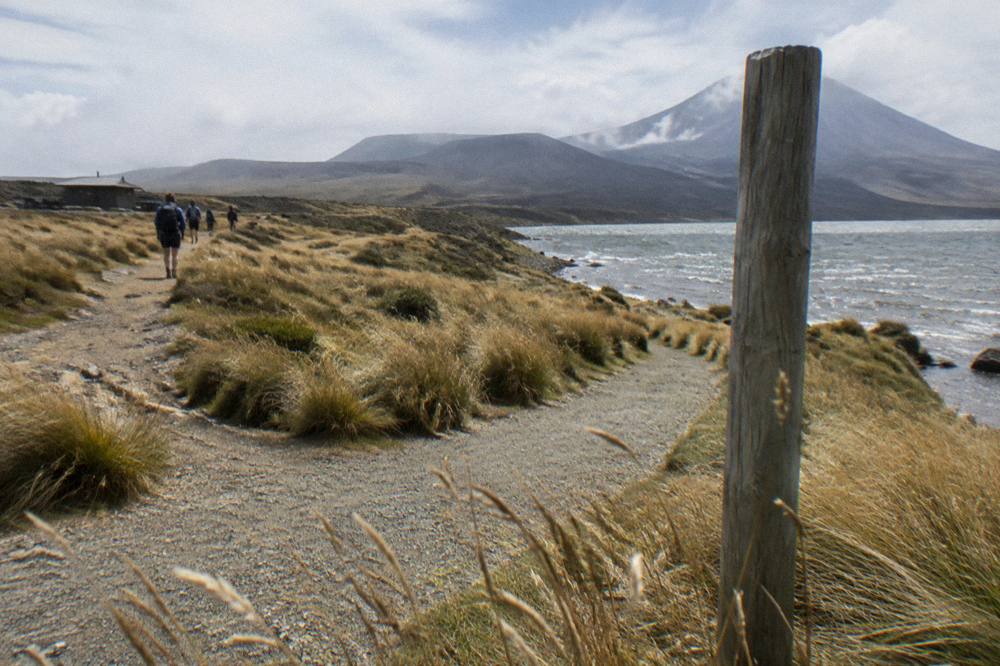
Weather is the second risk, and it is shared by every option. Book with free cancellation where it matters, keep an eye on the DOC Tongariro Alpine Crossing page and alerts, the GeoNet volcanic information, the NIWA Red Crater forecast and the MetService mountain forecast, and treat every departure as conditions allowing. DOC notes the track traverses an active volcanic area and that, although unlikely, eruptions can occur at any time.
Respect for the maunga is the third, quieter responsibility. The Crossing runs through mountains sacred to Ngati Hikairo ki Tongariro of Ngati Tuwharetoa, in New Zealand's oldest national park, gazetted in 1894, and a dual World Heritage area. Ngati Hikairo ki Tongariro ask visitors to respect the sacred mountains by not touching or entering any waterways, including the alpine lakes. After the late 2025 fires near the start of the track, visitors are also asked to stay on the track, clean shoes and gear, and take rubbish home.
The car-or-shuttle decision, in the end, is not really about the car. It is about which end of a 20.2 km one-way track you want to finish at, and who is driving when you get there. The mountain does the rest.
Common Questions About Car Park Or Shuttle
Can You Park At The Tongariro Crossing?
Only for up to 4 hours at the road ends from Labour weekend (late October) to 30 April, per DOC, and there is no summer parking for Crossing walkers at Mangatepopo car park at all. A private car park operates near the Ketetahi end, which is what the one-way park-and-ride products use.
Is A Shuttle Better Than Driving For The Tongariro Crossing?
DOC says the best way to get to the Tongariro Alpine Crossing is by shuttle, because of the 4-hour parking maximum and the one-way shape of the track. A round-trip shuttle from $42 or a one-way park-and-ride from $34 both solve the problem; driving alone does not.
How Does The Ketetahi Park-And-Ride Work?
You drive to the Ketetahi end, park at the operator's car park, and ride the shuttle backwards to Mangatepopo. You then walk the full 20.2 km Crossing in its normal direction and finish back at your own car, with no return transfer needed.
Do Tongariro Shuttles Run In Winter?
Generally no. DOC says shuttle buses generally do not operate from May to late October, while guided trips include transport. The Adrift Tongariro guided tours run in both seasons and include round-trip transport from the operator's base in National Park Village.
Do I Need A DOC Booking As Well As A Shuttle Ticket?
A free track booking is needed to use a shuttle or guided walk service, and recommended for everyone. Your shuttle or guide operator may make the booking for you, and there is no penalty for arriving without one.
What Is The Cheapest Tongariro Crossing Shuttle?
The cheapest per-person option here is the Active Outdoor Adventures one-way shuttle with a secure Ketetahi car park, from $34, rated 4.1 across 81 reviews. The cheapest round trip is the Tongariro Crossing Shuttles service from National Park Village, from $42.