Free Things To Do Around Your Guided Tongariro Crossing
The Tongariro Alpine Crossing sits inside a national park where several of the best short experiences cost nothing: shorter walks, ranger greetings, a free booking system and landscapes you can enjoy from the roadside villages.
Short answer
Free options around the Crossing include the Soda Springs Walk, the first 5.4 km of the track and a 2 hour return option, the Taranaki Falls Walking Track and the Tama Lakes Track, both named by DOC as poor-weather alternatives, and free Manaaki Ranger greetings daily from November to April. The DOC track booking itself is free for everyone.
Most people build a whole trip around one 20.2 km day on the Tongariro Alpine Crossing and then wonder what to do with the other days. The good news is that Tongariro National Park gives away a surprising amount for free: a shorter walk along the first section of the Crossing itself, two named alternative tracks within walking range of the villages, a daily ranger presence on the track through the summer season, and a booking system that costs nothing to use. This guide walks through each of those options with the details that matter for planning, and it finishes with how to fit the free pieces around a shuttle or guided tour day. Before setting out on any of these free walks, it helps to know whether sneakers can handle the Tongariro Crossing, since the terrain shifts between sharp rock, loose scoria and sometimes ice.
What Free Things Can You Do Around The Tongariro Alpine Crossing?
The free options are the Soda Springs Walk along the first 5.4 km of the Crossing track, the Taranaki Falls Walking Track and the Tama Lakes Track, both named by the Department of Conservation as alternatives in poor weather, the free daily Manaaki Ranger greetings from November to April, and the no-cost DOC track booking system introduced in October 2023. None of these requires a paid tour.
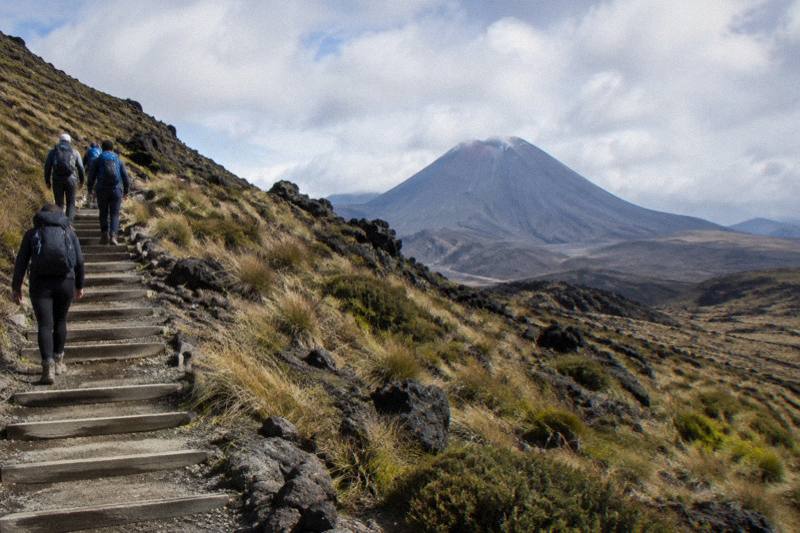
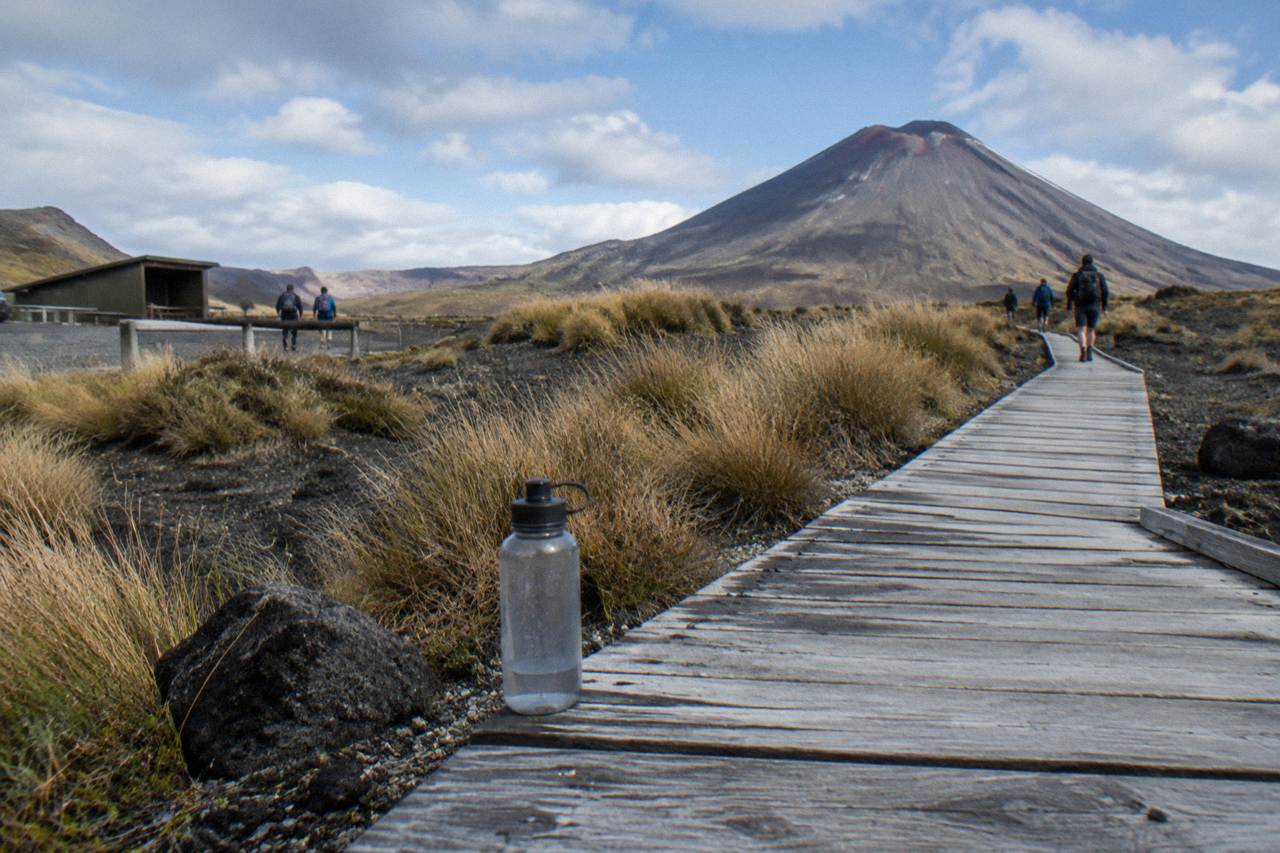
That list is deliberately short and verifiable. Everything on it comes from the Department of Conservation, which manages the park and the track, rather than from tour marketing. The Soda Springs Walk shares its path with the Crossing itself, which means you walk the same boardwalks through the Mangatepopo Valley that the full 20.2 km route uses.
Free here means no entry fee, no track fee and no booking fee. Tongariro is New Zealand's oldest national park, established in 1894, and a dual World Heritage area, first inscribed under the revised cultural landscape criteria in 1993. The mountains are sacred to Ngati Hikairo ki Tongariro of Ngati Tuwharetoa, who made the heart of the mountains sacrosanct in 1887, and that status is part of what keeps the core experiences open to everyone rather than ticketed.
There is a practical reason the free list matters. The Crossing itself is a high-fitness, full-day commitment: DOC grades it High for fitness, steep and undulating, 7 to 8 hours of walking from November to April and 9 hours from May to October. Travel companions who are not up for that, or a spare afternoon after a morning shuttle, are exactly who the shorter free options serve. DOC specifically notes the track is not recommended for children under 10, so families with younger kids often plan a free shorter walk instead of the full route.
Is The Soda Springs Walk A Free Shorter Option?
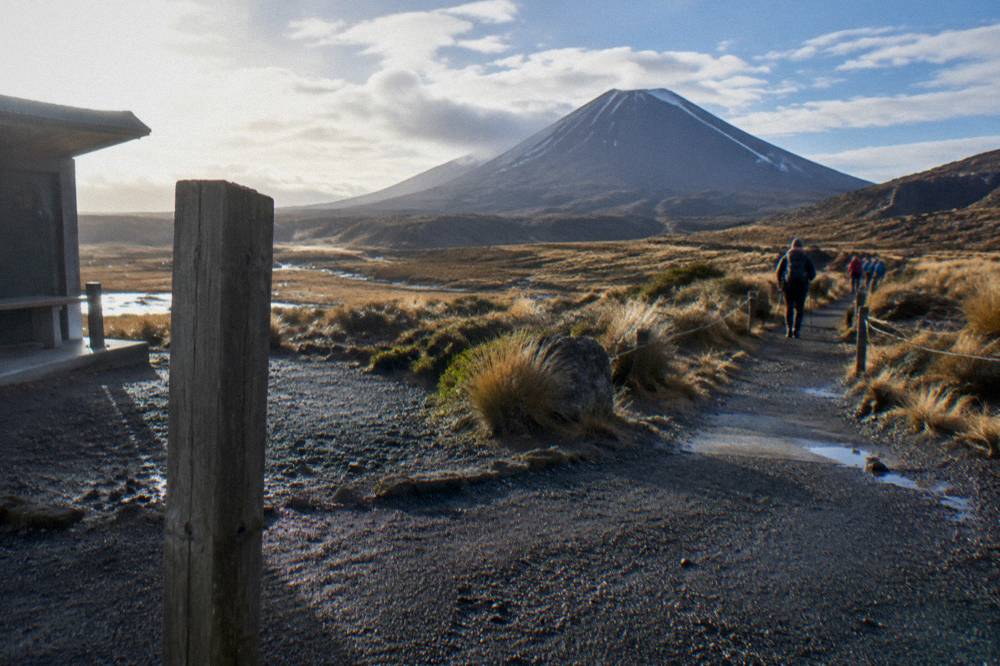
Yes. The Soda Springs Walk is an easy 2 hour return trip that covers the first 5.4 km of the Tongariro Alpine Crossing track through the Mangatepopo Valley, and DOC names it as the fallback for people without the fitness for the harder parts. It is free, and it uses the same starting section of track as the full Crossing.
The walk follows the boardwalked valley floor from the Mangatepopo end, the same 1120 m starting point as the full route, out to the Soda Springs and back. That single fact makes it the most logistically simple free walk in the park: no one-way transport puzzle, no timing pressure, no alpine equipment.
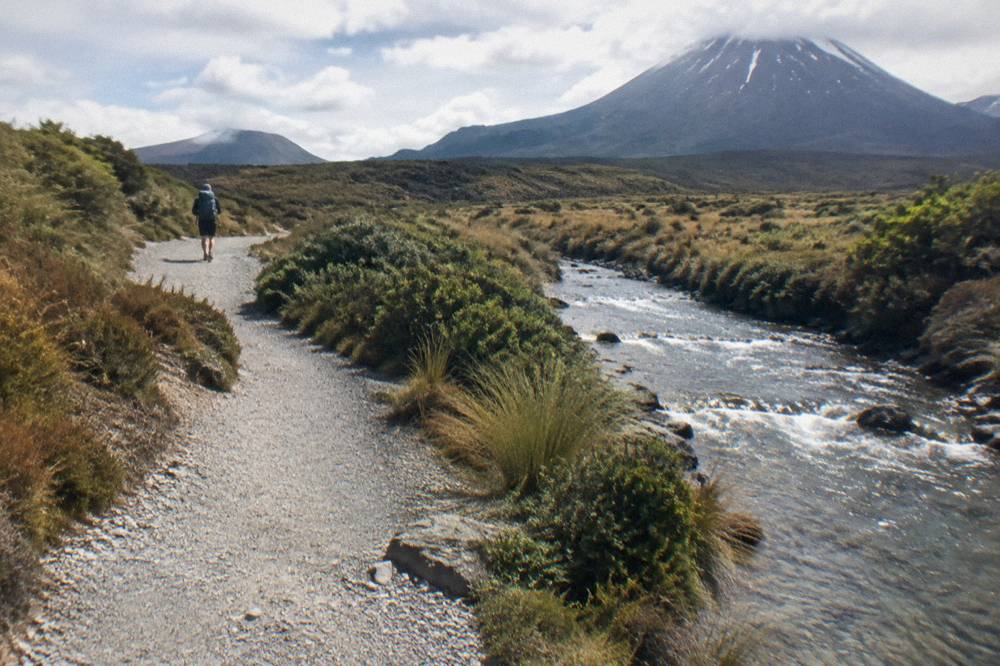
It is also the safest taste of the Crossing for casual walkers. The full route climbs from that valley to Red Crater at 1886 m, with loose scree that DOC calls a major slip hazard, and descends a long zig-zag to finish at Ketetahi Road at 760 m. The Soda Springs Walk stays below all of that. DOC grades it easy, and the 2 hour return time reflects a gentle gradient rather than the staircase climb of around 350 m that begins further up the full route.
One planning note from DOC's summer rules: from Labour weekend in late October to 30 April, a 4 hour maximum applies to parking at the road ends, and DOC says there is no parking for Crossing visitors at Mangatepopo car park in summer at all. A 2 hour return walk can fit inside the 4 hour window in a way a full Crossing never can, but the summer parking squeeze still applies, so check the current advice before driving to the road end.
For readers deciding between the free walk and the paid full experience, the honest framing is this: the Soda Springs Walk shows you the valley, and the Crossing shows you the volcano. The Tongariro Alpine Crossing Tours site covers guided crossings and shuttles: guided walks run from $197 per person, and shuttle and transfer options start at $34.
Which Free Tongariro National Park Walks Are Near The Crossing?
DOC names two free alternatives for poor weather: the Taranaki Falls Walking Track and the Tama Lakes Track, both on the Whakapapa side of the park, 10.4 km from the Crossing track by DOC's distance figures. They sit lower than the Crossing's high section, which makes them the recommended option on days when the alpine route is unwise.
Taranaki Falls and the Tama Lakes are the two DOC poor-weather alternatives, and both sit lower than the alpine section of the Crossing.
Ngauruhoe deserves a note here. Mount Doom is a popular nickname for the cone, and its Mordor look is real scenery on these walks, but no product climbs it and this article treats it strictly as something to look at. DOC's printable cultural request, from kaumātua Te Ngaehe Wanikau, is that visitors respect the sanctity of the sacred mountains by not touching or entering any of the waterways, including the alpine lakes. That request applies on the Tama Lakes Track as much as on the Crossing.
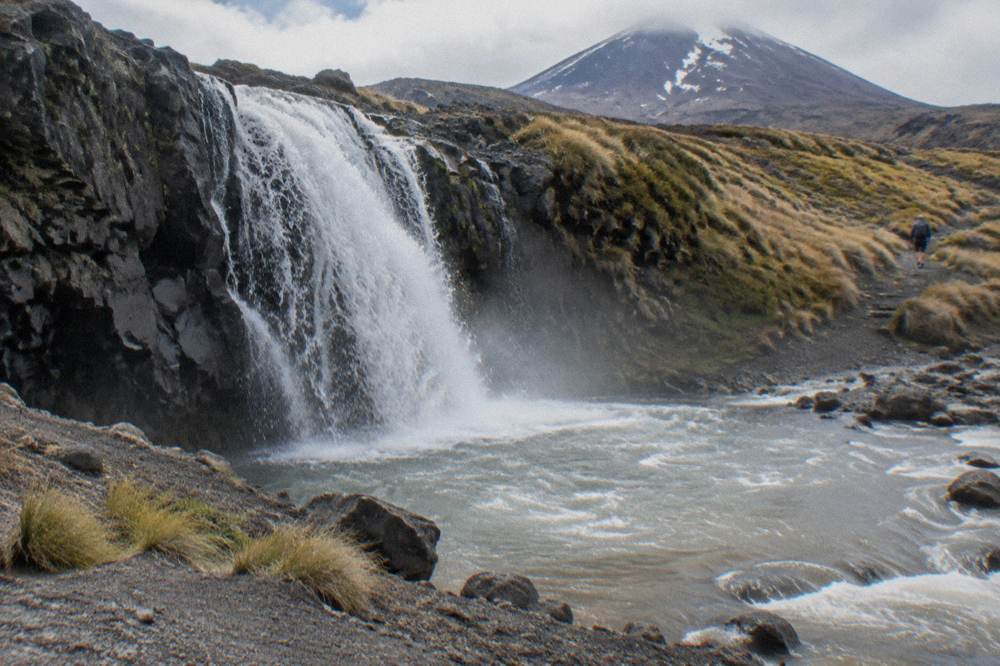
Here is how the free and near-free walking options compare on the facts DOC publishes:
| Walk | Length or type | Time | Grade | Cost |
|---|---|---|---|---|
| Soda Springs Walk | First 5.4 km of the Crossing, return | 2 hr return | Easy (DOC) | Free |
| Taranaki Falls Walking Track | Loop from the Whakapapa side | See DOC | DOC poor-weather alternative | Free |
| Tama Lakes Track | Continues past the falls toward two crater lakes | See DOC | DOC poor-weather alternative | Free |
| Tongariro Alpine Crossing | 20.2 km one way, Mangatepopo to Ketetahi Road | 7 to 8 hr Nov-Apr, 9 hr May-Oct | High fitness, Intermediate summer | Track free, booking free, transport paid |
If that final row has you wondering whether the full Crossing fits into a single day, the guide to completing the Tongariro Crossing in a day explains how shuttles, start times and fitness decide whether the day works.
Whakapapa, at 10.4 km from the track, is the natural base for the two alternative walks, and DOC's other distance figures help place the rest: National Park 13.5 km, Turangi 36.7 km, Ohakune 48 km, Taupo 86.5 km. Those are straight distances from the track, not travel times, but they explain why the free walks cluster near Whakapapa while most shuttle products start from the villages further out.
For context, if you would rather have a guide handle weather calls on the big day, the Adrift Tongariro premium guided Crossing hike covers the full 20.2 km with a guide, return transport included, from $253 per person, rated 4.6 across 241 reviews.
Does The Tongariro Alpine Crossing Booking Cost Anything?
No. The DOC booking system for the track is free for everyone, was introduced in October 2023, and is recommended for all users. A booking is needed to use a shuttle or guided walk service, and the guide or shuttle operator may make the booking for you. Arriving without one carries no penalty, and rangers check receipts at the carpark.
This is the free item people most often get wrong, because a booking requirement sounds like a ticket. It is not. There is no cost, no cap and no penalty for turning up unbooked, according to DOC's own visitor management wording. One booking covers a group, the receipt can be digital or paper, and hut and campsite holders on the Tongariro Northern Circuit are exempt because their hut booking already covers them.
The sequence that matters for a visitor combining free and paid pieces: if you walk the free Soda Springs section or the free alternative tracks, a booking is recommended but not enforced. Show the receipt to the rangers at the carpark.
The system exists because of sheer volume. Rangers greet visitors daily from November to April, and a free booking receipt is the lightest possible way of counting them. Nothing about the free walks in this guide interacts with the booking system beyond that recommendation, so a family splitting up, some doing the Crossing by shuttle and others doing Taranaki Falls, needs only one track booking for the Crossing group.
The booking rules sort cleanly by who is doing what on the track, so here is the full picture at a glance:
| Who you are | Track booking needed? | Cost | Notes |
|---|---|---|---|
| Independent walker, full Crossing or free short walks | Recommended, not enforced | Free | No penalty for arriving without one |
| Anyone using a shuttle or guided walk service | Required | Free | The operator may make the booking for you |
| Tongariro Northern Circuit hut or campsite holders | Exempt | Free | Hut booking already covers the track |
| Any group | One booking per group | Free | Show the receipt, digital or paper, to rangers at the carpark |
When And Where Do The Manaaki Rangers Greet Visitors?
Manaaki Rangers greet visitors daily on the track from November to April and share traditional stories, and the greeting is free. They are present at the carpark end of the route, where booking receipts are shown, through the main walking season.
The ranger programme is the least advertised free experience in the park. DOC describes the rangers as greeting visitors daily through the November to April window and sharing traditional stories, which makes them one of the few direct points of contact with the cultural layer of the World Heritage area. For overseas visitors in particular, a two minute conversation at the road end can carry more meaning than any signage further up the track.
The stories matter because the landscape is not neutral ground. DOC records that Ngatoroirangi, the founding ancestor of Ngati Tuwharetoa, ascended the mountains 30 generations ago and named Tongariro, and that the waterways, the lakes and the peaks Tongariro, Ngauruhoe and Ruapehu are all sacred. The rangers are the human face of that history, and unlike a guided tour they cost nothing and require nothing beyond showing up in season.
Practically, the ranger presence also anchors the safety system. Operators have agreed, as part of their concessions, not to run when a Hazardous Weather Warning has been issued, and signage at the Mangatepopo Road end is part of how advisories reach walkers. More detail on the weather system and the advisory thresholds sits in the Crossing weather and tours guide, which covers what triggers a Not Recommended Today advisory and where to check forecasts.
There is a budget angle too. If the free ranger greeting sparks an interest in a deeper cultural and geological commentary, the paid guided options are the upgrade path, and the question of whether a guided hike exists at all is one this site answers elsewhere in detail.
What Can You See For Free Around The Track Itself?
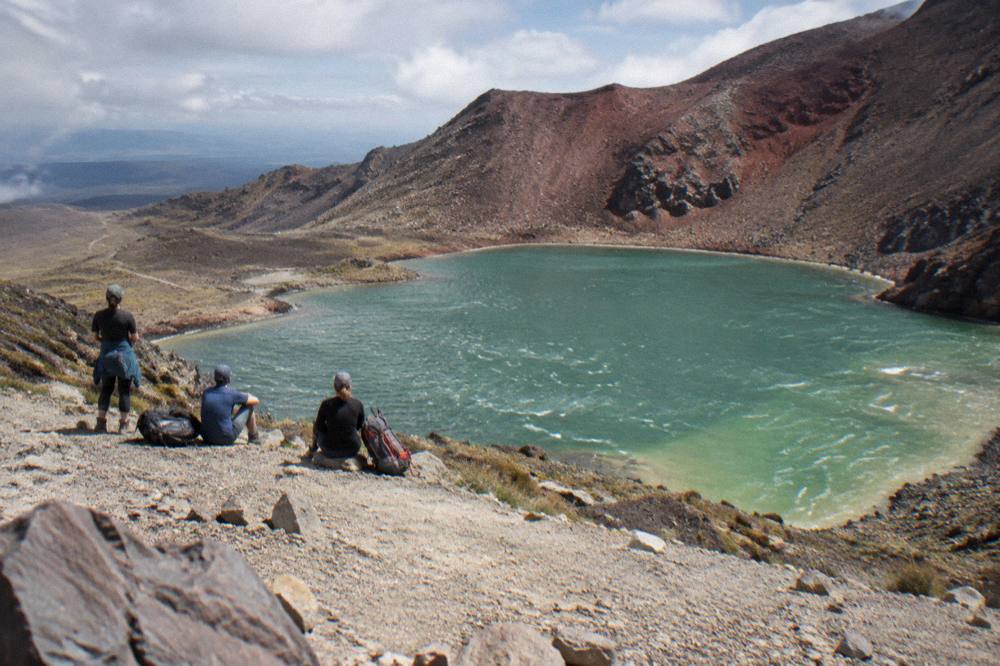
The Crossing's signature features cost nothing to look at once you are on the track: the Mangatepopo Valley boardwalk, the South Crater plateau, Red Crater at 1886 m, the Emerald Lakes, Blue Lake, and the long descent with views over Lake Rotoaira and Lake Taupo. The fee-free status applies to the track itself; the usual costs are transport and gear, not the landscape.
DOC's own route description reads like a highlights reel, and every item on it is free to anyone walking the track: the boardwalk through Mangatepopo Valley, a steady climb of around 350 m by staircase to the South Crater plateau, the ascent to Red Crater at 1886 m, a steep scree descent to the Emerald Lakes, Blue Lake, also called Te Wai Whakaata o Te Rangihīroa, and a long zig-zag descent of the northern slopes with views over Lake Rotoaira and Lake Taupo before forest and the finish at Ketetahi Road, 760 m.
Two free-adjacent rules protect those features and are worth knowing before you go. First, the geothermal rule: fumaroles steam near the Emerald Lakes, and DOC asks visitors not to approach steam vents and not to touch or enter any lake. Second, the drone rule: no drones without a permit. Both are cultural and safety rules rather than fees, and both are easy to comply with once you know they exist.
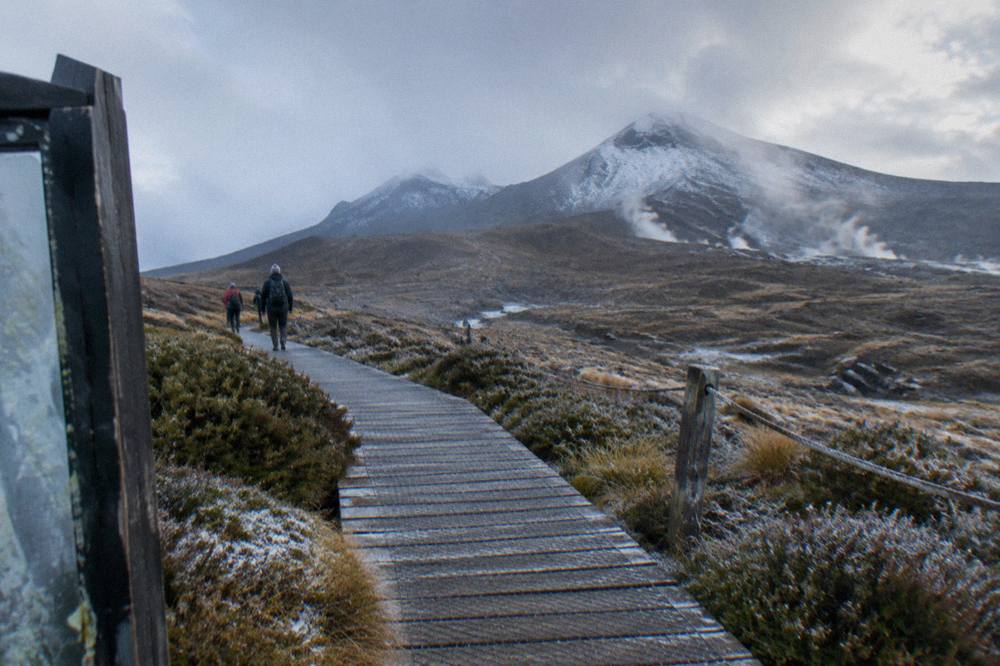
The free-looking landscape carries hazards worth respecting even in fine weather. The area is an active volcanic one, with a 3 km hazard zone around each of the three vents, Te Maari, Red Crater and Ngauruhoe, and the most recent eruption from Te Maari in 2012. Current status is not something a planning article can promise, so check the DOC Tongariro Alpine Crossing page and alerts, and GeoNet, before any walk.
How Do The Late 2025 Fires And The Rahui Change A Visit?
Two fires in late 2025 burned significant areas of Tongariro National Park around the start of the Crossing, and the hapu Ngati Hikairo ki Tongariro placed a 10-year restorative rahui over the affected area. Visitors are asked to stay on the tracks, keep out of fire-affected areas off track, clean shoes and gear, and take rubbish home. The rahui is not about keeping people out.
That last phrase is DOC's own, from spokesperson Te Ngaehe Wanikau, and it is the key to reading the restrictions correctly. Blackened landscapes and regrowth are now part of the scenery near the start of the route, and the request is to observe them from the track rather than wandering into the recovering areas.
The gear-cleaning request is the one with practical teeth. Cleaning shoes and gear before arrival helps prevent the spread of pests and pathogens into regenerating ground, and it costs nothing, takes a minute, and is the single easiest thing a visitor can do to honour the rahui. Taking rubbish home is the same: free, and directly tied to the restoration.
For walkers combining the free options, the rahui applies most visibly to the Mangatepopo end, where the Soda Springs Walk runs. That walk stays on track by design, so a visitor doing it as described is already compliant. The same respect request covers the waterways, as covered earlier, so the free experience and the cultural framework point in the same direction.
Which Free Activities Fit Around A Shuttle Or Guided Tour Day?
The best fits are the Soda Springs Walk or a village-side stroll on the day before an early shuttle start, the Taranaki Falls and Tama Lakes tracks on the day after, and the ranger greeting on the morning of the Crossing itself, since shuttle and guided days begin early and absorb most of the daylight. Free activities slot into the shoulders of a paid tour day, not the middle.
The shape of a Crossing day drives everything. Shuttles and guided tours begin early to fit the 7 to 8 hour walking window plus transport into daylight, so the day of the walk itself is not the day for a second track. DOC's booking guidance, parking rules and ranger presence all cluster around that early start, and the walker who plans free activities for the days either side gets a fuller trip without a second big booking.
Pairing free and paid pieces sensibly looks like this:
| Day | Paid piece | Free piece that fits |
|---|---|---|
| Day before | Book any shuttle or guided walk, free track booking arranged | Soda Springs Walk, 2 hr return, easy pace |
| Crossing day | Shuttle or guided hike, an early start | Manaaki Ranger greeting and stories at the road end |
| Day after | Nothing needed | Taranaki Falls Walking Track, or continue to the Tama Lakes |
| Poor weather day | Crossing deferred or cancelled | DOC's named alternatives, both free, lower altitude |
Transport is where the paid and free worlds meet, and it is worth being precise. The cheapest per-person paid option in this site's figures is the Active Outdoor Adventures one-way shuttle with a secure Ketetahi car park, from $34 per person, and the most reviewed tour here is the Tongariro Crossing Shuttles round trip from National Park Village, rated 4.7 across 886 reviews from $42 per person. DOC notes that shuttle buses generally do not operate in winter, May to late October, while guided trips include transport, so free-walk planning in the off-season assumes a private vehicle.
For anyone planning a trip purely around the shuttles, the detailed comparison lives in the shuttle from National Park Village guide and the broader Crossing shuttle guide, both of which break down round-trip and one-way options by operator and start point.
Is A Free Trip Better With One Paid Day Added?
For most visitors, yes: the free walks cover the shoulders of the trip, but the Crossing itself is the reason people come, and its 20.2 km one-way shape makes transport close to essential in summer. One paid day, a shuttle from $34 per person or a guided hike from $197 per person, buys the headline experience while the free options fill the rest.
The honest budget picture is that Tongariro is one of the cheaper headline destinations in New Zealand precisely because the track is free and the booking is free. The paid layer is transport and expertise: shuttles because summer parking rules and the one-way geometry make self-driving awkward, and guides because the winter route is graded Expert, with ice expected from April to October and DOC advising crampons, ice axe and helmet as essential, along with avalanche equipment for independent trips.
On that winter point, the free-access status of the track cuts both ways. DOC's winter essentials list, published on the official track page, expects walkers to carry avalanche transceiver, probe and shovel for independent trips, and DOC's plain summary of who the winter route suits is people with alpine skills who can navigate when marker poles are hidden and rescue in avalanche terrain. The free entry does not reduce the requirement, and DOC's own advice is simply "go with a guide", which is the one sentence that justifies the guided products on this site.
Gear, too, belongs to the paid-or-brought category rather than the free one: track water is not drinkable, so DOC recommends carrying 2 to 3 litres, plus sturdy boots and waterproof layers, on every walk in this article, free or not. Toilets sit every 1 to 2 hours along the Crossing, and if there is a queue at Mangatepopo the next ones are 1 km, about 20 minutes, further on, which is the kind of small planning fact that makes a free family walk go smoothly.
If a shuttle-only day is the paid piece you choose, the round-trip option from National Park Village is the natural companion to the free walks around Whakapapa, since it returns you to the same village cluster at the end of the day.
And if you prefer to park once at the Ketetahi end, ride to the start and walk back to your own car, the one-way park-and-ride is the other main format, with secure parking included on several options.
Either format leaves the rest of your days open for the free tracks, the rangers and the valley, which is exactly the balance this guide recommends.
Common Questions About Free Things Around The Crossing
Is The Soda Springs Walk Really Free?
Yes. It uses the first 5.4 km of the Crossing track, is graded easy by DOC, takes about 2 hours return and has no fee and no booking requirement, though a free track booking is recommended.
Do I Need To Pay For The Tongariro Alpine Crossing Booking?
No. The DOC booking system is free for everyone. It is recommended for all track users and required if you use a shuttle or guided walk service, and the operator may make the booking for you.
What Are The Free Alternatives If The Crossing Weather Is Bad?
DOC names the Taranaki Falls Walking Track and the Tama Lakes Track, both free, both lower than the Crossing's alpine section and both reached from the Whakapapa side of the park.
Are The Manaaki Rangers Free To Talk To?
Yes. The rangers greet visitors daily from November to April, share traditional stories and check booking receipts at the carpark, all at no cost.
Can I Park For Free Near The Free Walks?
DOC applies a 4 hour maximum at the road ends from Labour weekend in late October to 30 April, and says there is no summer parking for Crossing visitors at Mangatepopo car park. Check current DOC parking advice before driving to any road end.
Is The Tongariro Alpine Crossing Track Itself Free?
Yes, the track has no entry fee. The usual costs are transport and, for guided trips, the guide. Winter walkers should note DOC expects alpine skills and equipment for an independent trip in that season.