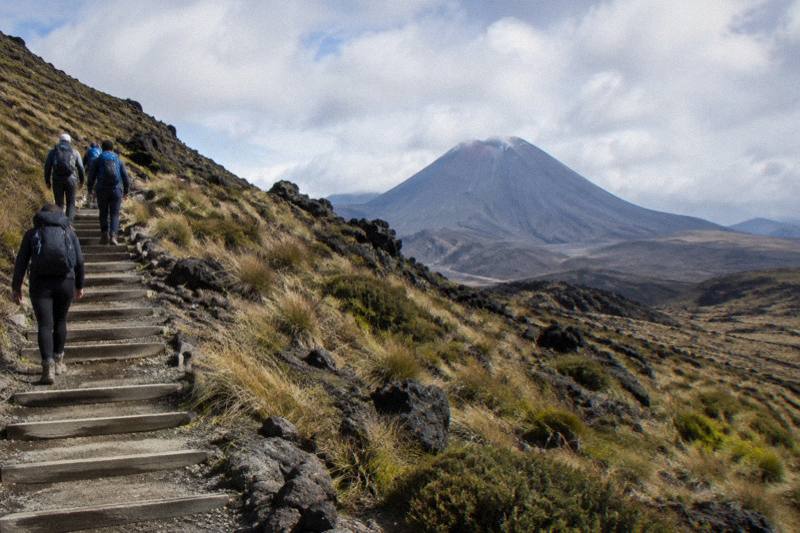
Tongariro Crossing Weather: How It Decides Guided Tours And Shuttles
Weather, not fitness or price, is the single thing most likely to change your Tongariro Alpine Crossing plans. Here is how the forecast system works, what it means for guided tours and shuttles, and which product to book for the conditions.
Short answer
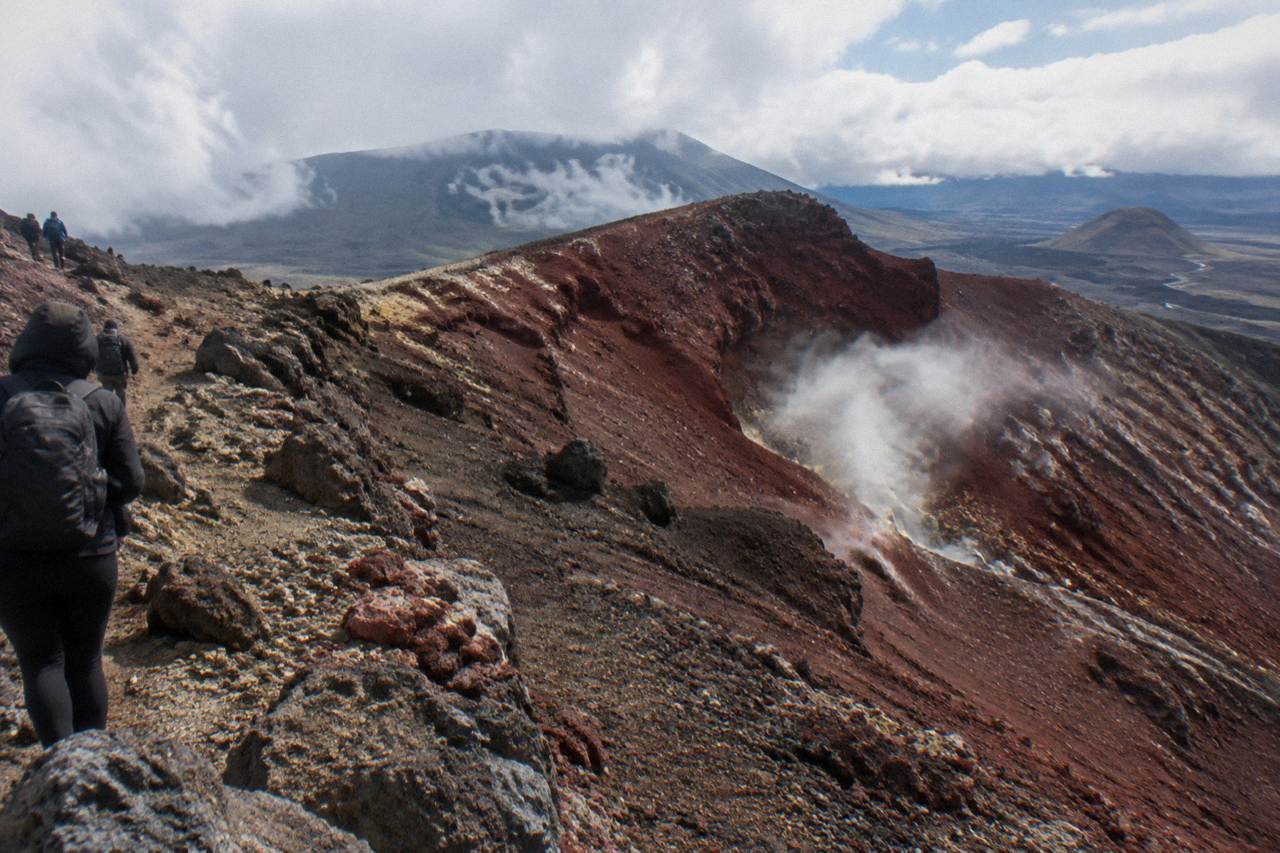
DOC issues a summer Not Recommended Today advisory when any two hours of the NIWA Red Crater forecast between 9 am and 5 pm hit set wind, wind chill, rain or snow thresholds, assessed each morning. From May to October no advisories are issued at all. Guided tours and shuttles run only conditions allowing, which makes the forecast the real decider of what you book.
Weather decides more Tongariro Alpine Crossing days than tired legs ever do. The track climbs from 1120 m at Mangatepopo to Red Crater at 1886 m, and on a calm day DOC says the summit ridge is at least 10 °C colder than Taupo, subtract another 2 °C for every 10 km/h of wind. A day that feels mild in town can be brutal on the crater edge, and DOC, guided operators and shuttle companies all read the same forecast before anyone sets foot on the mountain. The gap between a gentle morning at the trailhead and punishing wind on the ridge is exactly why the full safety guide to the Tongariro Crossing is worth a read before you lock in a start date.
This guide explains how the weather system around the Crossing actually works: the summer advisory triggers, the winter rules that replace them, and what each tour type does when conditions turn. It connects that forecast directly to the booking decision, because a round-trip shuttle, a one-way park-and-ride and a guided hike each carry different weather risk.
How Does DOC Decide The Weather Is Too Bad For The Tongariro Crossing?
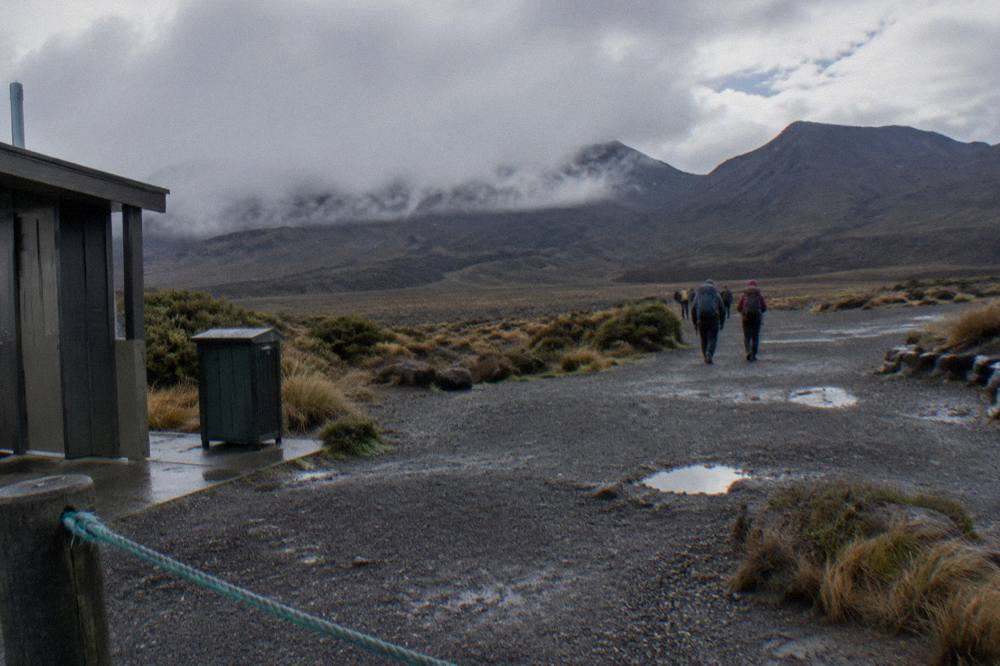
DOC issues a summer Not Recommended Today advisory when any two hours of the NIWA Red Crater forecast between 9 am and 5 pm reach these thresholds: average wind 55 kph, gusts 70 kph, wind chill -10 °C, wind chill 0 °C with 1 mm of precipitation, rain 2.5 mm per hour, snow 0.1 cm per hour, or 10 mm of rain over six hours; the advisory is assessed each morning and posted at the Mangatepopo road end.
That is the full mechanical rule, and it is worth reading closely because it explains something visitors often miss: the advisory is not a closure. The track itself is not shut by a bad forecast in summer. What happens instead is signage at the Mangatepopo road end, an alert on the NIWA Tongariro Alpine Crossing forecast page, and an email to operators and isites, all telling people the same thing, today is not a sensible day for this walk.
The thresholds matter because they combine. A calm day with light rain can pass every wind trigger and still trip the rain rule through sheer persistence: 10 mm across six hours is not a storm, it is a miserable six hours above the bushline. A dry day with a howling nor'wester trips the wind chill rule instead, because wind chill of -10 °C feels the same whether or not anything is falling from the sky.
DOC says operators have agreed, as part of their concessions, not to operate when a Hazardous Weather Warning has been issued, so on warning days guided tours and shuttles do not leave. That is the practical reason a reader checking the weather is really checking whether and when to book: a forecast that trips the thresholds takes every product off the mountain at once. The main planning guide covers the walk itself; this page is about the forecast that governs it.
The advisory season runs November to April, the same window in which Manaaki Rangers greet visitors daily at the track. In that period you can reasonably check the NIWA Red Crater forecast each morning and act on it. The sources to bookmark are the DOC Tongariro Alpine Crossing page for alerts and the NIWA forecast for the raw numbers.
| Trigger | Threshold on the NIWA Red Crater forecast |
|---|---|
| Average wind | 55 kph or more, in any two hours between 9 am and 5 pm |
| Gusts | 70 kph or more |
| Wind chill | -10 °C or colder |
| Wind chill with precipitation | 0 °C or colder plus 1 mm precipitation or more |
| Rain rate | 2.5 mm per hour or more |
| Snow rate | 0.1 cm per hour or more |
| Sustained rain | 10 mm over six hours |
Any one of these, sustained across two qualifying hours, is enough. The assessment is done each morning, which is why conditions can look perfect the night before and still cancel a departure by breakfast.
What Role Does Weather Play When You Book A Shuttle Or Guided Tour?
Weather decides the day for guided hikes: DOC's advisory is a recommendation rather than a closure, operators have agreed as part of their concessions not to run when a Hazardous Weather Warning is issued, and shuttle departures are weather-dependent, so a booking is always a bet that the morning assessment comes back clear. Shuttles are transport only, guided tours carry alpine gear and a guide, and both are pulled on warning days. Free cancellation windows, 14 days on some guided tours and 24 hours on many shuttles, are your buffer when the forecast turns.
Think of the booking as two decisions stacked on top of each other. The first is which product: a guided hike with the Adrift Tongariro premium guided hike includes a guide, return transport and crampons and ice axes if winter conditions require them, from $253 per person, rated 4.6 across 241 reviews. The second is whether the day holds, and that part belongs to the mountain, not the operator.
That is why the cancellation terms deserve as much attention as the price. The Tongariro Crossing Shuttles round-trip from National Park Village, from $42 per person and rated 4.7 across 886 reviews, states free cancellation up to 24 hours before, which lines up neatly with an advisory assessed each morning. The Adrift guided tours state free cancellation up to 14 days before, a longer runway that suits travellers locking in accommodation early. Two products on this site state non-refundable terms outright: the Adrift Tongariro private guided Crossing and the ExperienceKart three-day tour from Auckland. The booking page shows the cancellation terms for each.
Weather also shapes which start point makes sense. The full picture of departure options is in the tours by departure town guide, but the weather angle is simple: the further you start from the track, the earlier your day begins and the less slack you have if a departure is pushed to a better day.
The round-trip shuttle is the most reviewed tour here by a wide margin, and its 24-hour cancellation window is well matched to a forecast that is only resolved the morning of. You can compare the two cancellation postures, shuttle versus guided, in detail in the guided versus independent comparison.
Why Is Red Crater So Much Colder Than The Car Park?
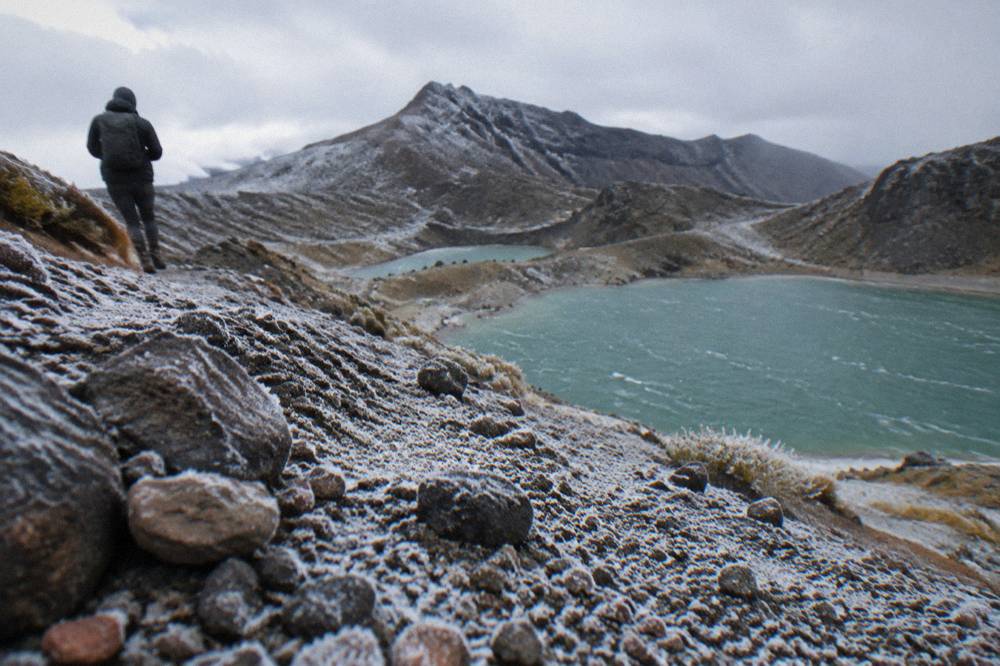
DOC's temperature rule for the Crossing is that on a calm day Red Crater, at 1886 m, is at least 10 °C colder than Taupo and at least 5 °C colder than the track start at Mangatepopo, and you subtract a further 2 °C for every 10 km/h of wind. A 10 °C afternoon in Taupo can mean about 2 °C on the crater rim before wind chill is even counted.
This rule is the single most useful piece of weather arithmetic a visitor can carry, because it converts a town forecast into a mountain forecast without any special knowledge. Most people experience the Crossing's weather as a shock precisely because they dressed for the valley. The start at Mangatepopo, 1120 m, can be sunny and still, and the summit can sit in cloud with a wind that doubles the apparent cold.
The detailed kit list is in the what to bring guide. Water matters too, 2 to 3 litres per person, since track water is not drinkable.
For guided walkers, some of that burden shifts to the operator. The Adrift guided tours state a clothing and footwear allowance alongside crampons and ice axes for winter conditions if required. For shuttle-only products, gear is your own affair, and the forecast arithmetic above is what you should pack against.
A shuttle booking with a 24-hour free cancellation window is a fair hedge against the temperature rule: if the morning assessment turns bad, you are not locked in.
What Changes Between Summer And Winter Weather On The Crossing?
Summer, November to April, is a 7 to 8 hour walk on an Intermediate tramping track with an advisory system watching the forecast. Winter, May to late October, is an Expert route on snow and ice needing about 9 hours, with no advisories issued at all, meaning you read the forecast yourself, and DOC's advice is blunt: go with a guide.
The two seasons are almost different mountains. In summer the hazards are wind, rain and cold driven by the thresholds above, and the infrastructure around the track, rangers, shuttles and advisory signage, is all running. DOC notes that shuttle buses generally do not operate during winter, while guided trips include transport, which quietly reorders the whole market: in the cold half of the year the guided products are the ones still moving. Other pages covering the same trip are gathered on Tongariro Alpine Crossing Tours.
Winter daylight is short, 9 to 11 hours by DOC's count, against a walk that needs about 9 hours, so DOC tells winter walkers to always take a head torch. Ice is expected on the track from April to October, and DOC states that 38 percent of tramping injuries come from slipping. The winter essentials list is serious equipment: crampons, ice axe and helmet, plus avalanche transceiver, probe and shovel for independent trips, and the competency to use all of it.
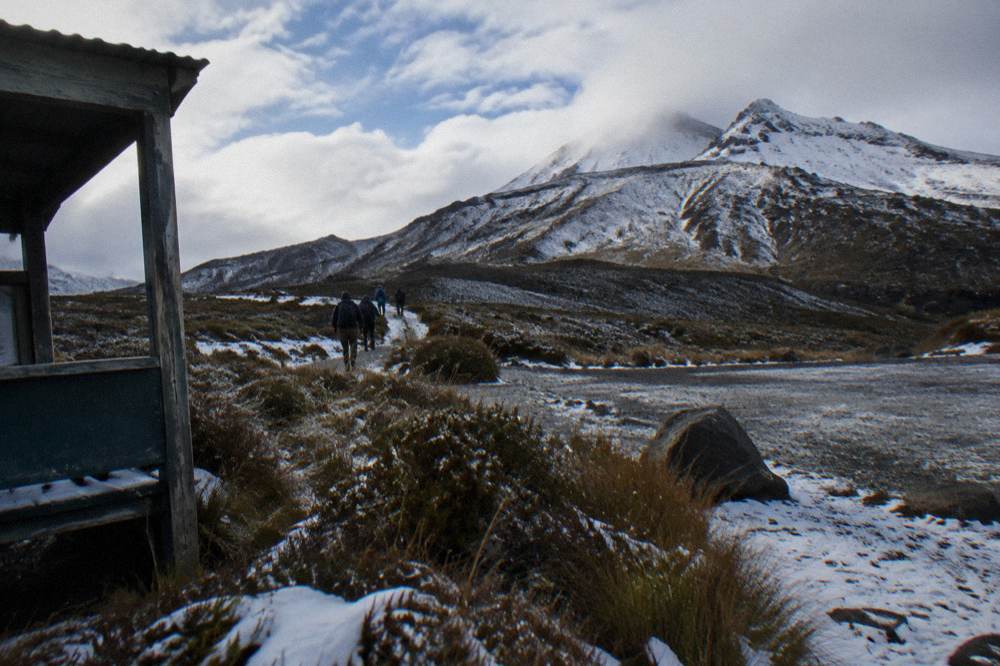
There is a risk asymmetry that matters for bookings. In summer, a bad forecast produces an advisory and your shuttle may not run; the downside is a rescheduled day. In winter, with no advisory system running, a bad forecast produces nothing official at all, just a mountain that does not forgive mistakes. That is the season in which the three Adrift Tongariro guided tours, which run summer and winter and supply crampons and ice axes when conditions require, earn their price difference over a shuttle fare.
| Factor | Summer (Nov-Apr) | Winter (May-late Oct) |
|---|---|---|
| Track category (DOC) | Intermediate tramping track | Expert route |
| Walking time (DOC) | 7 to 8 hours | 9 hours |
| Daylight (DOC) | Long days | 9 to 11 hours |
| Hazard advisory | Assessed each morning, Nov-Apr | None issued |
| Shuttles | Generally operating | Generally not operating |
| Guided trips | Running | Running, transport included |
| Ice on track | Possible | Expected, April to October |
Winter planning has its own page, the winter guided tour guide, but the headline for weather purposes is that a guided product is the only one that reliably keeps moving once the shuttles stop.
Which Tours Still Run When The Weather Is Marginal?
When conditions are marginal but below the advisory thresholds, the products best placed to run are the guided tours, since a guide carries alpine experience, gear and the authority to turn the group back. The Adrift Tongariro premium guided hike runs summer and winter from $253 per person, rated 4.6 across 241 reviews, with return transport included and free cancellation up to 14 days before.
Marginal is the interesting case. A forecast that fails no threshold but sits close to several is a day when independent walkers make private judgments and guided walkers hand that judgment to a professional. DOC's own winter summary of who the track suits, people with alpine skills who can navigate hidden marker poles, rescue in avalanche terrain and survive worsening weather, ends with short advice that applies to marginal summer days too: go with a guide.
The Adrift Tongariro premium guided hike meets at the Adrift base, 53 Carroll Street, National Park Village, runs 8 to 9 hours as a booked day, takes walkers from age 12, caps groups at 60 and supplies crampons and ice axes for winter conditions if required along with a clothing and footwear allowance. Lunch is not included, so bring your own.
A shorter option exists for anyone whose main worry is a long day in uncertain weather. The Adrift Tongariro half-day guided walk is a guided 4-hour walk, not the full Crossing, from $197 per person, rated 4.7 across 27 reviews, with the same free cancellation up to 14 days before. Cutting the objective shrinks the weather window you need, which is exactly the trade a nervous forecaster should consider. The full comparison of guided options is in the guided tour guide.
For weather beyond the walk itself, GeoNet is the official volcanic monitoring source, and winter travellers should add the avalanche forecast for the Tongariro region to their morning reading.
How Does Weather Affect Shuttle-Only Options?
Shuttles are weather-exposed in a different way: they are transport, not guidance, so they run or they do not, and on advisory days they do not. The one-way park-and-ride products are the most weather-sensitive of all, because you finish the walk at your own car with no return leg to fall back on if conditions push you off the track early.
The mechanics matter. A one-way park-and-ride means you park at the Ketetahi end, ride to Mangatepopo, and walk the Crossing back toward your own car. It is the cheapest way onto the track, from $34 per person with the Active Outdoor Adventures one-way shuttle with a secure Ketetahi car park, rated 4.1 across 81 reviews. But it is an all-or-nothing day: if weather forces a turnaround at South Crater, you walk back the way you came, because there is no afternoon pickup waiting at the far end.
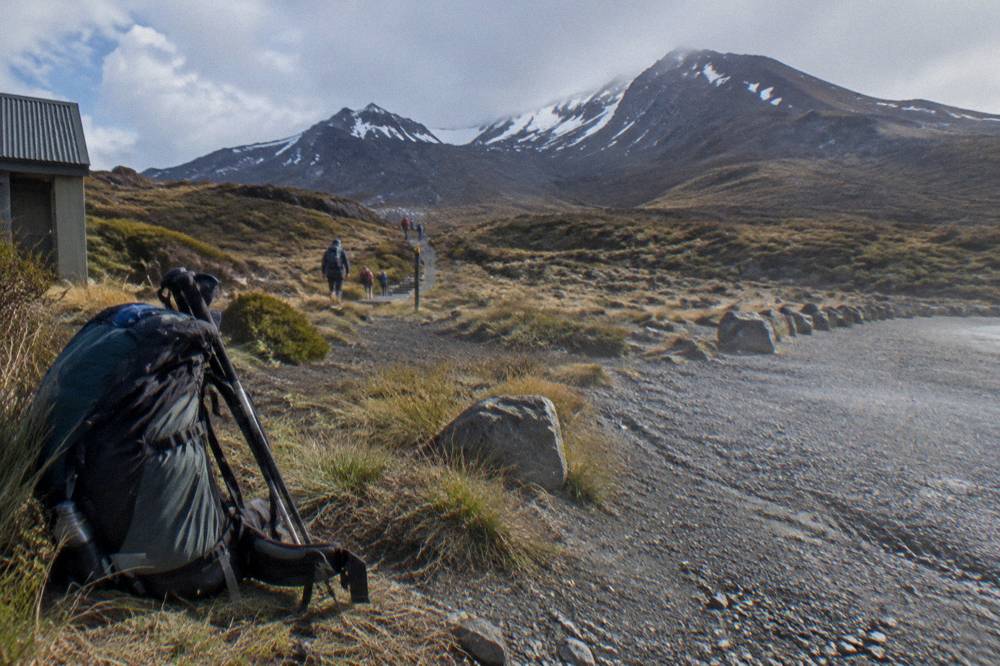
A round-trip shuttle spreads that risk differently. The Tongariro Crossing Shuttles round-trip from National Park Village starts at the Park n Ride, 59 Findlay Street, and returns you from Ketetahi in the afternoon, from $42 per person. The Dempsey Buses round-trip shuttle from National Park Village, from $51 per person and rated 4.8 across 72 reviews, collects from pickup points in National Park Village, with the same afternoon return from Ketetahi. Neither is guided, a shuttle is transport, but both give you a scheduled exit from the far end regardless of how your legs feel.
The park-and-ride posture suits confident walkers on a settled forecast, and its free cancellation up to 24 hours before gives a small escape hatch. The round-trip-versus-park-and-ride trade-off, parking rules included, is unpacked in the car park or shuttle guide.
| Product | Type | From (per person) | Weather exposure |
|---|---|---|---|
| Tongariro Crossing Shuttles round trip | Round-trip shuttle | $42 | Scheduled far-end exit, most reviewed tour here, 886 reviews |
| Dempsey Buses round trip (National Park Village) | Round-trip shuttle | $51 | Same far-end exit, pickup points in National Park Village |
| Ruapehu Scenic Shuttles Ketetahi park-and-ride | One-way shuttle | $38 | No return leg, finish at your own car |
| Active Outdoor Adventures one-way with secure car park | One-way shuttle | $34 | Cheapest entry, all-or-nothing day |
| Adrift Tongariro premium guided hike | Guided hike | $253 | Guide and alpine gear, runs summer and winter |
Every fare above is a from-price in USD; the live booking page carries the current figure and the exact cancellation terms.
What Should You Check Each Morning Before A Tongariro Crossing?
Check three things: the NIWA Red Crater forecast against the advisory thresholds, the DOC Tongariro Alpine Crossing alerts page for track status, and, in winter, the avalanche forecast. Do this in the days before you travel, not only on the morning, because cancellation windows of 24 hours and 14 days reward early decisions, and operators are emailed the moment an advisory is applied. If those checks turn up a closure, the guide to Tongariro Crossing closures explains how track status and volcanic alert levels affect shuttles and guided tours.
The habit matters as much as the sources. A traveller who watches the forecast for the three days before a booked shuttle sees the pattern forming, a front crossing, a ridge building, and can move or cancel inside the free window. A traveller who checks at breakfast gets a yes or no with no room to manoeuvre.
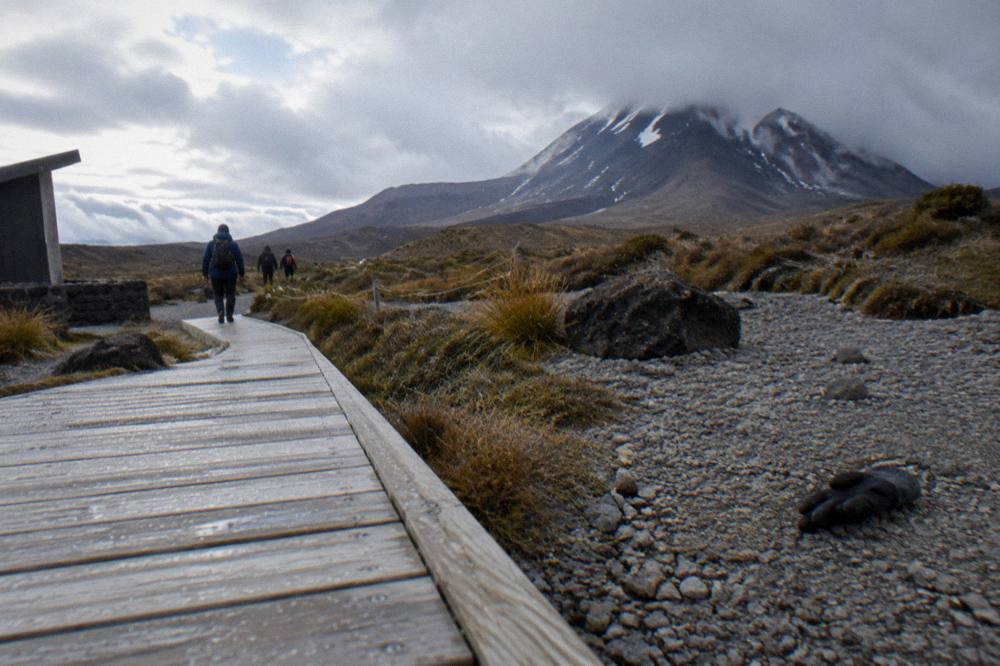
The second reason to watch early is the track itself. The Crossing traverses an active volcanic area, and DOC is explicit that if volcanic unrest rises at Tongariro or Ngauruhoe there will be track or section closures, with the whole Crossing closed if unrest centres on Red Crater or is uncertain. The most recent eruption was from Te Maari in 2012. Volcanic status is not weather, but it lives on the same alerts page and can remove your day just as completely. Current status questions are handled in the is the Crossing open guide.
There is also a standing cultural layer that weather does not change: the mountains are sacred to Ngati Hikairo ki Tongariro of Ngati Tuwharetoa, and visitors are asked to respect them by not touching or entering any waterways, including the alpine lakes. Late 2025 fires near the track start led to a 10-year restorative rahui, and walkers are asked to stay on the track, clean their gear and take rubbish out.
One small structural fact helps budget-minded planners: DOC says part of a shuttle fee goes to conservation. That is DOC's description of where the money flows, not a fare, but it explains why shuttles are the access method DOC itself suggests in the summer parking season.
The Tongariro Crossing Shuttles round trip is the tour this site features alongside its weather coverage, from $42 per person with free cancellation up to 24 hours before, a natural fit for a decision that resolves each morning. To dig deeper into start timing, the best time to start guide covers the early-start logic, and the month-by-month picture is in which month is best.
The forecast is not the enemy of a Tongariro booking, it is the terms of the deal. Book the product whose cancellation window matches your travel flexibility, watch the NIWA Red Crater forecast as your date approaches, and let the morning assessment make the final call.
Common Questions About Tongariro Crossing Weather
How Does DOC Decide The Weather Is Too Bad For The Tongariro Crossing?
DOC issues a summer Not Recommended Today advisory when any two hours of the NIWA Red Crater forecast between 9 am and 5 pm hit thresholds for average wind, gusts, wind chill, rain or snow, including sustained rain of 10 mm over six hours. The assessment is made each morning, posted as signage at the Mangatepopo road end, and emailed to operators.
Why Is Red Crater So Much Colder Than The Car Park?
DOC's rule is that on a calm day Red Crater, at 1886 m, is at least 10 °C colder than Taupo and 5 °C colder than the Mangatepopo start at 1120 m, and you subtract another 2 °C for every 10 km/h of wind. A warm town afternoon can mean near-freezing conditions on the crater rim.
What Changes Between Summer And Winter Weather On The Crossing?
Summer is a 7 to 8 hour Intermediate track with morning weather advisories; winter, May to late October, is an Expert route needing about 9 hours with no advisories issued. DOC says shuttles generally do not run in winter while guided trips include transport, and its winter advice is to go with a guide.
Do Shuttles Run In Bad Weather?
Operators have agreed, as part of their concessions, not to operate when a Hazardous Weather Warning has been issued, while the summer advisory is a recommendation rather than a closure. No one can promise a departure in advance; the decision rests on each morning's forecast assessment.
Which Tours Still Run When The Weather Is Marginal?
Guided tours are best placed for marginal days because a guide carries alpine experience, gear and the judgment to turn back. The Adrift Tongariro guided tours run summer and winter, supply crampons and ice axes for winter conditions if required, and include return transport.
What Should You Check Each Morning Before A Tongariro Crossing?
Check the NIWA Red Crater forecast against the advisory thresholds, the DOC Tongariro Alpine Crossing alerts page for track status, and in winter the avalanche forecast. Start watching in the days before you travel, because free cancellation windows of 24 hours or 14 days reward early decisions.