Tongariro Northern Circuit Or Alpine Crossing Tour: Which Hike To Book
The Tongariro Northern Circuit is a three to four day tramp around Mount Ngauruhoe that shares ground with the Alpine Crossing, while the Crossing itself is a single 20.2 km day between Mangatepopo and Ketetahi Road. Here is how the two hikes stack up on time, cost, fitness and what you can actually book.
Short answer
The Northern Circuit is a 3 to 4 day DOC tramp that includes parts of the Crossing, and no tour on this site covers it. The Alpine Crossing is a one-way 20.2 km day hike taking 7 to 8 hours in the main season. Shuttles to the track start from $34 per person, and guided hikes from $197.
The Tongariro Northern Circuit and the Alpine Crossing are two different propositions that share the same mountain. One is a multi-day loop through the heart of Tongariro National Park, the other is the famous 20.2 km day walk that DOC lists as a steep, undulating intermediate track from November to April and an expert route through the winter months. Deciding between them comes down to how many days you have, how much weight you want on your back, and whether you would rather sleep in a hut or in a bed.
DOC describes the circuit as a 3 to 4 day tramp, and the Crossing as a 7 to 8 hour day in the November to April season. This site sells day options for the Crossing only: shuttles, guided hikes and transfers. Nobody here runs the circuit as a product, which is itself useful information, because it tells you the circuit is a self-planned tramp with hut bookings through official channels, while the Crossing can be bought as a supported day out before breakfast is finished. Getting to the trailhead is its own puzzle, and the guide to getting from Auckland to the Tongariro Crossing covers the transport options, drive times and overnight stops you will want sorted before the shuttle picks you up.
The comparison is worth taking seriously rather than settling quickly. Both trips cross the same volcanic terrain, carry the same cultural weight, and answer to the same weather system, yet they suit almost opposite travellers. The pages on this site exist to help you book the Crossing day well, and the honest way to do that is to show you exactly what the multi-day alternative asks of you, so the choice is informed rather than defaulted.
What Is The Tongariro Northern Circuit?
The Tongariro Northern Circuit is a 3 to 4 day tramping loop around Mount Ngauruhoe that DOC classifies as one of New Zealand's Great Walks, and it includes sections of the Alpine Crossing as part of its route. It is a hut-to-hut trip with pack carrying, official hut bookings and your own route finding, and no tour product on this site covers any part of it.
The circuit loops the volcanic massif over several days of walking, camping overnight in huts along the way. Because it is a Great Walk, hut space is managed through DOC's booking system, and the trip demands a full pack: sleeping bag, cooker, food for the duration, and the layers you would carry on any alpine tramp. The terrain crosses the same volcanic landscape that makes the Crossing famous, including the climb over Red Crater, but spread across days rather than compressed into one.
What that means practically is a different category of commitment. The Crossing walker carries a day pack with two to three litres of water, lunch and layers, then finishes at a road end where transport waits. The circuit walker carries everything for days and sleeps on the mountain. DOC rates the Crossing's required fitness as High even as a day trip, so the circuit stacks that same demanding terrain on top of multi-day endurance.
There is also a seasonal difference worth naming. The Crossing is an intermediate tramping track from November to April and an expert route from May to late October, when DOC expects ice, snow and alpine skills. Great Walk-style tramping on the circuit sits squarely in the summer season, and winter attempts put the full weight of DOC's winter guidance on you: crampons, ice axe, helmet, avalanche equipment and the competency to use all of it. For anyone weighing the two, the honest framing is that the circuit is a bigger project measured in days and skills, not just kilometres.
How Does The Alpine Crossing Compare As A Day Hike?
The Alpine Crossing is a 20.2 km one-way day hike from Mangatepopo Valley at 1120 m over Red Crater at 1886 m, descending to finish at Ketetahi Road at about 760 m, with a total elevation change of plus and minus 1196 m. DOC gives the walking time as 7 to 8 hours from November to April and 9 hours in the winter season, making it one demanding day rather than several easier ones.
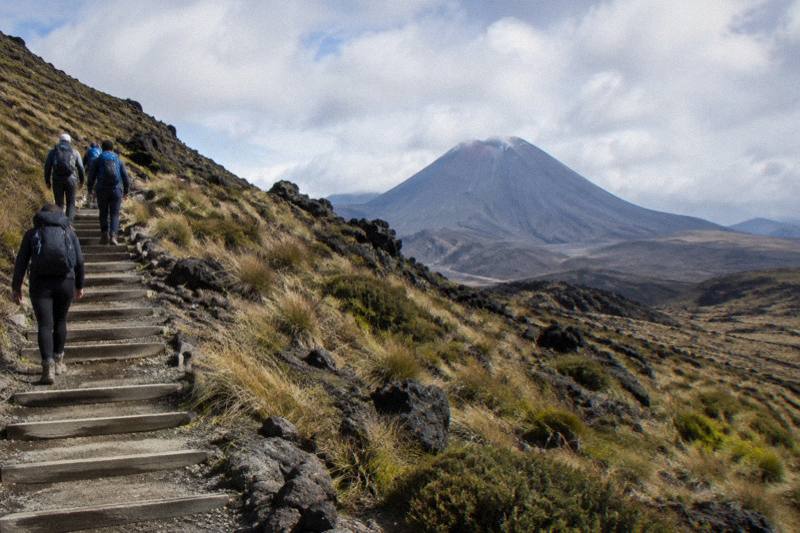
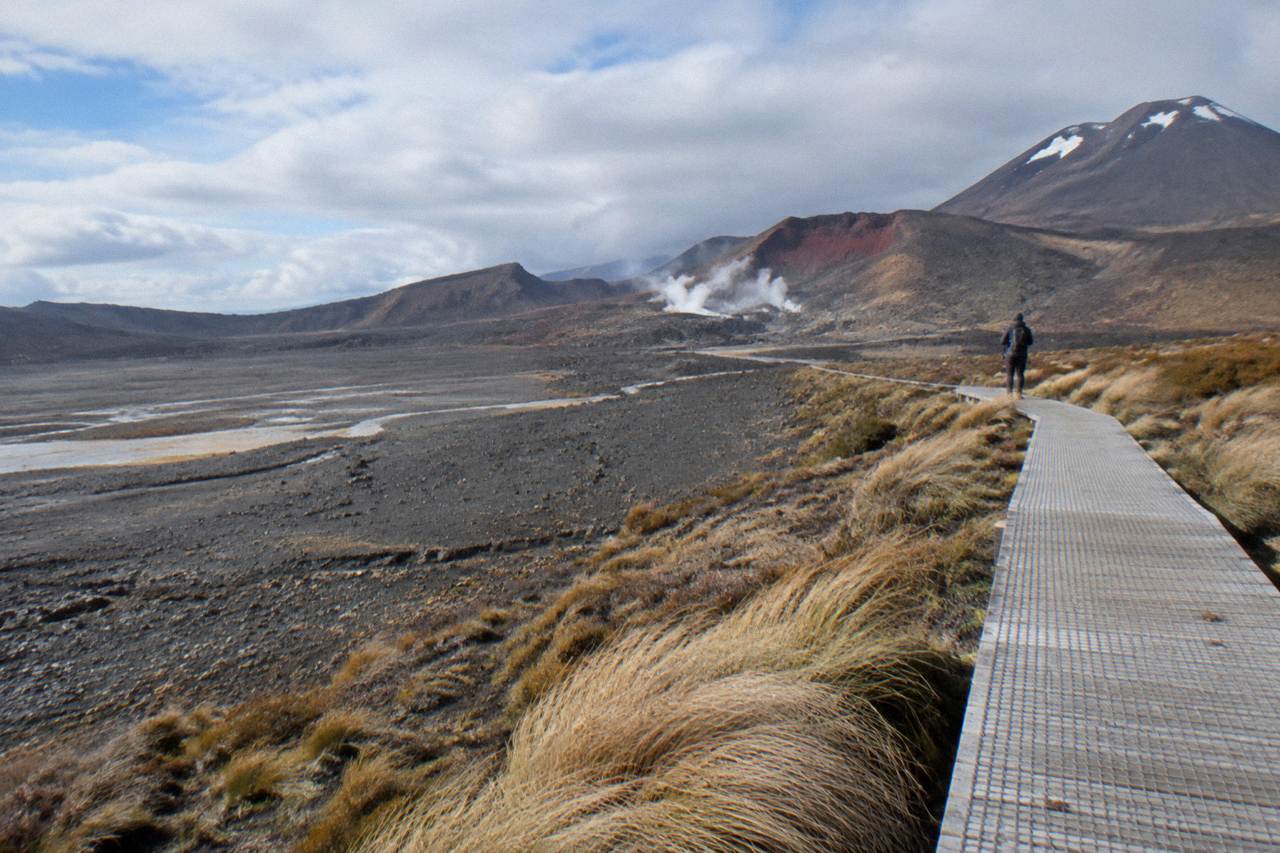
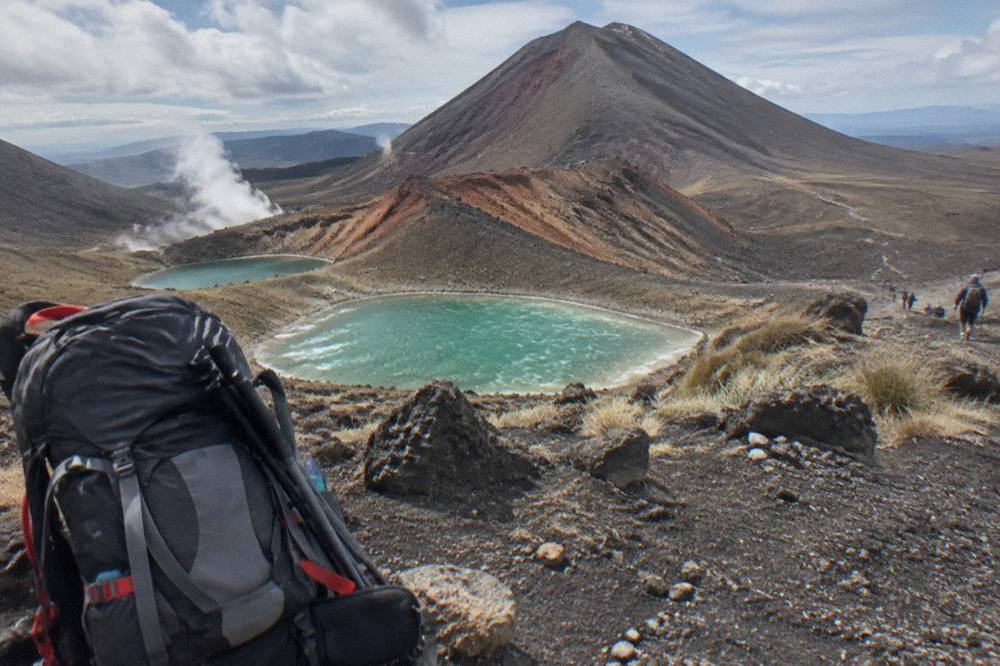
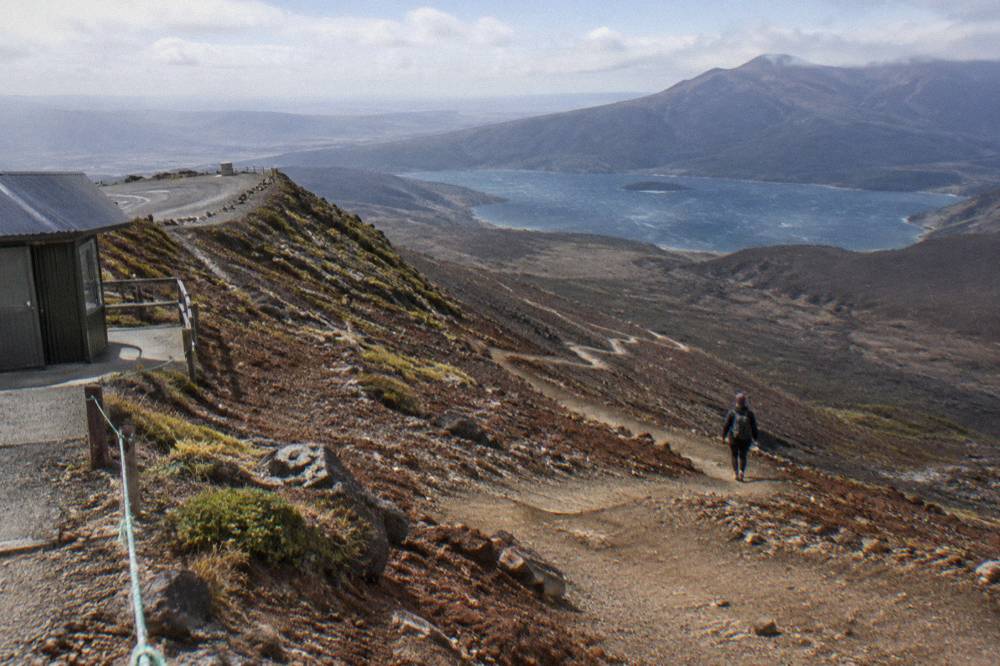
The route reads like a highlight reel. A boardwalk carries you up the Mangatepopo Valley, a staircase of roughly 350 m of climbing brings you to the South Crater plateau, then the track rises to Red Crater, the loose-scree high point at 1886 m. DOC singles out that scree as a major slip hazard, and its statistics are blunt: 38 percent of tramping injuries come from slipping. Below the crater sit the Emerald Lakes, Ngā Rotopounamu, steam curling from fumaroles you are asked not to approach, then Blue Lake, and a long zig-zag descent with views over Lake Rotoaira and Lake Taupō before forest delivers you to the road.
For a comparison shopper, the appeal is obvious. Everything the circuit spreads across days, the Crossing delivers between an early start and a late afternoon, and you sleep in a real bed that night with transport arranged at both ends. The trade is intensity. There is no bailout halfway that saves the scenery, and DOC's own fallback suggestion for walkers without the fitness is the Soda Springs Walk, the easy two-hour return option that shares the first 5.4 km of track. If the full day is beyond you, the circuit is not the easier answer; it is the harder one.
Support is the other difference, and it is where a day hike wins outright for most visitors. A shuttle or a guided walk turns the Crossing into a managed product: someone else drives, someone else reads the forecast, and on the guided trips someone else carries the group's judgement about turning back. Multi-day packages that build a Crossing day into a longer itinerary are covered in the Tongariro Crossing multi-day packages guide, which is the closest thing to a circuit-style trip you can book here.
Which One Should A First-Time Visitor Book?
A first-time visitor with one day and no alpine gear should book the Crossing with either a shuttle or a guided hike rather than attempt the circuit, because the Crossing day is the only one of the two available as a supported product here. Shuttles start from $34 per person and guided hikes from $197, and both formats handle the road-end logistics. The circuit requires hut bookings and days of carrying a pack.
How many nights can you give the trip? Do you have, or can you rent, a full tramping kit? And are you comfortable reading the route when cloud hides the marker poles? Answer days, yes and yes, and the circuit is a genuine adventure. Answer anything less, and a supported Crossing day is the product that matches.
For the shuttle route, the cheapest entry point on this site is the one-way park-and-ride format from the Ketetahi end. You park at the Ketetahi Road end, ride to Mangatepopo in the morning, walk the Crossing in the standard direction, and finish at your own car with no return leg to wait for. The Ketetahi park-and-ride shuttle from Ruapehu Scenic Shuttles runs this format from $38 per person, rated 4.8 across 665 reviews, with free cancellation up to 24 hours before. The Active Outdoor Adventures version with a secure Ketetahi car park starts from $34 per person.
Guiding changes the product again. Adrift Tongariro runs the three guided tours on this site, and a guide brings winter equipment when conditions demand it: crampons and ice axes are supplied on all three guided trips if required, along with a clothing and footwear allowance. DOC's own winter advice is simply "go with a guide", and in the May to late October season, when shuttle buses generally do not operate but guided trips include transport, that advice becomes the practical route onto the track.
First-timers should also weigh the two formats against their own experience of alpine terrain. A shuttle suits walkers who have done long, steep day hikes before and trust their own judgement on a track DOC grades intermediate in summer. A guide suits anyone who does not want to own the weather call, the pacing or the winter equipment question, and the guide's return transport removes the parking problem entirely. Neither format removes the mountain; both remove the logistics.
What Does Each Option Cost?
A Crossing shuttle costs from $34 to $80.27 per person depending on departure point and format, a guided Crossing day runs from $197 to $253 per person, and the private and multi-day options carry prices on a different basis, from $338 for an Auckland transfer to $774.01 for a private guided Crossing. The Northern Circuit has no tour price here at all: hut fees are paid through DOC's own channels.
Among per-person fares, the spread is wide but legible. At the floor sit the one-way Ketetahi park-and-rides: Active Outdoor Adventures at $34, National Park Shuttles at $34.40, then Ruapehu Scenic Shuttles and Owhango Adventures at $38 each. Round-trip shuttles from villages cost more, from $42 for the Tongariro Crossing Shuttles round trip out of National Park Village to $62 for the Dempsey Buses return from Ohakune, with the Tongariro Expeditions Taupo return at $80.27. The median per-person fare across the day tours here sits at $43.36.
| Format | Example product | From price (USD) | Basis | Rating |
|---|---|---|---|---|
| One-way park-and-ride | Active Outdoor Adventures secure car park shuttle | $34 | per person | 4.1 from 81 reviews |
| One-way park-and-ride | Ruapehu Scenic Shuttles | $38 | per person | 4.8 from 665 reviews |
| Round-trip village shuttle | Tongariro Crossing Shuttles, National Park Village | $42 | per person | 4.7 from 886 reviews |
| Round trip from Taupo | Tongariro Expeditions Taupo return | $80.27 | per person | 4.5 from 25 reviews |
| Guided half-day walk | Adrift Tongariro half-day guided walk | $197 | per person | 4.7 from 27 reviews |
| Guided full Crossing | Adrift Tongariro premium guided hike | $253 | per person | 4.6 from 241 reviews |
The guided tier needs its own sentence. The Adrift premium guided hike, an 8 to 9 hour day with return transport included, is $253 per person and is the most reviewed guided product here. The half-day guided walk at $197 is a shorter walk and not the full Crossing, useful for walkers who want a guide's knowledge without the full distance. The private guided Crossing at $774.01 and the ExperienceKart three-day private tour from Auckland at $3,150.50 carry no per-person basis, so they belong in a different mental column from the fares above.
One DOC figure deserves a place in any cost discussion. DOC says part of the shuttle fee helps fund conservation, which is why the shuttle price is not pure transport margin. The track booking itself, required if you use a shuttle or guided service, is free, introduced in October 2023, and your operator may make it for you. Budget for the tour, lunch from your own pack, and nothing to the park beyond what is folded into the fare.
Cancellation terms matter to the comparison too, because a multi-day trip that goes wrong costs more than a day that does. On the day side, 15 of the 17 tours here state free cancellation, most up to 24 hours before and the Adrift guided walks up to 14 days before. Two are non-refundable: the Adrift private Crossing and the ExperienceKart three-day tour. A circuit tramp carries a different risk, since hut bookings and transport span several days and a single bad forecast can unwind the whole plan rather than one walk.
How Long Does Each Hike Take?
The Crossing takes 7 to 8 hours of walking from November to April and 9 hours from May to October, on top of shuttle or transfer time; booked day products span 4 hours for the guided half-day up to 10 hours for the Taupo return shuttle. The Northern Circuit takes DOC's 3 to 4 days of hut-to-hut tramping. The Crossing is one long day, the circuit a short expedition.
Those day-product durations are total booked times, not hours on foot, and the distinction matters when you compare. The Adrift premium guided hike books as an 8 to 9 hour day including transport both ways. The Tongariro Crossing Shuttles round trip from National Park Village books 8 hours, door to door. The Taupo return shuttle with Tongariro Expeditions books 10 hours because the distance from Taupo to the track is 86.5 km each way, a figure DOC publishes in its getting-there notes.
| Trip | Time on the track | Total booked time | Source |
|---|---|---|---|
| Alpine Crossing, November to April | 7 to 8 hours walking | plus shuttle or transfer | DOC |
| Alpine Crossing, May to October | 9 hours walking | plus transfer, guided trips only | DOC |
| Tongariro Northern Circuit | 3 to 4 days tramping | self-planned | DOC |
| Adrift premium guided hike | full Crossing with a guide | 8 to 9 hours | operator |
| Guided half-day walk | shorter walk, not the full Crossing | 4 hours | operator |
| Taupo return shuttle | full Crossing, independent | 10 hours | operator |
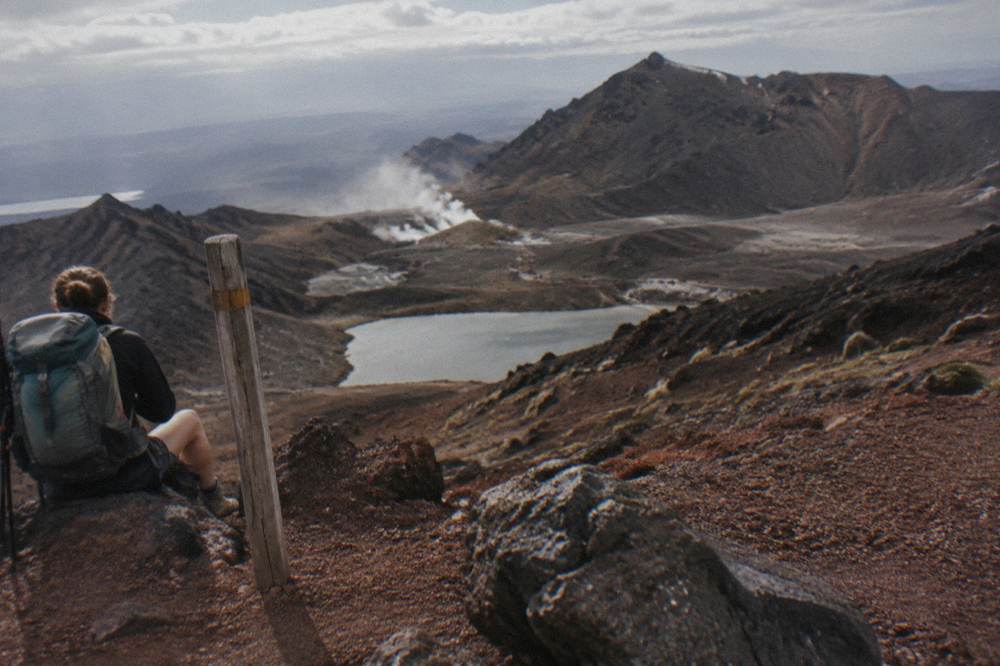
Daylight is the hidden constraint on both. Winter brings only 9 to 11 hours of daylight, which is why DOC tells winter walkers to allow 9 hours and always carry a head torch. Even in the main season, an early start is standard practice, and shuttles are built around it, with no clock times published here because schedules live on each operator's booking page. The full breakdown of timing, from track hours to booked tour lengths, is in the guide to how long the Tongariro Crossing takes.
A note on the comparison itself: packing days together on the circuit does not shorten the hard sections. The climb to Red Crater and the long northern descent take the same effort on day two of a loop as they do at hour four of a single day. What multi-day walking buys is rest between them, at the cost of carrying the means to rest.
What About Fitness, Gear And The Weather?
DOC rates the Crossing's required fitness as High, recommends against it for children under 10, and expects boots, waterproof layers and two to three litres of water even in summer; winter adds crampons, ice axe, helmet and avalanche equipment for independent walkers. Guided Adrift trips supply crampons, ice axes and a clothing allowance when winter conditions require them. The circuit demands all of that plus a multi-day pack and hut booking.
The gear gap between the two trips is the clearest practical difference for a visitor weighing them. A Crossing day with a shuttle is a day-pack trip. The what to bring guide walks the full list, but the core is sturdy boots, base layer, insulation and shell, hat, gloves, sunscreen, and water, because track water is not drinkable. A circuit tramp adds sleeping kit, cooking gear, food for days, and the navigation tools DOC insists on when cloud or snow hides the marker poles.
| Item | Crossing day, shuttle | Crossing day, guided | Northern Circuit |
|---|---|---|---|
| Boots and waterproof layers | Yes | Yes | Yes |
| Water, 2 to 3 litres | Yes, track water not drinkable | Yes, track water not drinkable | Yes, plus cooking water |
| Crampons and ice axe, winter | Bring your own | Supplied by Adrift if required | Bring your own, DOC calls them essential |
| Helmet, winter | Bring your own | Check with the operator | Bring your own |
| Avalanche transceiver, probe, shovel, winter | DOC advises for independent trips | Guide carries the call | Essential, DOC wording |
| Sleeping bag and cooker | No | No | Yes |
| Food | Bring your own lunch | Bring your own lunch | Full trip supply |
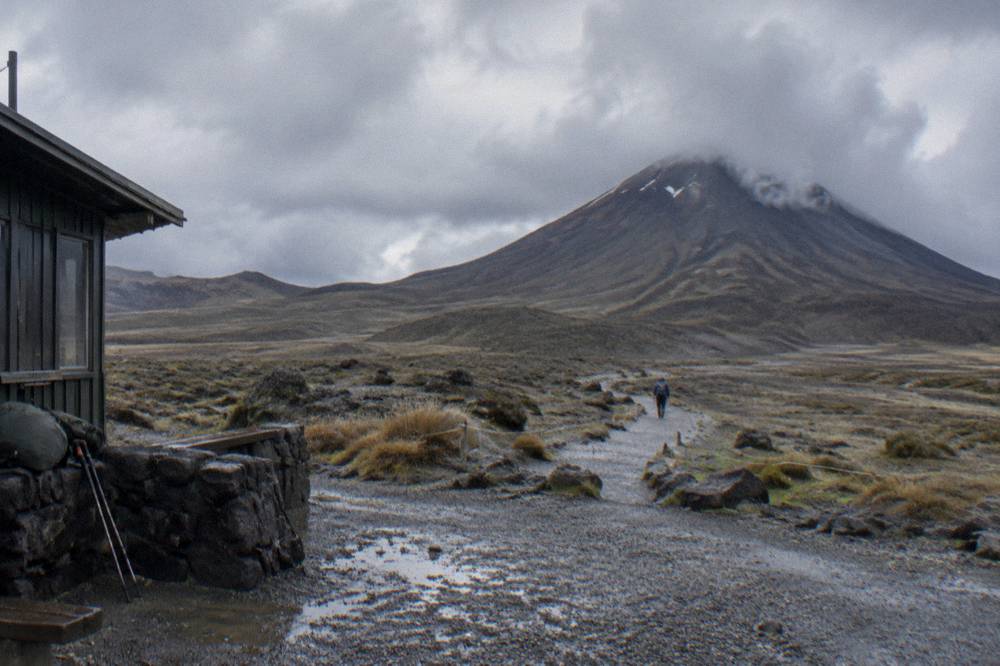
Weather governs both, and no operator here promises otherwise. In the November to April season, DOC assesses each morning whether to apply a Not Recommended Today advisory, triggered when the NIWA Red Crater forecast shows sustained winds of 55 kph or more, gusts of 70 kph or more, wind chill of -10 °C or colder, or rain rates of 2.5 mm per hour or more, among other thresholds. Operators have agreed, under their concessions, not to run when a Hazardous Weather Warning is issued. From May to October no advisories are issued at all, and DOC's guidance is to read the forecast yourself, check the avalanche outlook at avalanche.net.nz, and go with a guide.
Temperature arithmetic explains the caution. On a calm day, DOC says, Red Crater is at least 10 °C colder than Taupō and 5 °C colder than the track start, and you subtract another 2 °C for every 10 km/h of wind. A mild lakeside morning can be a near-freezing summit hour. The fitness question deserves the same respect: the Alpine Crossing difficulty guide breaks the gradient and the hardest sections down, and honest self-assessment against it is what separates a great day from a rescue statistic.
Can You Book The Circuit Or The Crossing As A Tour?
The Crossing can be booked as a supported day tour in three formats, shuttle-only, guided hike or private guided, from 17 products across five categories on this site; the Northern Circuit cannot be booked as a tour here at all, only self-planned with hut bookings. The question is not which circuit tour to book, it is which Crossing product to book instead of it.
Start with the format that matches your confidence. Independent walkers with fitness and gear take a shuttle, and the round-trip trail shuttle from National Park Village from Tongariro Crossing Shuttles is the most reviewed tour here, rated 4.7 across 886 reviews at $42 per person. Walkers who want a guide, especially in the shoulder and winter months, take the Adrift premium guided hike, an 8 to 9 hour guided day from $253 with return transport, crampons and ice axes supplied when winter requires them.
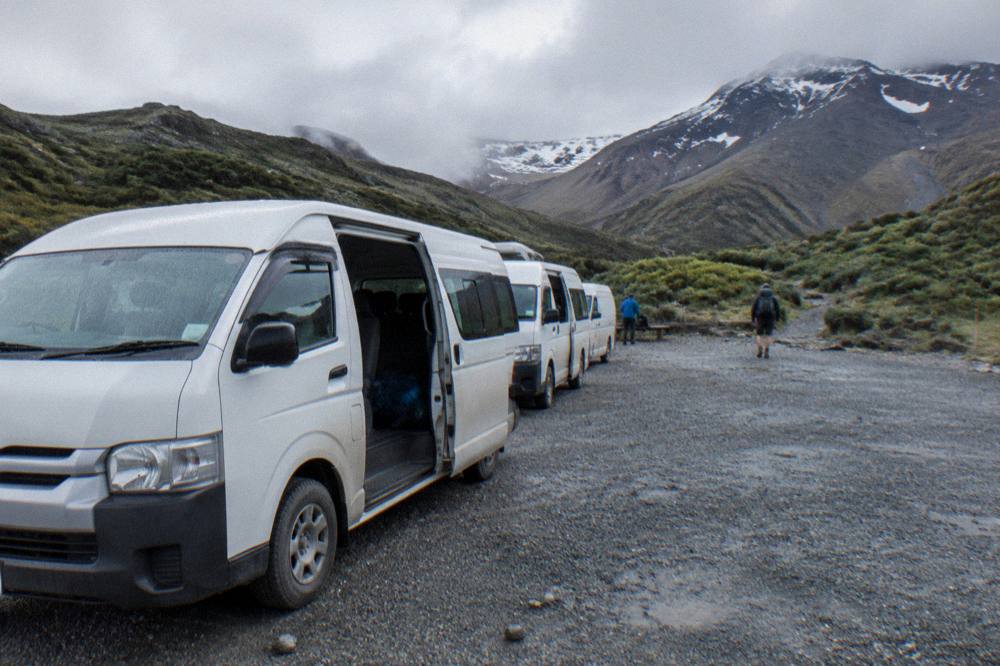
Cultural context sits under all of this, and it belongs in the decision rather than in a footnote. The Crossing winds through mountains sacred to Ngāti Hikairo ki Tongariro of Ngāti Tūwharetoa, in New Zealand's oldest national park, established 1894, and a dual World Heritage area first inscribed under the cultural landscape criteria in 1993. Kaumātua Te Ngaehe Wanikau asks visitors to respect the sanctity of the sacred mountains by not touching or entering any of the waterways, including the alpine lakes. After fires near the track start in late 2025, the hapū placed a 10-year restorative rāhui over the affected area: stay on the track, clean your gear, take rubbish home. Manaaki Rangers greet visitors daily from November to April and share traditional stories, a small piece of the same kaupapa.
Age and cancellation terms vary by product, so check the specific one. The Adrift premium guided hike takes walkers from age 12 and allows cancellation up to 14 days ahead for a full refund; its private Crossing is non-refundable. Most shuttles allow free cancellation up to 24 hours before. DOC separately advises the track is not recommended for children under 10. The details for each product are on the booking page before you pay, and the booking guide explains how the free track booking fits with whatever tour you choose.
That is the whole comparison. The circuit is a self-reliant, hut-based, three to four day project you plan yourself. The Crossing is a hard but contained day that a shuttle or guide can carry the logistics for, from a $34 park-and-ride seat to a $253 guided crossing with winter gear included. For most visitors comparing the two, the supported day is the one that actually gets walked. If you are still weighing a guide against going alone, the question can you hike Tongariro without a guide is answered in detail elsewhere on Tongariro Alpine Crossing Tours.
Common Questions About Tongariro Northern Circuit Or Alpine Crossing Tours
What Is The Tongariro Northern Circuit?
A 3 to 4 day tramp around Mount Ngauruhoe that DOC lists among New Zealand's Great Walks, crossing parts of the Alpine Crossing along the way. It is hut-based, self-planned and carries no tour product on this site.
Is The Northern Circuit Harder Than The Alpine Crossing?
Yes, in commitment. The Crossing is DOC fitness rating High packed into one 7 to 8 hour day, while the circuit spreads similar terrain across days with a full pack, hut bookings and your own route finding. Neither is the easy option.
Can I Book A Guided Tour Of The Northern Circuit?
Not through this site. The products here cover the Crossing day: shuttles from $34 per person, guided hikes from $197 and private options. The circuit is booked independently through DOC hut bookings.
Does The Alpine Crossing Form Part Of The Northern Circuit?
Yes. DOC's circuit route shares sections with the Crossing, including the climb to Red Crater, which is why the two hikes are often compared. Closure and status questions for the circuit tracks are separate from the Crossing and are not covered here.
Which Is Cheaper, The Circuit Or The Crossing?
On this site the only bookable comparison is among Crossing products: shuttles from $34 to $80.27 per person and guided hikes from $197 to $253. Circuit costs are hut fees paid to DOC, separate from any tour.
Do Shuttles Run For The Circuit Like They Do For The Crossing?
No. The shuttles here serve the Crossing day between Mangatepopo and Ketetahi Road. DOC notes shuttle buses generally do not operate in winter (May to late October), while guided trips include transport.