Which Month Is The Best To Do The Tongariro Crossing On A Guided Hike Or Shuttle?
A month-by-month look at the Tongariro Alpine Crossing through DOC season rules, shuttle and guided tour schedules, parking limits and booking requirements, so you can pick your timing with real facts.
There is no single best month, because the Department of Conservation runs the Tongariro Alpine Crossing on two season settings rather than a calendar of good and bad months. November to April is the summer season, 20.2 km one way, 7 to 8 hours of walking. May to late October is the winter season, 9 hours, an Expert route needing crampons, ice axe and helmet. Shuttles generally run in summer; guided trips include transport year round.
The honest answer to the month question starts with that structure, and it is worth understanding before comparing dates. The track is the same 20.2 km in every month, starting at Mangatepopo at 1120 m, topping out at Red Crater at 1886 m and finishing at Ketetahi Road at about 760 m, with an elevation change of plus or minus 1196 m as DOC measures it. What changes is the classification. In summer DOC rates it an Intermediate tramping track. From May to late October the same track becomes an Expert route, and DOC's language shifts: alpine equipment and alpine skills are called essential, and a guide is advised for anyone without both.
That seasonal switch drives the practical calendar more than any weather forecast does. Manaaki Rangers greet visitors at the track daily from November to April and share traditional stories, which is a summer-only presence. Parking restrictions at both road ends apply from Labour weekend in late October through 30 April, a four hour maximum, and DOC suggests booking a shuttle during that window. In winter, DOC notes that shuttle buses generally do not operate, but guided trips include transport, which quietly rearranges your options depending on the month you pick.
So the month choice is really a choice between two products. A summer month means a shuttle or a self-guided walk alongside the guided option, with rangers on the track and a 7 to 8 hour walking estimate. A winter month means a guided hike with transport included, full winter equipment, and a 9 hour allowance against 9 to 11 hours of daylight. Neither is the right answer for everyone, and this article does not hand you a verdict, because the Department of Conservation itself frames the mountain in seasons, not rankings.
What this page can do is lay out what each stretch of the year actually means for the two ways most visitors experience the Crossing: a guided hike or a shuttle. The comparison below is the short version, built only from DOC's own season rules.
| Months | DOC season | Track class | Walking time | Rangers on track | Parking at road ends |
|---|---|---|---|---|---|
| November to April | Summer | Intermediate tramping track | 7 to 8 hours | Yes, Manaaki Rangers daily | 4 hour maximum, Labour weekend to 30 April |
| May to late October | Winter | Expert route | 9 hours | Check DOC for ranger presence | Restrictions not in force |
If you already know you want the guided experience, the seasons matter less than you might think, because the guided product runs across both. Adrift Tongariro runs three guided tours, the premium guided Crossing hike, a half-day guided walk and a private guided Crossing, and all three list summer and winter as their season. The premium hike is from $253 per person, rated 4.6 across 241 reviews, an 8 to 9 hour booked day from the Adrift base at 53 Carroll Street in National Park Village, with return transport included and crampons and ice axes supplied for winter conditions if required. If a winter month is on your shortlist, that gear clause is the detail that matters most. Once the tour is booked, a quick read on where the toilets sit along the Crossing helps you pace your water intake and rest stops around the guided schedule.
For shuttle travellers the calendar is narrower. The shuttle fleet, by DOC's own account, generally sits out the winter months, so a January plan and a July plan are not variations of the same trip. A January traveller chooses between roughly a dozen shuttle formats and departure points; a July traveller is choosing a guided hike with transport built in, or postponing.
What Does The Summer Season Change On The Tongariro Crossing?
From November to April the Crossing runs on its summer settings: a 7 to 8 hour walking estimate over 20.2 km, an Intermediate track classification, Manaaki Rangers greeting walkers daily, and a four hour parking maximum at the Mangatepopo and Ketetahi road ends from Labour weekend through 30 April. Shuttle services operate in this window, and DOC suggests booking one rather than driving.
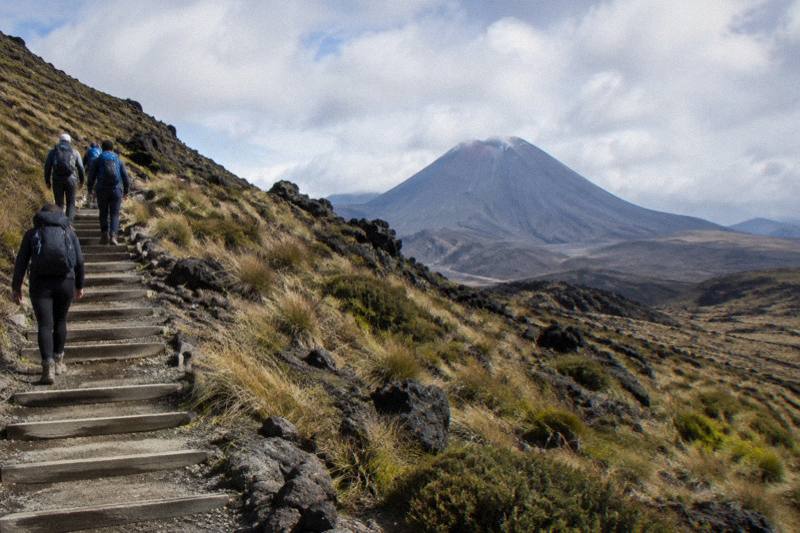
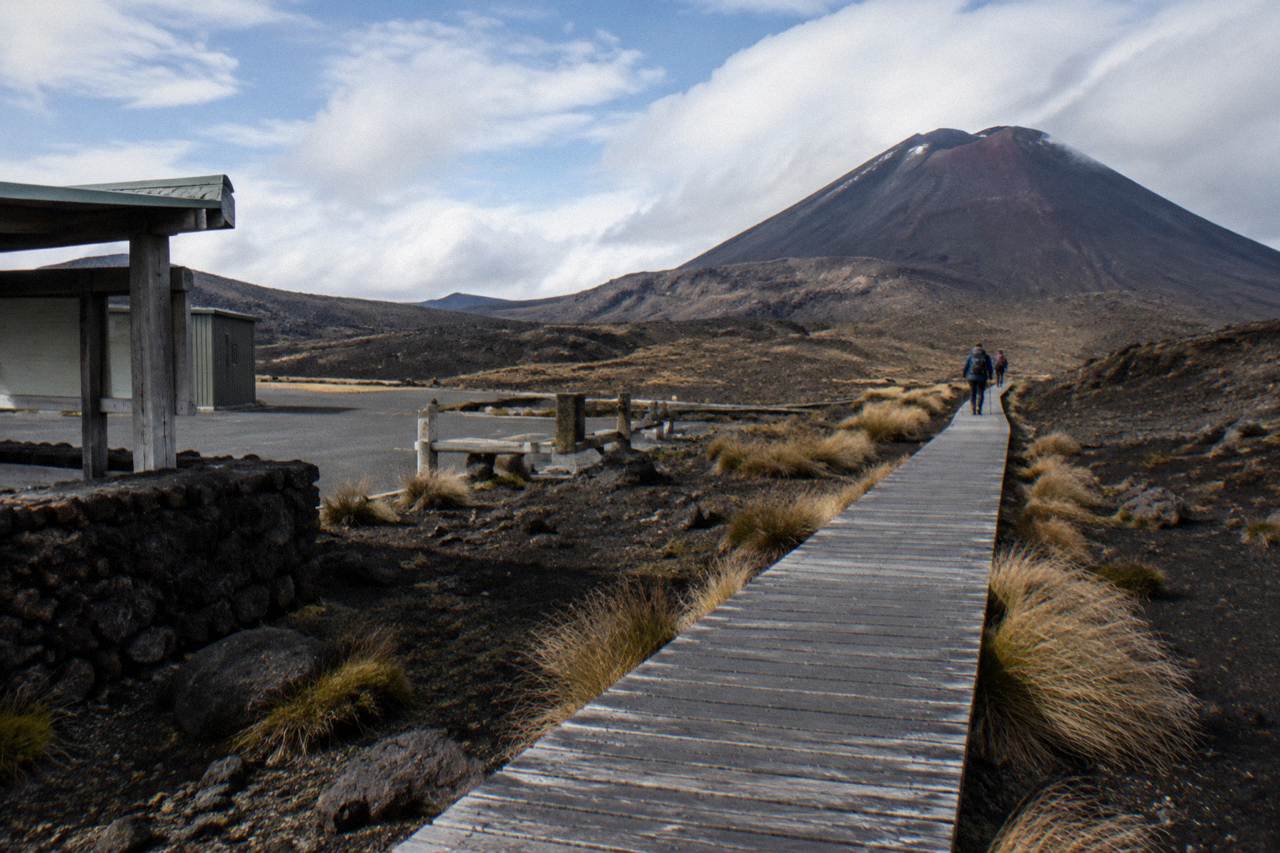
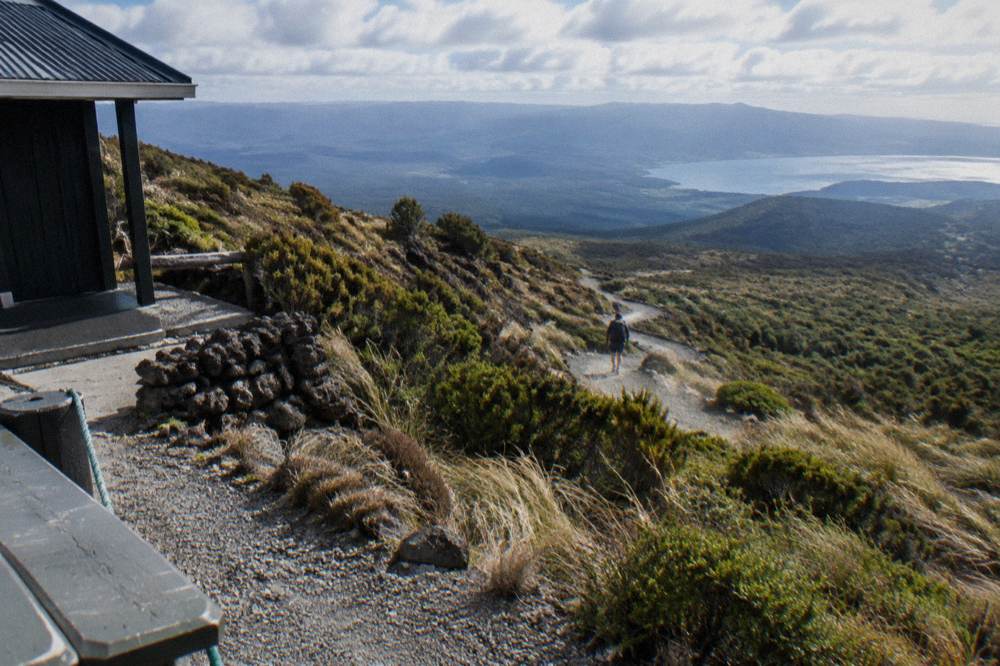
Summer is the season the track was signed for. The route climbs from the Mangatepopo Valley boardwalk, up a staircase of roughly 350 m to the South Crater plateau, on to Red Crater at 1886 m, then descends steep scree past the Emerald Lakes, by Blue Lake and down long zig-zags with views over Lake Rotoaira and Lake Taupo before forest delivers you to Ketetahi Road. DOC grades the fitness requirement as High and the gradient as steep and undulating, summer or winter, so the summer label describes the track category, not an easy version of the walk.
The seasonal differences are around the edges of that route, and they add up. The ranger programme, for instance, is a summer feature: Manaaki Rangers greet visitors daily from November to April and share traditional stories of the maunga. The parking rule is also a summer rule. Between Labour weekend, which falls in late October, and 30 April, parking at both road ends is capped at four hours, which rules out parking at Mangatepopo for the walk itself, since seven hours of walking plus the drive comfortably exceeds it. DOC goes further and says there is no parking for Crossing visitors at Mangatepopo car park in summer at all, with only a private car park near Ketetahi at the far end.
That parking geometry is why the summer months belong to the shuttles. A round-trip shuttle drops you at Mangatepopo and collects you at Ketetahi, which removes the four hour cap as a problem entirely. The Tongariro Crossing Shuttles round-trip from National Park Village is the most reviewed tour here, rated 4.7 across 886 reviews, from $42 per person, an 8 hour booked day starting at the Park n Ride at 59 Findlay Street in National Park Village, with free cancellation up to 24 hours before. Dempsey Buses runs a comparable round trip from pickup points in National Park Village, from $51 per person, rated 4.8 across 72 reviews, with children under 6 excluded under the operator's age rule.
Guided hikes run through summer too, and summer is when they run at their largest scale. The Adrift Tongariro premium guided hike takes groups of up to 60 on an 8 to 9 hour day, from $253 per person, with a minimum age of 12 on the operator's rule, return transport included from the base at 53 Carroll Street, and lunch not included, so you bring your own. The half-day guided walk, from $197 per person and rated 4.7 across 27 reviews, covers four hours and is not the full Crossing, which makes it a genuine summer option for travellers who want the volcanic landscape without the 7 to 8 hour commitment. The site's guide to the full guided product, what a guided Tongariro Crossing includes, breaks down that comparison in detail.
One more summer-only note that often decides the month for families: the first 5.4 km of the Crossing is shared with the Soda Springs Walk, an easy two hour return option DOC points to for people without the fitness for the harder parts. That fallback only makes sense in the months when shuttles and the full track are running at summer capacity. DOC advises the full Crossing is not recommended for children under 10 in any month.
What Should A Winter Month On The Tongariro Crossing Look Like?
May to late October is DOC's winter season: the track becomes an Expert route, the walking allowance rises to 9 hours against 9 to 11 hours of daylight, and crampons, ice axe and helmet are described as essential, along with competency using them. Shuttle buses generally do not operate, but guided trips include transport, and Adrift Tongariro supplies winter gear on its guided tours.
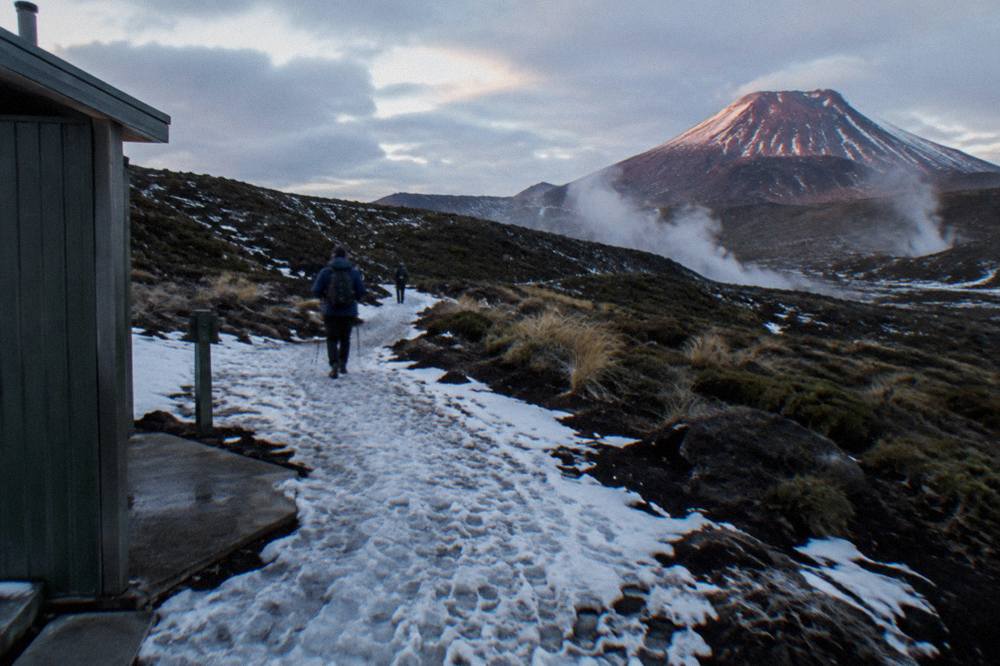
Winter changes the product you are buying more than it changes the track. The physical route is identical, 20.2 km from Mangatepopo to Ketetahi Road, but DOC reclassifies it from Intermediate to Expert and rewrites the expectations. The nine hour allowance is not padding. Short winter days are one reason DOC's gear list tells walkers to always carry a head torch with spare batteries. Ice should be expected on the track between April and October, and DOC notes that 38 percent of tramping injuries come from slipping, a statistic that explains the equipment list better than any adjective could.
That list is specific. For independent winter trips DOC expects crampons, ice axe and helmet, an avalanche transceiver, probe and shovel, a personal locator beacon, a head torch with spare batteries, a map and compass or GPS, and sturdy tramping or mountaineering boots. The skills are listed with equal weight: finding the route when cloud or snow hides the marker poles, knowing where avalanches are a risk, being able to rescue someone, prevent a slide, and survive worsening weather. DOC's summary advice for winter visitors is short: go with a guide.
The guided winter option absorbs most of that list. Adrift Tongariro's guided Crossing tours list summer and winter as their season, supply crampons and ice axes for winter conditions if required, include a clothing and footwear allowance, and include return transport, which matters because DOC says shuttle buses generally do not operate during winter. The premium guided hike runs the full Crossing from $253 per person, rated 4.6 across 241 reviews, with a booked day of 8 to 9 hours. The private guided Crossing, from $774.01, is a 7 to 9 hour day, with the price basis on the booking page, and its cancellation terms differ: it is non-refundable.
There is one administrative difference worth knowing when you weigh a winter month. DOC's summer advisory system, which flags days when the track is not recommended, does not run in winter. From May to October no hazardous weather advisories are issued, which means the responsibility for reading conditions sits with you or your guide rather than with a posted sign. Checking the forecast sources yourself, including the avalanche forecast at avalanche.net.nz, is part of the winter routine in a way it is not in summer.
Planning a winter Crossing, with a summer date as the fallback if the month does not suit? The round-trip shuttle from National Park Village can be cancelled free up to 24 hours before, so a date change costs nothing if winter rearranges your plans.
For travellers weighing winter against shoulder months, the site's winter guided Crossing guide covers the season in full.
Which Tongariro Tours And Shuttles Run In Which Months?
Guided hikes run in both seasons: Adrift Tongariro lists summer and winter on its premium hike, half-day walk and private Crossing. Shuttle-only products run to the summer pattern DOC describes, with Tongariro Expeditions stating a peak season from late October to the end of April and off-peak parking in early October and May. The site's departure-town guide lists which shuttles serve each starting point. Since your shuttle or guide usually fixes the hour you set off, the guide to the best time to start the Tongariro Crossing shows how the season, the walk length and winter daylight shape that early departure.
This is where month planning becomes product planning, because the two halves of the market keep different calendars. The guided side does not stop for winter; it changes equipment and carries on with transport included. The shuttle side follows the DOC pattern of a summer season with a shoulder edge, and one operator makes that explicit: Tongariro Expeditions states a peak season from late October to the end of April, with off-peak parking in early October and May, on its Crossing shuttle with options from Taupo, Turangi and Ketetahi, from $42 per person, rated 4.7 across 429 reviews.
The shuttle formats also split by where you start, which interacts with the season through the parking rules. Round-trip shuttles collect you in town, drop you at Mangatepopo and pick you up at Ketetahi. One-way park-and-ride shuttles invert the day: you park at the Ketetahi end, ride to Mangatepopo, and the Crossing itself delivers you back to your own car, with no return transport because you do not need one. Both formats only make sense in the months when shuttles operate.
| Tour | Format | From price (USD) | Rating and reviews | Season |
|---|---|---|---|---|
| Adrift Tongariro premium guided hike | Guided full Crossing, transport included | $253 per person | 4.6 from 241 reviews | Summer and winter |
| Adrift Tongariro half-day guided walk | Guided walk, not the full Crossing | $197 per person | 4.7 from 27 reviews | Summer and winter |
| Tongariro Crossing Shuttles round trip | Shuttle, round trip from National Park Village | $42 per person | 4.7 from 886 reviews | Check the booking page |
| Dempsey Buses round trip | Shuttle, round trip from National Park Village | $51 per person | 4.8 from 72 reviews | Check the booking page |
| Ruapehu Scenic Shuttles park-and-ride | Shuttle, one-way from Ketetahi | $38 per person | 4.8 from 665 reviews | Check the booking page |
| Tongariro Expeditions shuttle options | Shuttle, several options from Taupo, Turangi, Ketetahi | $42 per person | 4.7 from 429 reviews | Peak late October to end of April; off-peak early October and May |
If you're wondering which of these tours and shuttles need to be reserved ahead of time, the guide to Tongariro Crossing booking requirements explains when a reservation is required.
The park-and-ride option deserves a closer look if you like the independence of your own car at the finish. The Ruapehu Scenic Shuttles Ketetahi park-and-ride is from $38 per person, rated 4.8 across 665 reviews, an 8 hour booked day: park at the Ketetahi Road end, shuttle to Mangatepopo, walk the Crossing back to your car. Owhango Adventures runs the same format at the same from price of $38 per person, rated 4.8 across 312 reviews. The cheapest per person option on the site is the Active Outdoor Adventures one-way shuttle with a secure Ketetahi car park priced from $34 per person, rated 4.1 across 81 reviews. All three allow free cancellation up to 24 hours before.
Round-trip travellers from further afield have their own calendar. The Tongariro Expeditions Taupo return shuttle, from $80.27 per person with groups capped at 24, and the Backyard Tours round-trip transfer from Turangi, from $51.60 per person, rated 4.9 across 76 reviews and private to your group, both operate on seasonal timetables, as does the Dempsey Buses return shuttle from Ohakune priced from $62 per person; DOC notes shuttles generally do not run in winter, so check each operator's dates on the booking page. DOC's distances frame those towns: Turangi 36.7 km from the track, Ohakune 48 km, Taupo 86.5 km. The full breakdown by departure town, including the Ketetahi options, is in the shuttle and departure-town guide.
How Do Parking Rules Shape Which Month You Pick?
From Labour weekend in late October to 30 April, DOC caps parking at both road ends at four hours and says there is no parking for Crossing visitors at Mangatepopo car park in summer, with only a private car park near Ketetahi. Outside that window the stated restrictions do not apply, but in winter shuttles generally do not run, so the self-drive option and the shuttle option keep opposite calendars.
The four hour maximum is the single rule that converts most summer visitors into shuttle customers, and it is worth understanding precisely. The walk alone takes 7 to 8 hours in summer, before you count an early start, the drive in and the drive out. A four hour cap at the road end makes parking-at-Mangatepopo-and-walking structurally impossible in the restricted months, and DOC's advice follows the logic: the best way to do the Crossing is by shuttle. DOC also asks visitors not to park on State Highway sides.
The park-and-ride format is the clever workaround, and it exists precisely because of this rule. By parking at the Ketetahi end, where several operators run secure or private car parks, you flip the day: the shuttle takes you to the start in the morning, and your own car is waiting at the finish, with no return leg to wait for. It only works in the shuttle season, which for most operators means the summer months, with Tongariro Expeditions naming its peak season as late October to the end of April.
In the unrestricted months the geometry changes again. With shuttles generally off the road and the stated parking caps not in force, a winter visit almost always routes through a guided product with transport included, which is the arrangement DOC itself describes. The two calendars, parking and shuttle, line up so that every month of the year has one clear access pattern: shuttle or park-and-ride in summer, guided transport in winter.
Do You Need A Booking For The Crossing In Every Month?
Yes in practice, though the booking itself is free. DOC's free system, in place since October 2023, recommends a track booking for everyone, and one is needed to use a shuttle or guided walk service; arriving without it carries no penalty. One booking covers a group, arriving without one carries no penalty, and the receipt is shown to rangers at the carpark. Your guide or shuttle operator may make the booking for you.
This is the quiet administrative layer under the month decision, and it is the same in both seasons. The booking costs nothing, there is no cap and no penalty for turning up without one, but using any shuttle or guided service requires it, so most visitors on a paid product are covered through their operator. Rangers ask to see the receipt, digital or paper, at the carpark. Separately, Manaaki Rangers greet visitors daily from November to April and share traditional stories, another small reason the summer months feel more structured than winter ones.
The booking interacts with cancellation terms in a way worth checking before you fix a date. Most tours here allow free cancellation, up to 14 days before on the Adrift premium hike and half-day walk, and up to 24 hours before on most shuttles, but two products are non-refundable and cannot be changed: the Adrift Tongariro private guided Crossing and the ExperienceKart private three-day tour from Auckland. If your chosen month carries any chance of moving, the booking page shows the cancellation terms for the specific product, and they differ enough to change which one suits.
What Else Should Shape Your Choice Of Month?
The cultural and conservation context of the maunga applies in every month. Tongariro is New Zealand's oldest national park, gazetted in 1894, a dual World Heritage area, and the mountains are sacred to Ngati Hikairo ki Tongariro of Ngati Tuwharetoa. After the late 2025 fires near the start of the track, a 10-year restorative rahui asks visitors to stay on the track, clean gear and take rubbish home.
None of that is season-dependent, but it belongs in a month-planning article because it shapes behaviour on every date you might choose. Ngati Hikairo ki Tongariro, kaitiaki of the maunga, ask visitors to respect the sacred mountains by not touching or entering any of the waterways, including the alpine lakes, which is a request you will carry past the Emerald Lakes and Blue Lake whichever month you walk. Ngatoroirangi, the founding ancestor of Ngati Tuwharetoa, ascended these mountains 30 generations ago and named Tongariro, and the track winds through that living cultural landscape rather than past it.
The late 2025 fires burned significant areas of the park around the start of the Crossing, and the regrowth is part of what walkers now see in the early kilometres. The 10-year rahui placed over the affected area is, in the words of the DOC explainer, not about keeping people out; it asks visitors to stay on the tracks, keep out of fire-affected areas off track, clean shoes and gear, and carry rubbish home. Choosing a month is also choosing to walk through a landscape mid-recovery.
There is also the volcanic fact that gives the track its name setting: the Crossing traverses an active volcanic area, and although unlikely, eruptions can occur at any time. The most recent eruption from Te Maari was in 2012, and if volcanic activity levels rise, DOC closes sections or the whole track. No month protects you from that calendar; it simply belongs on the list of things checked before any visit, alongside the official DOC Tongariro information pages.
So How Do You Actually Choose A Month For The Tongariro Crossing?
Choose by access pattern, not by a verdict: a summer month, November to April, gives you shuttles, park-and-ride options, rangers on the track and a 7 to 8 hour walk; a winter month, May to late October, means a guided hike with transport and winter gear included over a 9 hour Expert route. The shoulder edges, early October, late October and May, are where operator seasons differ, so check the specific product's dates before booking.
Working through that logic in order keeps the decision manageable. First, decide between the shuttle experience and the guided experience, since that single choice narrows the calendar more than anything else. Second, check the season stated for your specific shortlisted product, because operator calendars differ at the edges: Tongariro Expeditions runs off-peak parking in early October and May, while the guided products list summer and winter outright. Third, book the free DOC track booking, or confirm your operator makes it for you. Fourth, read the cancellation terms on the product you choose, which range from 24 hours to 14 days to non-refundable.
Travellers starting far from the mountain have two more calendar-shaped options. The Kiwi Road Tours private transfer from Auckland to the Tongariro area is a two-day private transfer from $338, with the walk self-guided and no Crossing shuttle included, so it still ties to the shuttle season. The ExperienceKart private three-day tour from Auckland, from $3,150.50, includes the Crossing as one self-guided leg among Waitomo, Huka Falls and Lake Taupo stops, with a minimum age of 12 and non-refundable terms. The Auckland to Tongariro guide covers that route in full, and it is a long way, so treat it as an overnight proposition.
However you land the month, the site behind this article, Tongariro Alpine Crossing Tours, carries the full set of shuttle, guided and multi-day options with live prices and availability on each tour page, so you can check your chosen dates against the product rather than against a generalisation.
Common Questions About Choosing A Month For The Tongariro Crossing
Which Month Is The Best To Do The Tongariro Crossing On A Guided Hike Or Shuttle?
There is no single best month. November to April brings shuttles, rangers and a 7 to 8 hour Intermediate track; May to late October brings a 9 hour Expert route where guided trips include transport and winter gear. Pick the season that matches your equipment, experience and travel style, then check the specific product's dates.
Do Shuttles Run All Year On The Tongariro Alpine Crossing?
No. DOC says shuttle buses generally do not operate during winter, May to late October, while guided trips include transport. Tongariro Expeditions states a peak season from late October to the end of April, with off-peak parking in early October and May.
Is The Tongariro Crossing Harder In Winter?
Yes by DOC's classification. The track becomes an Expert route from May to late October, with a 9 hour allowance against 9 to 11 hours of daylight, and crampons, ice axe and helmet described as essential. DOC advises winter walkers to go with a guide.
When Do The Parking Restrictions Apply At The Tongariro Road Ends?
From Labour weekend in late October to 30 April, a four hour parking maximum applies at the Mangatepopo and Ketetahi road ends, and DOC says there is no parking for Crossing visitors at Mangatepopo car park in summer. DOC suggests booking a shuttle in that window.
Are Manaaki Rangers On The Track In Every Month?
No. Manaaki Rangers greet visitors daily from November to April, the summer season. In winter the guided crossings run with crampons and ice axes, and trips can be cancelled when the weather turns, so check the booking page before you set out.
Do I Need A Track Booking For A Guided Hike Or Shuttle?
Yes, the DOC booking is free, recommended for all walkers, and needed to use a shuttle or guided walk, though arriving without one carries no penalty. Your guide or shuttle operator may make the booking for you, and you show the receipt to rangers at the carpark.