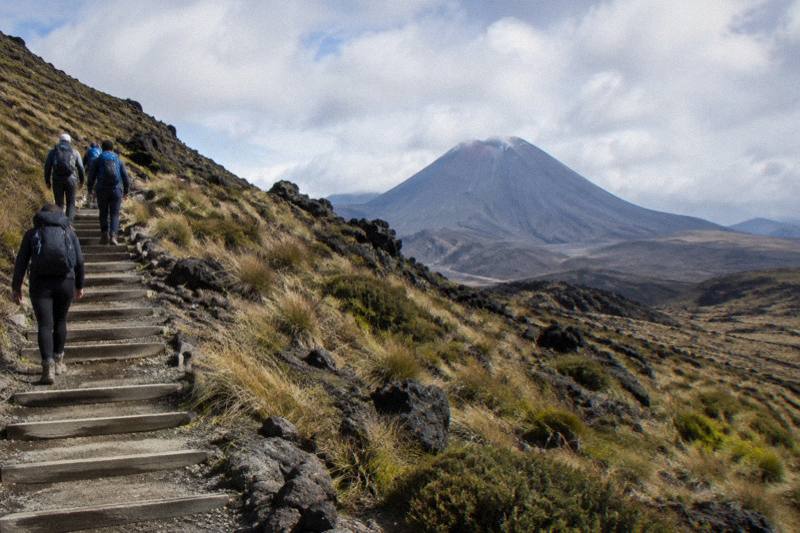
Mount Ngauruhoe Climb Or Tongariro Crossing Tour: What Guides Offer Instead
Mount Ngauruhoe is the most photographed peak on the Tongariro Alpine Crossing, but no tour climbs it. Guided Crossing hikes and shuttles are what you can actually book, and they deliver the volcano up close from the track itself.
Short answer
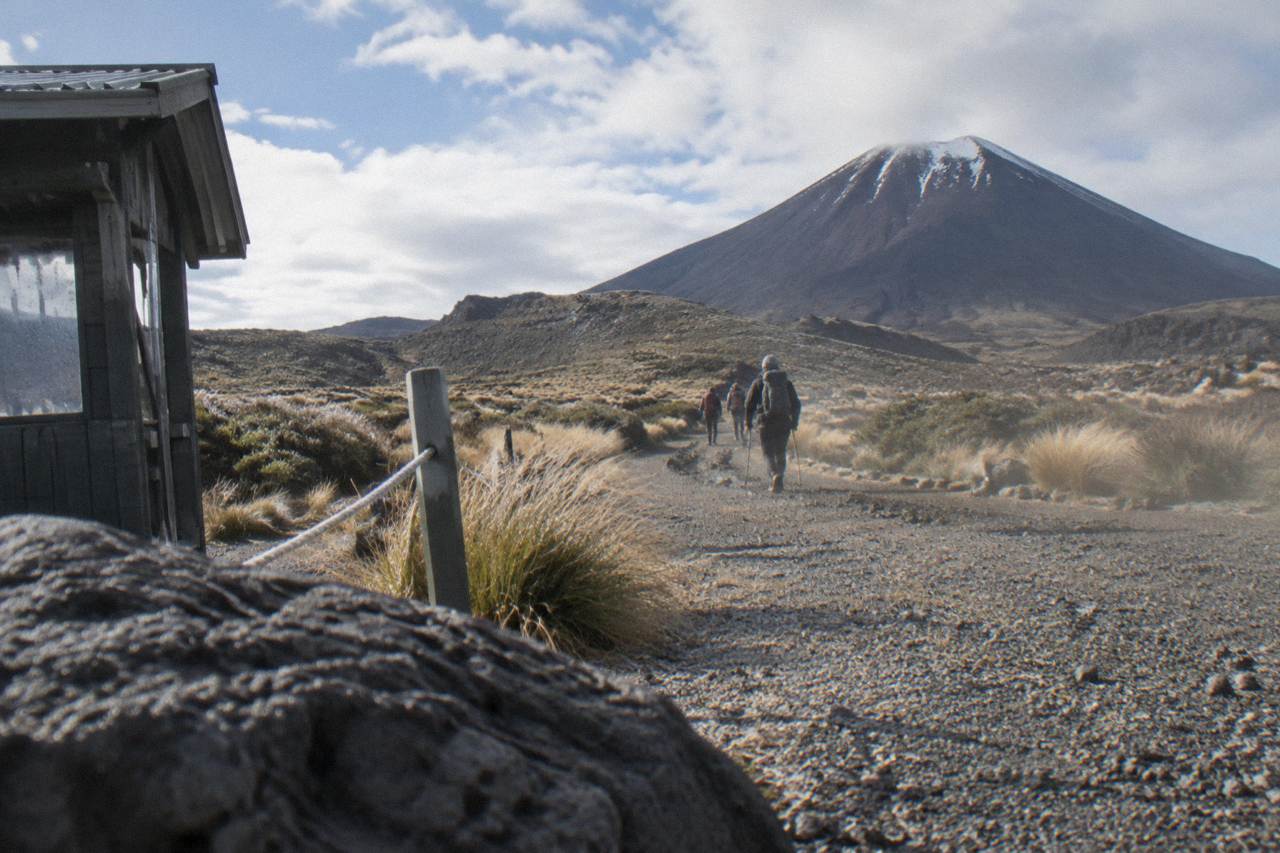
No tour climbs Mount Ngauruhoe. The guided option is the Adrift Tongariro premium guided Crossing hike, from $253 per person, rated 4.6 across 241 reviews. Shuttles start at $34 per person. The Crossing track passes the cone's flanks and Red Crater reaches 1886 m, the high point of the day.
The cone of Mount Ngauruhoe stands beside the Tongariro Alpine Crossing like a watchtower, and plenty of people arrive at the track believing a tour will take them up it. None does. Across every guided hike and shuttle you can book for this walk, not one product includes a summit climb of Ngauruhoe, and no operator here sells one. What exists instead is a family of guided Crossing hikes and park-and-ride shuttles that put you on the track immediately below the cone, close enough to read the scree fields and lava gullies with your own eyes. Before booking any of those guided hikes or shuttles, check whether the Tongariro Crossing is open and how closures affect tours, since volcanic activity can shut the track down at short notice.
That distinction matters for planning. Search "mount ngauruhoe" and you will meet two very different ideas of the day: a dormant scramble up a loose volcanic slope, and a 20.2 km one-way alpine traverse that DOC grades as requiring high fitness. Only the second is something you can book on this site. The pages below set out what the guided tours actually include, how near the track comes to the cone, and which of the bookable options suits the way you want to see the mountain. For a broader look at the walk itself, start with the Tongariro Crossing guide. This whole site, Tongariro Alpine Crossing Tours, exists to compare those bookable options honestly, price by price and operator by operator.
Can You Climb Mount Ngauruhoe On A Tongariro Crossing Tour?
No tour sold for the Tongariro Alpine Crossing climbs Mount Ngauruhoe. Guided hikes traverse the track from Mangatepopo to Ketetahi Road, and shuttles only move walkers between trailheads. Ngauruhoe appears beside the route as scenery, never as a destination. No booked product here climbs it. For walkers curious about the volcano, the guide to Mount Doom and the Tongariro Alpine Crossing explains why no tour climbs it.
That is a matter of what operators have chosen to run, not a hidden rule. Adrift Tongariro runs the three guided tours shown here for this walk, the premium full Crossing hike, a half-day guided walk that covers a shorter section rather than the whole track, and a private guided Crossing, and each one stays on the marked route. The premium hike runs from $253 per person, rated 4.6 across 241 reviews. The half-day version runs from $197 per person, rated 4.7 across 27 reviews. The private Crossing from $774.01, the Auckland transfer from $338 and the three-day Auckland tour from $3,150.50 carry no stated price basis, so they should not be set beside the per-person fares.
The summit question comes up often enough that it shapes how people choose their day. DOC describes Red Crater, at 1886 m, as the highest point of the Crossing, and the track crosses its rim rather than any peak. If you want more on that nickname and the scenery it comes from, the Mount Doom hike and Crossing tours page covers the story in detail.
One cultural note is printable and worth carrying with you. DOC relays the request of kaumātua Te Ngaehe Wanikau that visitors respect the sanctity of the sacred mountains by not touching or entering any of the waterways, including the alpine lakes. That is the specific request on record. The Crossing itself passes through mountains sacred to Ngāti Hikairo ki Tongariro of Ngāti Tūwharetoa, inside New Zealand's oldest national park, established 1894, and a dual World Heritage area.
How Close Does The Tongariro Crossing Get To Mount Ngauruhoe?
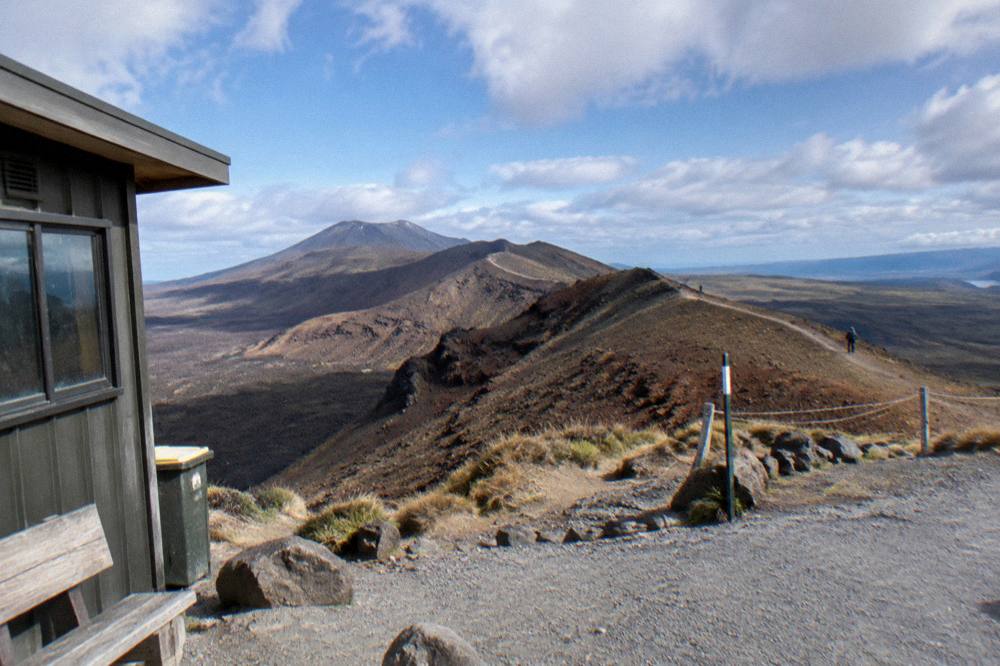
Very close, from below. The track climbs the Mangatepopo Valley directly toward the cone, crosses the South Crater plateau at its feet, and crests Red Crater on the adjacent ridge, from which Ngauruhoe fills the southern sky at arm's reach. DOC lists the start at 1120 m, Red Crater at 1886 m, and the finish at 760 m.
The sequence is worth knowing because it decides where your best views land. DOC describes the walk as a boardwalk through Mangatepopo Valley, a steady climb of around 350 m up a staircase to the South Crater plateau, then the ascent to Red Crater at 1886 m, a steep scree drop to the Emerald Lakes, past Blue Lake, and a long zig-zag descent with views over Lake Rotoaira and Lake Taupō before forest and the Ketetahi Road end. The total distance is 20.2 km one way, with an elevation change of plus and minus 1196 m. Walking time is 7 to 8 hours from November to April and 9 hours from May to October, per DOC.
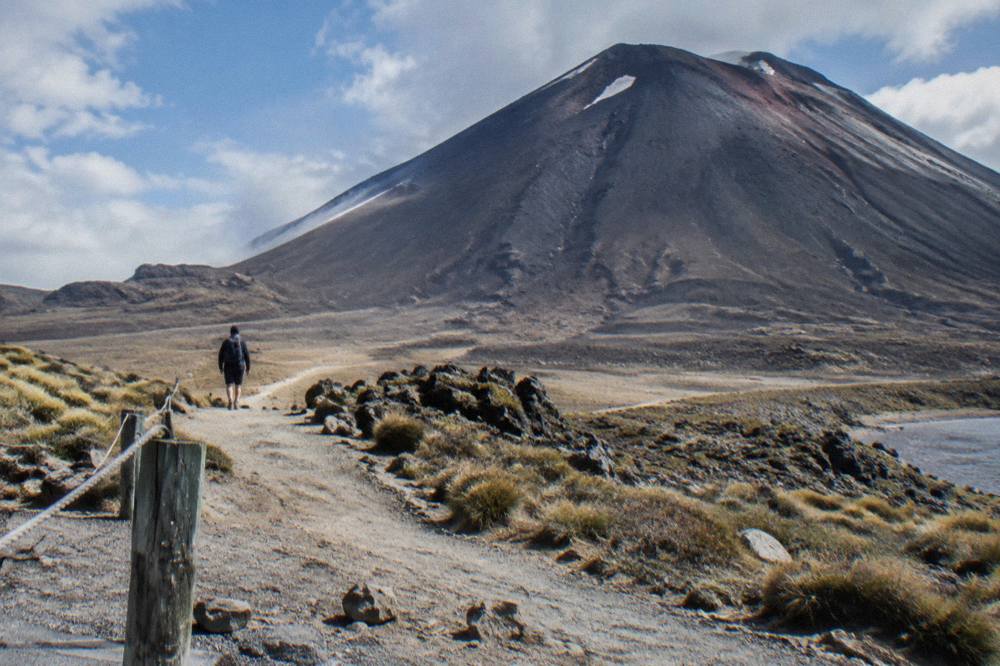
From the South Crater plateau the cone looks close enough to touch, and in clear conditions the texture of its old lava flows is visible without binoculars. Red Crater's rim gives the widest composition, cone on one side, Emerald Lakes below on the other. DOC notes that loose rock on Red Crater is a major slip hazard, and the many steps on the descent can trouble weaker knees, so the view comes with some care attached.
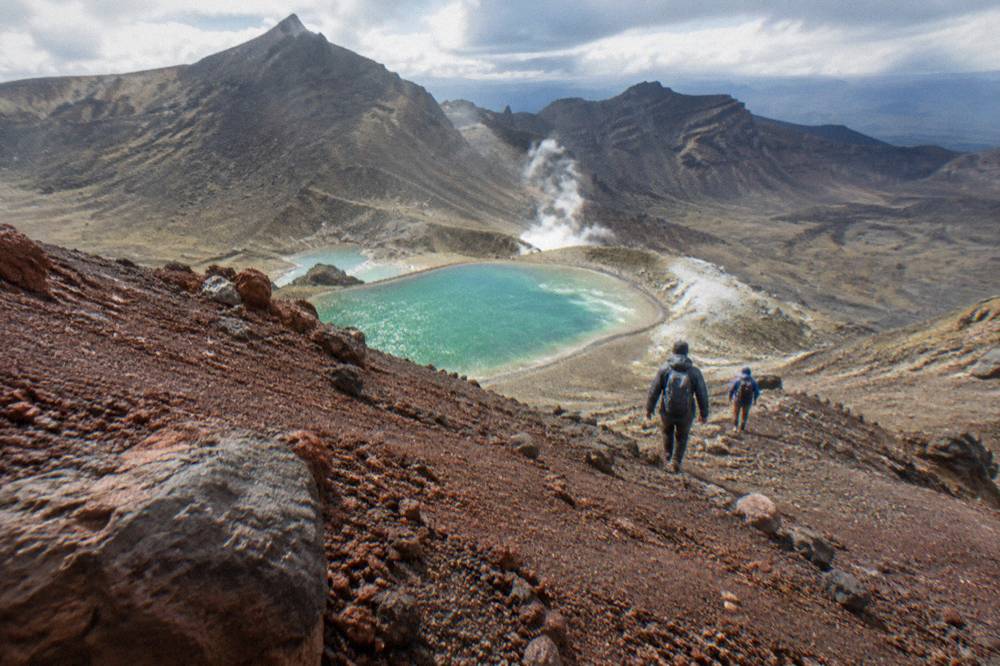
Weather decides how much of this you actually see. DOC advises checking the NIWA Red Crater forecast, the MetService mountain forecast, and GeoNet before the day, and all operators have agreed, as part of their concessions, not to operate when a Hazardous Weather Warning has been issued. On a calm day, DOC says, Red Crater is at least 10 °C colder than Taupō and 5 °C colder than the track start, and you subtract another 2 °C for every 10 km/h of wind. No operator promises clear views, and no honest page should.
| Where on the track | What you see of Ngauruhoe | Notes from DOC |
|---|---|---|
| Mangatepopo Valley boardwalk | The cone ahead for the whole lower valley | First 5.4 km shared with the easy Soda Springs Walk |
| Devil's Staircase and South Crater | Full face of the cone, closest approach of the day | Steady climb of around 350 m to the plateau |
| Red Crater rim, 1886 m | Cone to the south, Emerald Lakes below to the north | Loose scree, a major slip hazard |
| Ketetahi descent | Looking back at the whole massif | Long zig-zag descent, views over Lake Rotoaira |
What Guided Tongariro Crossing Tours Can You Book Instead?
Adrift Tongariro runs three guided tours: the premium guided Crossing hike from $253 per person (4.6 across 241 reviews), a half-day guided walk from $197 per person that is not the full Crossing, and a private guided Crossing from $774.01. All three meet at the Adrift base, 53 Carroll Street, National Park Village, include return transport, and supply crampons and ice axes for winter conditions if required.
Guided is the word to hold onto. A shuttle is never guided, and only these three Adrift tours put a guide on the track with you. The premium hike runs 8 to 9 hours as a booked day, for walkers aged 12 and over, with a group cap of 60, free cancellation up to 14 days in advance for a full refund, and lunch excluded, so bring your own. The half-day walk is a 4-hour booked outing covering a shorter section of the walk rather than the full 20.2 km. The private Crossing costs from $774.01 with the price basis on the booking page, is guided, runs 7 to 9 hours, is also for ages 12 and up, and is non-refundable, which is the sharpest term on the page and worth reading before you commit.
| Guided tour | From price | Booked duration | Age rule | Cancellation |
|---|---|---|---|---|
| Adrift premium guided Crossing hike | $253 per person | 8 to 9 hours | 12 and over | Free up to 14 days ahead |
| Adrift half-day guided walk | $197 per person | 4 hours | Check the booking page | Free up to 14 days ahead |
| Adrift private guided Crossing | from $774.01, price basis on the booking page | 7 to 9 hours | 12 and over | Non-refundable |
Winter changes the picture in your favour if a guide appeals. DOC's winter guidance for the track, May to late October, is blunt: the route becomes an Expert route, snow and ice sit on the sections you would cross in sneakers in summer, crampons, ice axe and helmet are essential, as is competency using them, and DOC's own summary line is "go with a guide". The Adrift tours run in summer and winter and carry the winter kit. Shuttles are a different story, and DOC notes that shuttle buses generally do not operate during winter, while guided trips include transport.
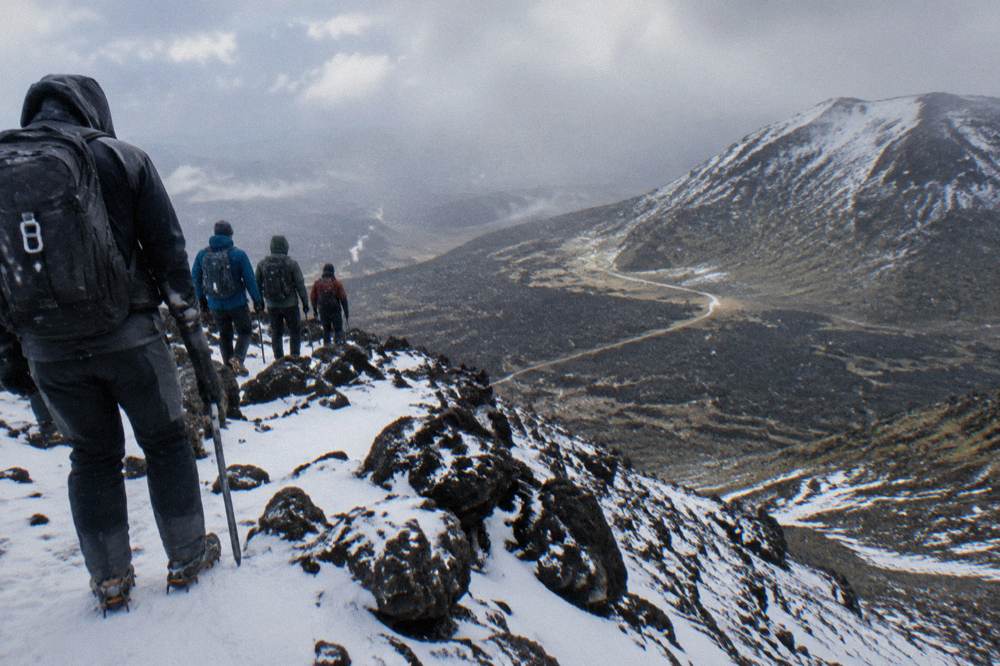
If you are weighing guided against independent, the guided Tongariro Crossing comparison and the page on hiking Tongariro without a guide cover the decision from both sides.
Shuttle Or Guided Tour For Seeing Ngauruhoe?
Shuttles are transport only, from $34 per person one way, and never guided. A guided tour puts a guide beside you for the walk, from $197 per person. Both approaches reach the same views of Ngauruhoe, because the track is the same track; the choice is about support, winter conditions, and budget, not scenery.
The shuttle family here splits into two shapes. Round-trip shuttles collect you in the morning and bring you back from Ketetahi in the afternoon: the Tongariro Crossing Shuttles round trip from National Park Village, from $42 per person, rated 4.7 across 886 reviews, the most reviewed tour on this site, and Dempsey Buses from National Park Village, from $51, rated 4.8 across 72 reviews. One-way park-and-rides work the other way around: you park at the Ketetahi end, ride to Mangatepopo, and walk the Crossing back to your own car. The cheapest per-person option of all is the Active Outdoor Adventures one-way shuttle with a secure Ketetahi car park, from $34, rated 4.1 across 81 reviews.
There are six park-and-ride products in that one-way family, alongside round trips out of National Park Village, Ohakune, Turangi and Taupō. The comparison of parking or shuttle explains the DOC parking rules that push most summer walkers toward one of them: from Labour weekend in late October to 30 April, a 4-hour maximum applies at the road ends, DOC says there is no parking for Crossing walkers at Mangatepopo car park in summer, and only a private car park operates near Ketetahi.
| Option | From price per person | Rating and reviews | What it is |
|---|---|---|---|
| Adrift Tongariro premium guided hike | $253 | 4.6, 241 reviews | Guided full Crossing, return transport, winter gear |
| Adrift Tongariro half-day guided walk | $197 | 4.7, 27 reviews | Guided shorter walk, not the full Crossing |
| Tongariro Crossing Shuttles round trip | $42 | 4.7, 886 reviews | Shuttle only, round trip from National Park Village |
| Ruapehu Scenic Shuttles park-and-ride | $38 | 4.8, 665 reviews | One-way shuttle, park at Ketetahi, walk back to your car |
| Active Outdoor Adventures one-way | $34 | 4.1, 81 reviews | One-way shuttle with a secure Ketetahi car park |
What Does A Ngauruhoe View Day Actually Cost?
Shuttle seats run from $34 to $80.27 per person depending on start point, with a median of $43.36 across the 14 per-person tours. Guided hikes sit higher: $197 for the half-day and $253 for the premium full Crossing. Three products, the private Crossing from $774.01, the Auckland transfer from $338 and a three-day Auckland tour from $3,150.50, carry no stated price basis and cannot be compared with them.
The per-person ladder is short enough to hold in your head. Below the guided tours, the Taupō return shuttle from Tongariro Expeditions, from $80.27 per person, rated 4.5 across 25 reviews, is the dearest pure transport. The Dempsey Buses return from Ohakune costs from $62. The one-way park-and-rides cluster tightly: the National Park Shuttles one-way sits at $34.40, the Ruapehu Scenic Shuttles and Owhango Adventures one-ways at $38 each, and the Backyard Tours one-way with secure parking at $44.72. DOC adds one structural note worth knowing: part of a shuttle fee goes to conservation, but that is DOC's description of where the money flows, not a price you can book.
Cancelling matters as much as paying. Fifteen of the seventeen tours here state free cancellation, the two Adrift guided tours up to 14 days before and most of the rest up to 24 hours before. The exceptions are the Adrift private Crossing and the ExperienceKart three-day tour from Auckland, both non-refundable. The booking page shows the cancellation terms for whichever product you are holding, and reading them before you pay is the cheapest insurance on the trip.
Is The Red Crater Section The Mount Doom Moment?
It is, in everything but name. Red Crater, 1886 m, is the high point of the Crossing and the closest the track comes to sharing a ridge with Ngauruhoe, and its rust-coloured scree and steaming ground deliver the volcanic look the nickname promises. DOC calls its loose rock a major slip hazard, so the drama comes with real care. If you came for Ngauruhoe itself, the guide to Mount Doom hikes and Tongariro Crossing tours explains why no tour climbs the volcano and what the walks cover instead.
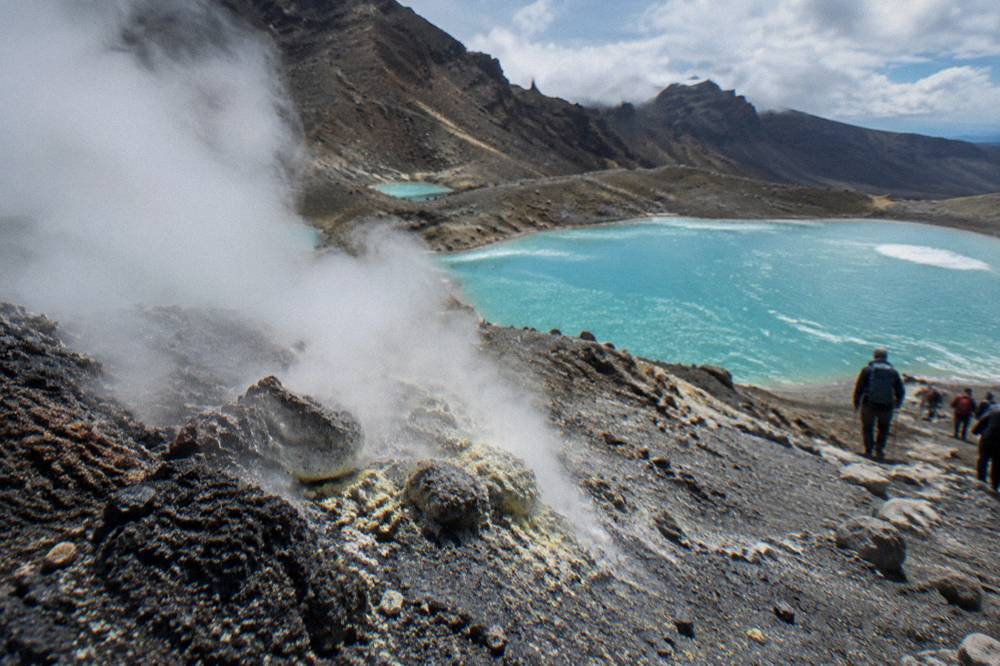
The nickname belongs to Ngauruhoe, but the Crossing's most otherworldly hour is spread across the ridge between South Crater and the Emerald Lakes. Red Crater's rim is a knife of loose red scree; DOC warns that the descent to the lakes is steep, and notes that 38% of tramping injuries come from slipping. Below sit the Emerald Lakes, Ngā Rotopounamu, their colour the payoff of the whole climb, and beyond them Blue Lake. Near the lakes, fumaroles vent steam, and DOC's rules are firm: do not approach the steam vents and do not touch or enter any of the lakes, the same waterways request noted earlier.
Late 2025 fires burned significant areas of the park around the start of the walk, and hapū Ngāti Hikairo ki Tongariro placed a 10-year restorative rāhui over the affected area. DOC's framing, in the words of spokesperson Te Ngaehe Wanikau, is that it is not about keeping people out. What it asks of you is concrete: stay on the tracks, keep out of fire-affected areas off track, clean your shoes and gear, and take your rubbish home. The landscape at the Mangatepopo end is blackened and regrowing, which is itself part of what you are walking through.
The volcanic setting is not decorative. DOC notes the Crossing traverses an active volcanic area, that eruptions can occur at any time although unlikely, and that the most recent eruption from Te Maari was in 2012. If volcanic activity levels rise at Tongariro or Ngāuruhoe, DOC closes track sections or the whole Crossing. GeoNet is the live source for volcanic status, and the DOC Tongariro Alpine Crossing page carries any current alerts.
What Should You Know Before Booking A Ngauruhoe View Day?
Book the guided hike or shuttle that matches your start town, check the weather sources DOC names, and know the age and fitness limits. DOC grades the track as requiring high fitness, does not recommend it for children under 10, and allows 7 to 8 hours of walking November to April, 9 hours May to October.
Start towns decide the product more than anything else. National Park Village, 13.5 km from the track by DOC's figures, carries five tours. The Ketetahi car park end carries six park-and-rides. Taupō, 86.5 km away, has two, Turangi one, Ohakune one, and Auckland two long-distance products. If you are coming from Auckland, know that it is a long way: the Kiwi Road Tours private transfer, from $338, is a two-day product that excludes the Crossing shuttle and leaves the walk self-guided, and the ExperienceKart three-day tour, from $3,150.50, includes the Crossing as one self-guided leg among Waitomo, Huka Falls and Lake Taupō stops. Neither is a guided Crossing tour.
| Departure point | Distance from the track (DOC) | Tours starting there |
|---|---|---|
| National Park Village | 13.5 km | 5 |
| Ketetahi car park | at the track's end | 6 |
| Taupō | 86.5 km | 2 |
| Tūrangi | 36.7 km | 1 |
| Ohakune | 48 km | 1 |
| Auckland | a long way, overnight products only | 2 |
The booking system is free and simple. A track booking, in place since October 2023, is recommended for everyone and required to use a shuttle or guided walk service, there is no penalty for arriving without one, and your guide or shuttle operator may make the booking for you. Rangers at the carpark ask to see the receipt, digital or paper. Manaaki Rangers greet visitors daily from November to April and share traditional stories.
Ages and group sizes are per tour, never blanket. The Adrift premium and private tours take walkers from 12. National Park Shuttles sets its minimum at 8, its group cap at 37. Dempsey Buses excludes children under 6 on both its services. The Tongariro Expeditions Taupō return caps groups at 24. The ExperienceKart three-day tour is not suitable under 12. DOC, separately, does not recommend the track for children under 10. Gear follows the same rule: crampons and ice axes are supplied only on the three Adrift guided tours when winter conditions require them, and DOC's own winter kit list for independent walkers, including avalanche transceiver, probe and shovel, is spelled out on the DOC Tongariro Alpine Crossing page.
Fitness is the honest gate. DOC grades the requirement as High, the gradient steep and undulating, and the first 5.4 km shared with the Soda Springs Walk, an easy 2-hour return option that serves as a fallback for anyone who reaches the valley and realises the day is beyond them. The difficulty guide and the page on how long the Crossing takes take those numbers further. Toilets sit every 1 to 2 hours along the track, and if there is a queue at Mangatepopo, the next ones are 1 km, about 20 minutes, on.
Work through the choices in order and the decisions mostly resolve themselves. Start town comes first, since it filters the product list before price or itinerary details matter. Season comes second, because it moves both the time allowance and the gear question. Ages and headcount come third, matched operator by operator rather than assumed across the board. Whoever you book with, settle at payment who files the track booking, you or the operator, and keep the receipt reachable for the carpark check.
Auckland travellers should be clear about what the two long-distance products are not. Both leave the Crossing self-guided, so if a guide is the point of the trip, begin from a town closer to the track and treat the Auckland options as transport and itinerary products rather than Crossing tours.
On the day, fitness still decides how far you go, but the track builds in a dignified way out. The easy return walk sharing the opening stretch makes a shorter day a genuine option rather than a failure, and the spacing of the toilets means a queue at the first one is seldom worth standing in.
Common Questions About Mount Ngauruhoe And Tongariro Crossing Tours
Can You Climb Mount Ngauruhoe On A Tour?
No tour here climbs Mount Ngauruhoe. Guided Crossing hikes and shuttles follow the marked track from Mangatepopo to Ketetahi Road, and Ngauruhoe appears beside the route as scenery. No booked product offers a summit ascent.
Can You Hike To Mount Doom On The Tongariro Alpine Crossing?
Mount Doom is a popular nickname for Ngauruhoe, and no tour climbs it. The Crossing track passes the cone's flanks, and Red Crater at 1886 m is the highest point of the day, a full 20.2 km traverse from Mangatepopo to Ketetahi Road.
How Close Does The Crossing Get To Mount Ngauruhoe?
The track climbs Mangatepopo Valley directly toward the cone, crosses the South Crater plateau at its feet, and crests Red Crater on the adjacent ridge. From Red Crater's rim the cone fills the southern view at close range, in clear weather.
What Is The Cheapest Way To See Ngauruhoe On The Crossing?
The Active Outdoor Adventures one-way shuttle with a secure Ketetahi car park runs from $34 per person, the cheapest per-person option available. You park at the Ketetahi end, ride to Mangatepopo, and walk the track back to your own car.
Is A Guided Tongariro Crossing Tour Worth It For The Ngauruhoe Views?
The views are identical with or without a guide, because the track is the same. A guide adds safety support, winter equipment, and interpretation; the Adrift premium guided hike costs from $253 per person and runs in summer and winter with return transport included.
Are Visitors Asked Not To Climb Mount Ngauruhoe?
The request DOC relays is that visitors respect the sacred mountains by not touching or entering any of the waterways, including the alpine lakes. No tour climbs the cone regardless; the guided alternatives all traverse the marked Crossing track.